Incremental Value of Right Ventricular Outflow Tract Diameter in Risk Assessment of Chronic Heart Failure Patients with Implantable Cardioverter Defibrillators: Development of RVOTD-ICD Benefit Score in Real-World Setting
Hao Huang, Yu Deng, Sijing Cheng, Yu Yu, Xi Liu, Hongxia Niu, Xuhua Chen, Chi Cai, Min Gu, Wei Hua

TL;DR
This study shows that measuring the right ventricular outflow tract diameter (RVOTD) improves risk assessment for heart failure patients considering implantable cardioverter defibrillators (ICDs).
Contribution
The novel contribution is the development of the RVOTD-ICD benefit score, a new risk assessment tool incorporating RVOTD for better ICD decision-making.
Findings
Higher RVOTD was significantly linked to increased risk of ventricular tachycardia/fibrillation (VT/VF) but not non-arrhythmic mortality.
The RVOTD-ICD benefit score outperformed existing tools in predicting VT/VF and mortality risks in heart failure patients.
The highest benefit group had an 8-fold higher risk of VT/VF compared to non-arrhythmic mortality over three years.
Abstract
Left ventricular ejection fraction (LVEF) remains the basic reference for the prevention of sudden cardiac death (SCD) patients, while right ventricular (RV) abnormalities have now been associated with SCD risk. A modified benefit assessment tool incorporating RV function parameters in consideration of implantable cardioverter defibrillators (ICD) insertion should be taken into account. We enrolled 954 chronic heart failure (CHF) patients (age 58.8 ± 13.1 years; 79.0% male) with quantitative measurements of right ventricular outflow tract diameter (RVOTD) before ICD implantation and then divided them according to the median level of RVOTD. The predictive value of RVOTD in life-threatening ventricular tachycardia (VT)/ventricular fibrillation (VF) vs. non-arrhythmic mortality (defined as death without prior sustained VT/VF), was evaluated respectively. Based on RVOTD and…
Genes, proteins, chemicals, diseases, species, mutations and cell lines named across the full text — each resolved to its canonical identifier and authoritative record.
Click any figure to enlarge with its caption.
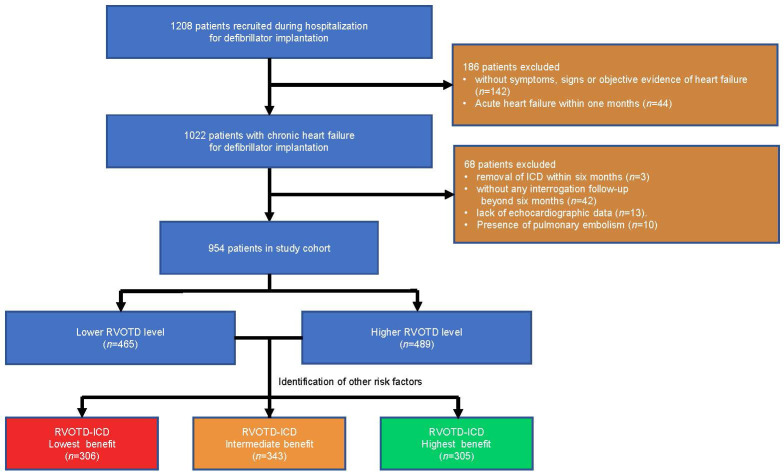 Figure 1
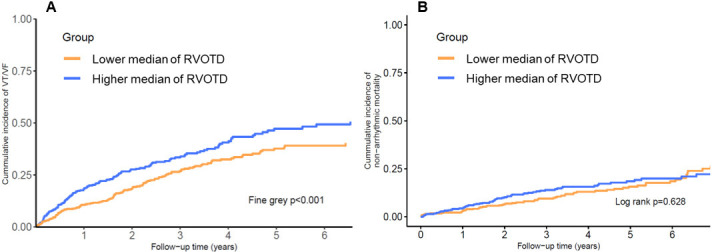 Figure 2
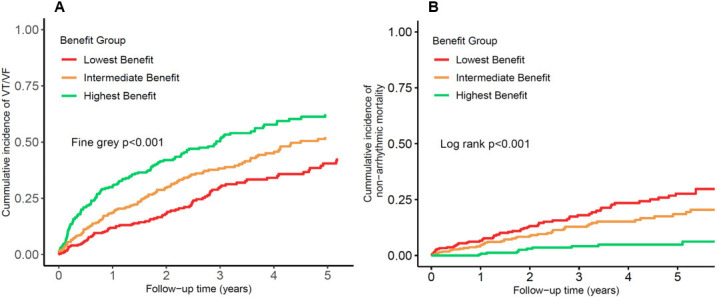 Figure 3
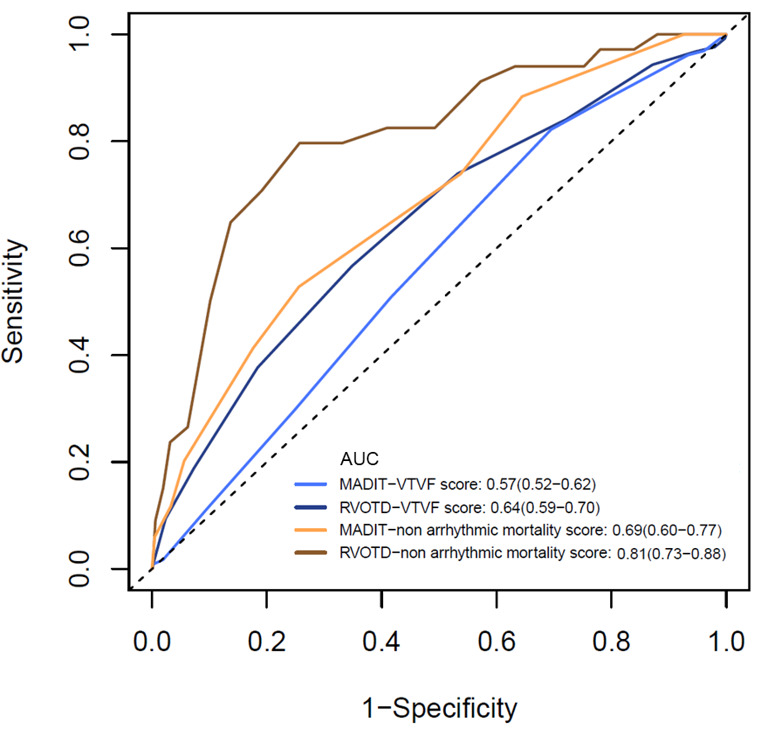 Figure 4
Peer Reviews
No public reviews on file for this paper yet. If you reviewed it on a platform where reviews are public (OpenReview, ICLR, NeurIPS, ICML), you can paste yours below so the community can read it here.
Videos
No videos yet. Explain this paper in a talk, walkthrough, or lecture? Add one.
Taxonomy
TopicsCardiac pacing and defibrillation studies · Cardiovascular Function and Risk Factors · Cardiac Arrhythmias and Treatments