Association between the Serum Soluble Urokinase Plasminogen Activator Receptor and Peripheral Arterial Stiffness According to the Cardio-Ankle Vascular Index in Patients Undergoing Kidney Transplantation
Hsiao-Hui Yang, Yen-Cheng Chen, Ching-Chun Ho, Bang-Gee Hsu

TL;DR
This study finds that higher levels of a protein called suPAR are linked to increased arterial stiffness in kidney transplant patients, which could indicate a higher risk of cardiovascular issues.
Contribution
The study is the first to show an independent association between serum suPAR levels and peripheral arterial stiffness in kidney transplant recipients.
Findings
24.4% of kidney transplant patients had peripheral arterial stiffness (PAS), with higher suPAR levels in this group.
Serum suPAR levels were independently associated with PAS after adjusting for other factors.
Logarithmically transformed suPAR levels were positively correlated with CAVI values in kidney transplant patients.
Abstract
High soluble urokinase plasminogen activator receptor (suPAR) levels are correlated with cardiovascular (CV) disease. Arterial stiffness is associated with aging-related vascular diseases and is an independent risk factor for CV morbidity and mortality. It can be measured by the cardio-ankle vascular index (CAVI). We evaluated the association between serum suPAR levels and arterial stiffness according to the CAVI in kidney transplantation (KT) recipients. In this study, 82 patients undergoing KT were enrolled. Serum suPAR levels were analyzed using an enzyme immunoassay. The CAVI was measured using a plethysmograph waveform device, and patients with a CAVI of ≥9.0 were assigned to the peripheral arterial stiffness (PAS) group. Twenty KT patients (24.4%) had PAS, were of older age (p = 0.042), and had higher serum triglyceride (p = 0.023) and suPAR levels (p < 0.001) than…
Genes, proteins, chemicals, diseases, species, mutations and cell lines named across the full text — each resolved to its canonical identifier and authoritative record.
Click any figure to enlarge with its caption.
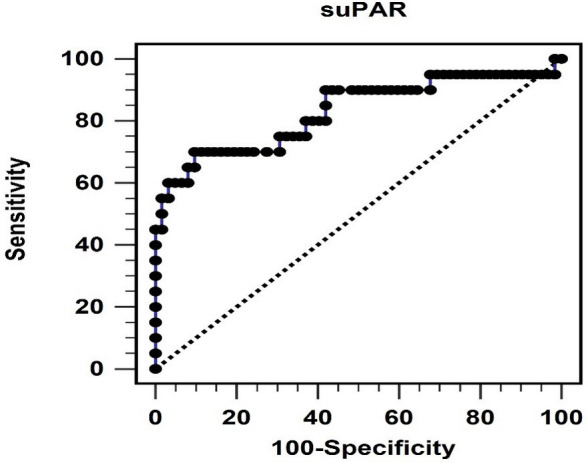 Figure 1
Peer Reviews
No public reviews on file for this paper yet. If you reviewed it on a platform where reviews are public (OpenReview, ICLR, NeurIPS, ICML), you can paste yours below so the community can read it here.
Videos
No videos yet. Explain this paper in a talk, walkthrough, or lecture? Add one.
Taxonomy
TopicsPeripheral Artery Disease Management · Cardiovascular Health and Disease Prevention · Cerebrovascular and Carotid Artery Diseases