Use of the CONSIDER statement by eye health researchers when conducting and reporting research involving Indigenous peoples: an online survey
Isaac Samuels, Lisa M. Hamm, Juan Carlos Silva, Benoit Tousignant, João M. Furtado, Lucy Goodman, Renata Watene, Jaki Adams, Aryati Yashadhana, Aryati Yashadhana, Ben Wilkinson, Helen Dimaras, Ilena Brea, Jaymie Rogers, Joanna Black, Joshua Foreman, Juan Camilo Arboleda

TL;DR
Eye health researchers find the CONSIDER statement useful for improving research involving Indigenous peoples, but need more guidance and support to use it effectively.
Contribution
This study explores the use and perceived value of the CONSIDER statement among eye health researchers working with Indigenous communities.
Findings
Researchers reported limited use of the CONSIDER statement in past work but found it relevant for future research.
Participants requested clarity on how to apply the CONSIDER statement alongside existing guidelines.
Researchers highlighted the benefits of Indigenous leadership and collaboration in their work.
Abstract
Indigenous peoples experience worse eye health compared to non-Indigenous peoples. Service providers and researchers must avoid perpetuating this inequity. To help achieve this, researchers can use the CONSolIDated critERia for strengthening the reporting of health research involving Indigenous peoples (CONSIDER) statement. This study aimed to identify the degree to which the CONSIDER statement has been used by eye health researchers when conducting and reporting research with an Indigenous component, and how they perceive its relevance in their future research. We used purposive sampling to recruit eye health researchers from any country who have undertaken research with an Indigenous component. The online survey collected quantitative and qualitative data and was analysed using descriptive statistics and reflexive thematic analysis. Responses were gathered on a four-point Likert…
Genes, proteins, chemicals, diseases, species, mutations and cell lines named across the full text — each resolved to its canonical identifier and authoritative record.
Click any figure to enlarge with its caption.
 Figure 1
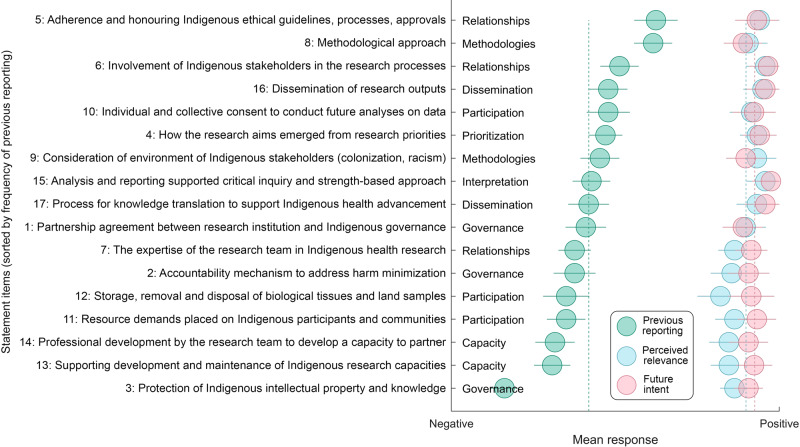 Figure 2
Peer Reviews
No public reviews on file for this paper yet. If you reviewed it on a platform where reviews are public (OpenReview, ICLR, NeurIPS, ICML), you can paste yours below so the community can read it here.
Videos
No videos yet. Explain this paper in a talk, walkthrough, or lecture? Add one.
Taxonomy
TopicsDiscourse Analysis and Cultural Communication