The biological effects and thermal degradation of NPB-22, a synthetic cannabinoid
Akihiro Takeda, Takahiro Doi, Akiko Asada, Katsuhiro Yuzawa, Akemichi Nagasawa, Kai Igarashi, Tomokazu Maeno, Atsuko Suzuki, Seiko Shimizu, Nozomi Uemura, Jun’ichi Nakajima, Toshinari Suzuki, Akiko Inomata, Takaomi Tagami

TL;DR
This study examines the biological effects and thermal degradation of NPB-22, a synthetic cannabinoid, when inhaled.
Contribution
The study identifies thermal degradation products of NPB-22 and their lack of CB1 receptor activity.
Findings
NPB-22 and Adamantyl-THPINACA showed similar CB1 activity in vitro.
NPB-22 degraded into 8-quinolinol and pentyl indazole 3-carboxylic acid, which lack CB1 activity.
Thermal degradation of NPB-22 likely reduces its biological effects during inhalation.
Abstract
NPB-22 (quinolin-8-yl 1-pentyl-1H-indazole-3-carboxylate), Adamantyl-THPINACA (N-(1-adamantantyl)-1-[(tetrahydro-2H-pyran-4-yl)methyl]-1H-indazole-3-carboxamide), and CUMYL-4CN-B7AICA (1-(4-cyanobutyl)-N-(2-phenylpropan-2-yl)-1H- pyrrolo[2,3-b]pyridine-3-carboxamide), synthetic cannabinoids were evaluated in terms of CB1 (cannabinoid receptor type 1) and CB2 (cannabinoid receptor type 2) activities, and their biological effects when inhaled similar to cigarettes were examined. The half maximal effective concentration values of the aforementioned synthetic cannabinoids at the CB1 and CB2 were investigated using [35S]guanosine-5’-O-(3-thio)-triphosphate binding assays. In addition, their biological effects were evaluated using the inhalation exposure test with mice. The smoke generated was recovered by organic solvents in the midget impingers, and the thermal degradation compounds of the…
Genes, proteins, chemicals, diseases, species, mutations and cell lines named across the full text — each resolved to its canonical identifier and authoritative record.
Click any figure to enlarge with its caption.
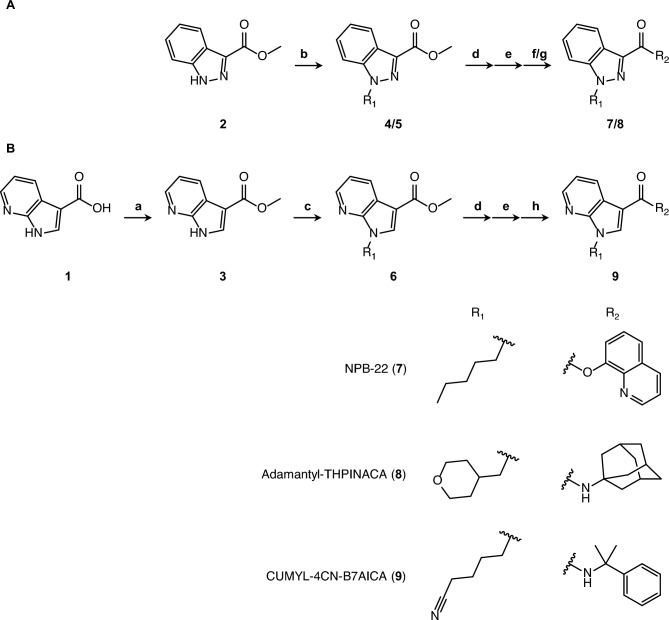 Figure 1
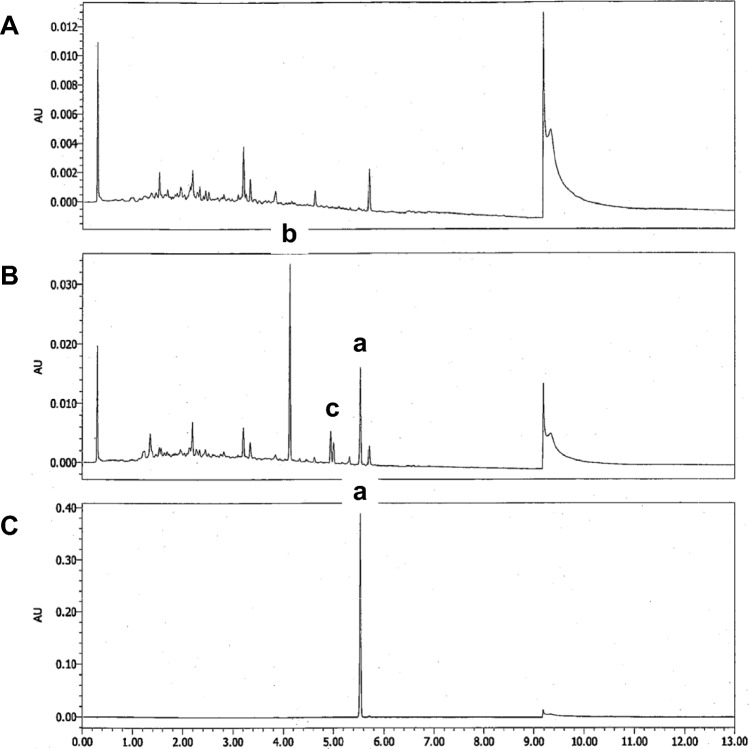 Figure 2
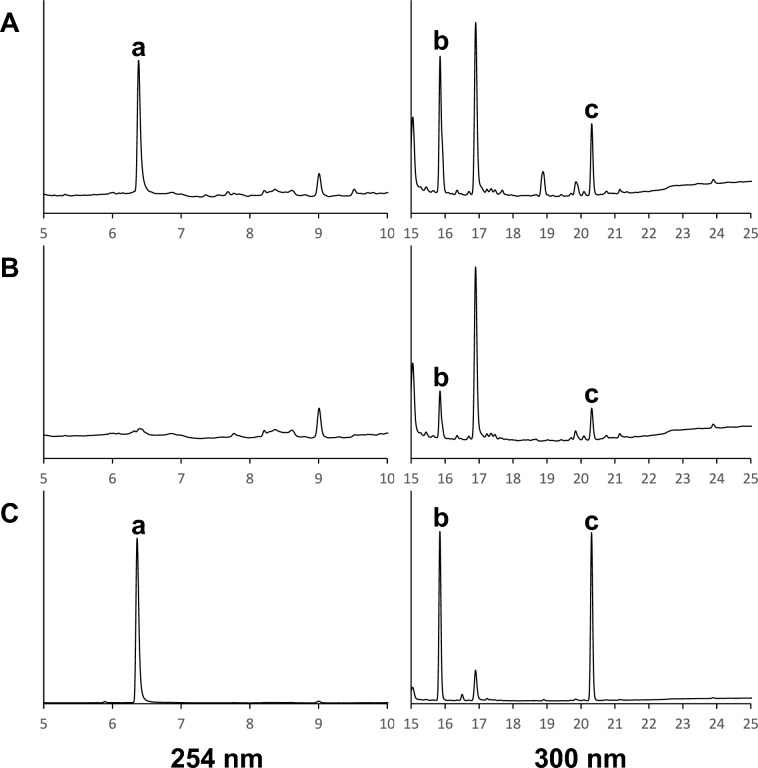 Figure 3
Peer Reviews
No public reviews on file for this paper yet. If you reviewed it on a platform where reviews are public (OpenReview, ICLR, NeurIPS, ICML), you can paste yours below so the community can read it here.
Videos
No videos yet. Explain this paper in a talk, walkthrough, or lecture? Add one.
Taxonomy
TopicsForensic Toxicology and Drug Analysis · Cannabis and Cannabinoid Research · Toxic Organic Pollutants Impact