Bioassay-guided isolation of leishmanicidal cucurbitacins from Momordica charantia
Maria Carolina Silva Marques, Nídia Cristiane Yoshida, Eduardo Caio Torres-Santos, Fernanda Rodrigues Garcez, Walmir Silva Garcez

TL;DR
This study identifies natural compounds from the plant Momordica charantia that show strong potential as treatments for leishmaniasis, a parasitic disease.
Contribution
The study isolates and characterizes new leishmanicidal cucurbitacin-type triterpenoids from Momordica charantia with low toxicity.
Findings
Four cucurbitacin-type triterpenoids showed significant antileishmanial activity with IC50 values between 2.11 and 3.25 μg.mL−1.
The compounds exhibited low toxicity and selectivity indexes ranging from 8.5 to 17.2.
Bioassay-guided fractionation led to the isolation of bioactive cucurbitacin-enriched fractions.
Abstract
Leishmaniasis, a neglected tropical parasitic disease, is regarded as a major public health problem worldwide. The first-line drugs for leishmaniasis suffer from limitations related to toxicity and the development of resistance in certain parasitic strains. Therefore, the discovery of alternative treatments for leishmaniasis is imperative, and natural products represent a valuable source of potential therapeutic agents. The present study aimed at finding new potential antileishmanial agents from the aerial parts of the medicinal plant Momordica charantia. This study was based on bioassay-guided fractionation of the M. charantia extract against promastigotes and amastigotes of Leishmania (Leishmania) amazonensis. The cytotoxicity of the extract, fractions, and isolated compounds were evaluated against peritoneal murine macrophages by employing the MTT assay for assessing cell metabolic…
Genes, proteins, chemicals, diseases, species, mutations and cell lines named across the full text — each resolved to its canonical identifier and authoritative record.
Click any figure to enlarge with its caption.
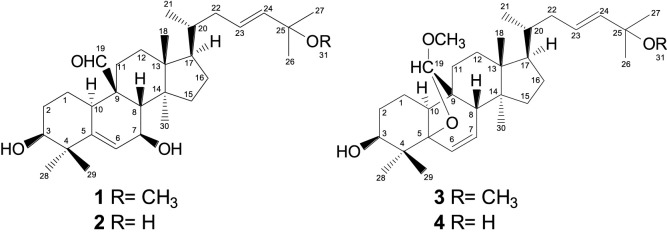 Figure 1
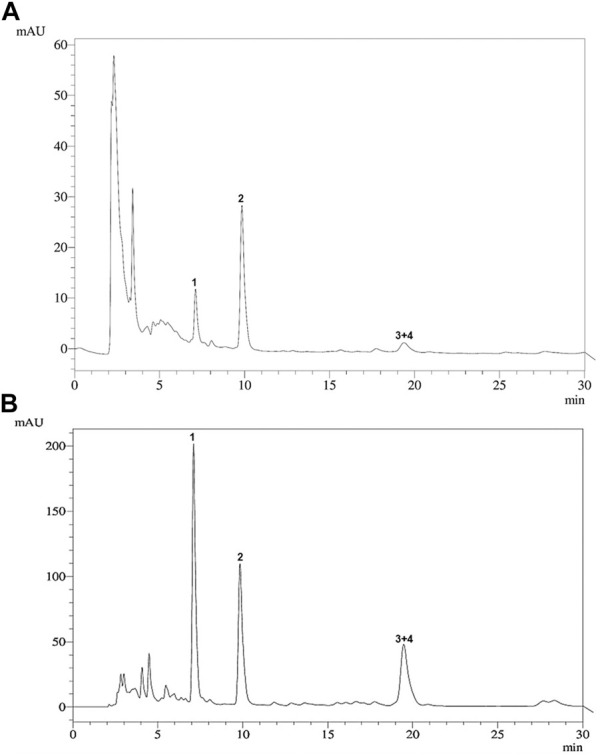 Figure 2
Peer Reviews
No public reviews on file for this paper yet. If you reviewed it on a platform where reviews are public (OpenReview, ICLR, NeurIPS, ICML), you can paste yours below so the community can read it here.
Videos
No videos yet. Explain this paper in a talk, walkthrough, or lecture? Add one.
Taxonomy
TopicsResearch on Leishmaniasis Studies · Toxin Mechanisms and Immunotoxins · Advances in Cucurbitaceae Research