Molecular identification of polymorphic transposable elements in populations of the invasive ant Cardiocondyla obscurior
Esther van den Bos, Jürgen Gadau, Lukas Schrader

TL;DR
This study develops a method to identify transposable element variations in ants, revealing genetic diversity in an invasive ant species.
Contribution
An optimized Transposon Display protocol for small insect genomes and identification of active retrotransposons in Cardiocondyla obscurior.
Findings
An optimized Transposon Display protocol was developed for ants with small genomes.
Active LTR/Ty3 retrotransposons were found to contribute to genetic diversification in Cardiocondyla obscurior.
TE polymorphisms were characterized between two genetic lineages and neighboring populations of the ant.
Abstract
Transposable elements (TEs) are found in virtually every eukaryotic genome and are important for generating de novo genetic variation. However, outside of costly and time-consuming whole-genome sequencing approaches, the set of available methods to study TE polymorphisms in non-model species is very limited. The Transposon Display (TD) is a simple yet effective technique to characterize polymorphisms across samples by identifying amplified fragment length polymorphisms using primers targeting specific TE families. So far, this technique has almost exclusively been used in plants. Here, we present an optimized TD protocol for insect species with small genomes such as ants (ca. 200–600 Mb). We characterized TE polymorphisms between two distinct genetic lineages of the invasive ant Cardiocondyla obscurior, as well as between neighboring populations of the New World lineage. We found active…
Genes, proteins, chemicals, diseases, species, mutations and cell lines named across the full text — each resolved to its canonical identifier and authoritative record.
Click any figure to enlarge with its caption.
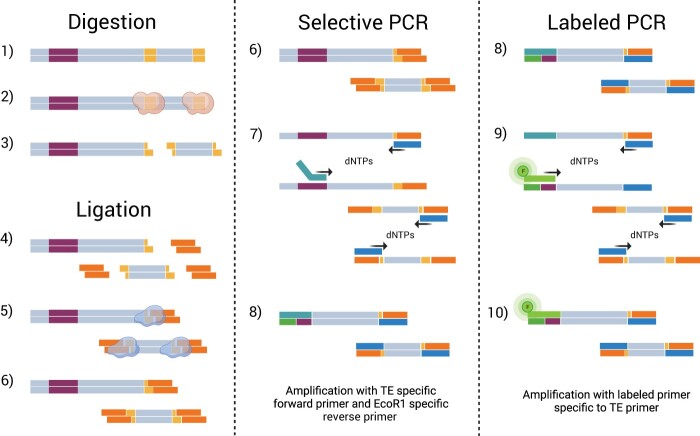 Figure 1
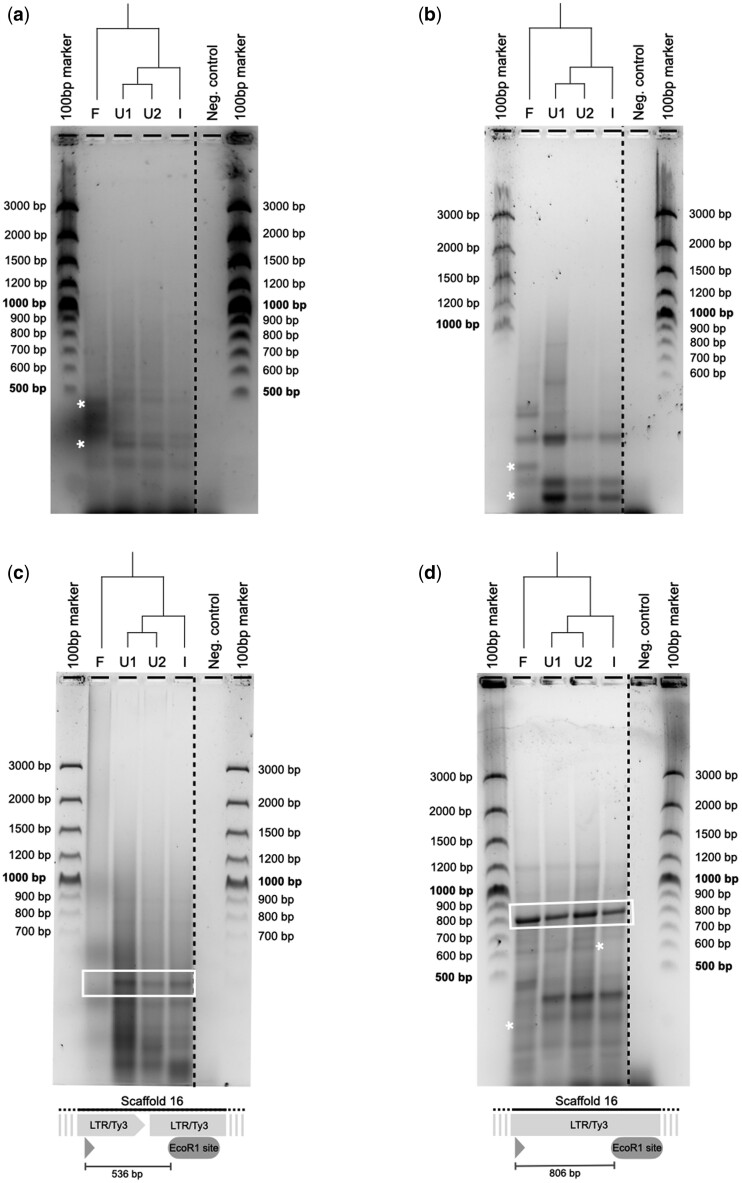 Figure 2
Peer Reviews
No public reviews on file for this paper yet. If you reviewed it on a platform where reviews are public (OpenReview, ICLR, NeurIPS, ICML), you can paste yours below so the community can read it here.
Videos
No videos yet. Explain this paper in a talk, walkthrough, or lecture? Add one.
Taxonomy
TopicsChromosomal and Genetic Variations · Insect and Arachnid Ecology and Behavior · Insect Resistance and Genetics