Proton Transfer via Arginine with Suppressed pKa Mediates Catalysis by Gentisate and Salicylate Dioxygenase
Qian Wang, Aleksey Aleshintsev, Kamal Rai, Eric Jin, Rupal Gupta

TL;DR
This study identifies arginine as the proton source in the catalytic mechanism of GDO and SDO enzymes, which break down aromatic compounds.
Contribution
The paper reveals that arginine, not histidine, is the proton shuffler in GDO and SDO, supported by thermodynamic and phylogenetic evidence.
Findings
A single proton transfer is essential for catalysis, with a ΔHion° of 51 kJ/mol.
Arginine, not histidine, is the likely proton source due to suppressed pKa in the GDO family.
A 2-histidine-1-carboxylate variant shows elevated pKa, supporting the role of the GDO scaffold in suppressing arginine pKa.
Abstract
Gentisate and salicylate 1,2-dioxygenases (GDO and SDO) facilitate aerobic degradation of aromatic rings by inserting both atoms of dioxygen into their substrates, thereby participating in global carbon cycling. The role of acid–base catalysts in the reaction cycles of these enzymes is debatable. We present evidence of the participation of a proton shuffler during catalysis by GDO and SDO. The pH dependence of Michaelis–Menten parameters demonstrates that a single proton transfer is mandatory for the catalysis. Measurements at variable temperatures and pHs were used to determine the standard enthalpy of ionization (ΔHion°) of 51 kJ/mol for the proton transfer event. Although the observed apparent pKa in the range of 6.0–7.0 for substrates of both enzymes is highly suggestive of a histidine residue, ΔHion° establishes an arginine residue as the likely proton source, providing…
Genes, proteins, chemicals, diseases, species, mutations and cell lines named across the full text — each resolved to its canonical identifier and authoritative record.
Click any figure to enlarge with its caption.
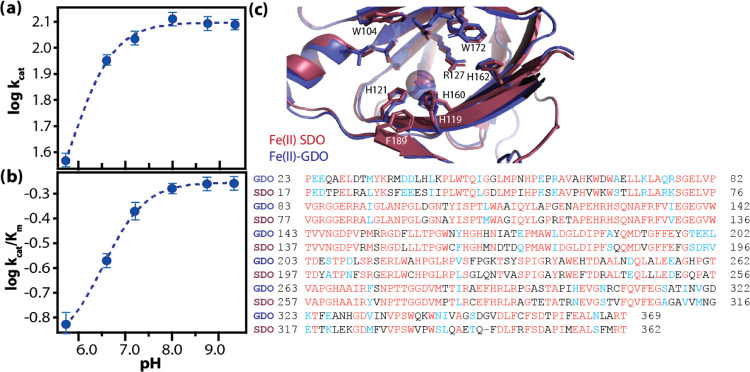 Figure 1
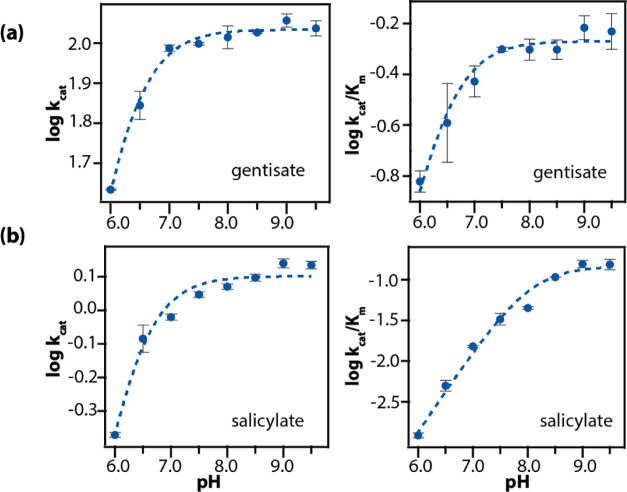 Figure 2
 Figure 3
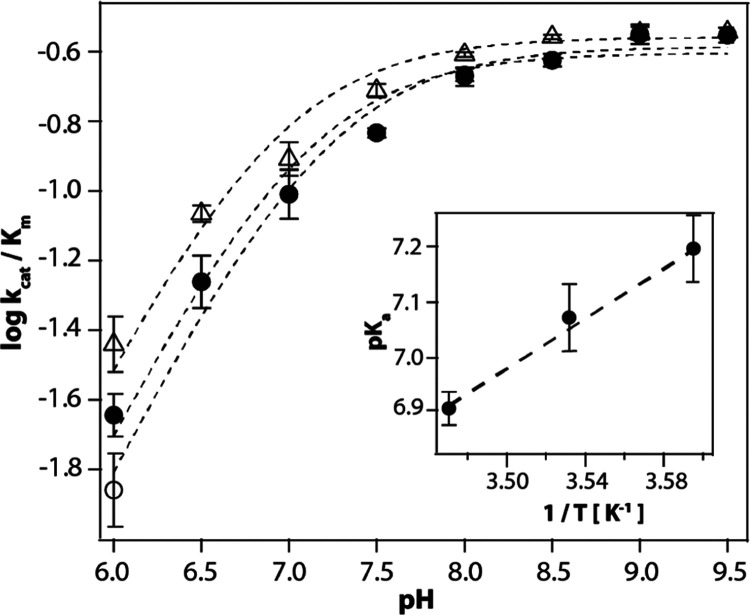 Figure 4
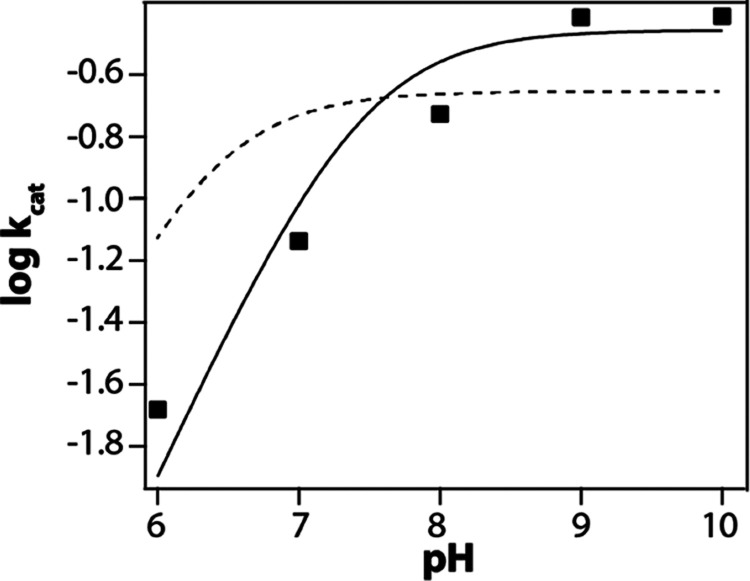 Figure 5
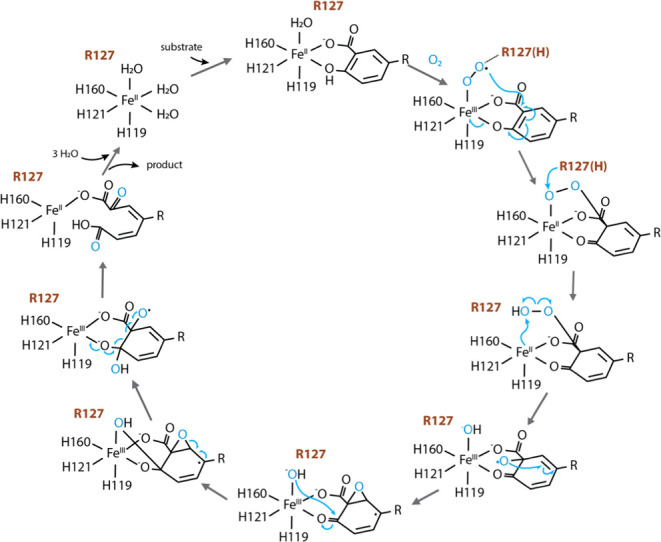 Figure 6
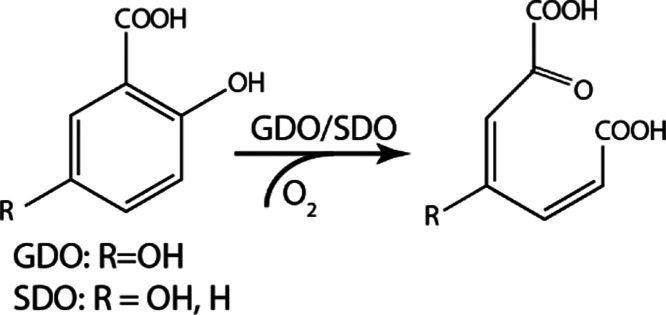 Figure 7
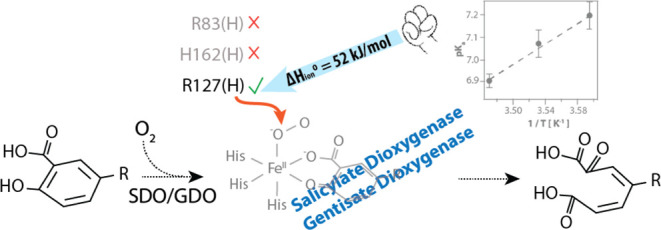 Figure 8
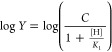 Figure 9
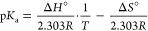 Figure 10
Peer Reviews
No public reviews on file for this paper yet. If you reviewed it on a platform where reviews are public (OpenReview, ICLR, NeurIPS, ICML), you can paste yours below so the community can read it here.
Videos
No videos yet. Explain this paper in a talk, walkthrough, or lecture? Add one.
Taxonomy
TopicsMetal-Catalyzed Oxygenation Mechanisms · Metal complexes synthesis and properties · Metalloenzymes and iron-sulfur proteins