Ab Initio Chemical Kinetics for Oxidation of CH3OH by N2O4: Elucidation of the Mechanism for Major Product Formation and Its Relevancy to Tropospheric Chemistry
Hue-Phuong Trac, Ming-Chang Lin

TL;DR
This study explains how methanol reacts with dinitrogen tetroxide to form specific products and assesses its impact on atmospheric chemistry.
Contribution
The paper provides a detailed ab initio mechanism for the oxidation of methanol by N2O4, revealing the formation of CH3ONO and HNO3.
Findings
The reaction proceeds via isomerization of N2O4 to ONONO2 with a 14.3 kcal/mol barrier.
The rate constant for CH3ONO and HNO3 formation agrees with low-temperature kinetic data.
Both the bimolecular and termolecular reactions are negligible in tropospheric chemistry.
Abstract
Next to CH4, CH3OH is the most abundant C1 organics in the troposphere. The redox reaction of CH3OH with N2O4 had been shown experimentally to produce CH3ONO, instead of CH3ONO2. The mechanism for the reaction remains unknown to date. We have investigated the reaction by ab initio MO calculations at the UCCSD(T)/6-311+G(3df,2p)//UB3LYP/6-311+G(3df,2p) level. The result indicates that the reaction takes place primarily by the isomerization of N2O4 to ONONO2 through a very loose transition state within the N2O4–CH3OH collision complex with a 14.3 kcal/mol barrier, followed by the rapid attack of ONONO2 at CH3OH producing CH3ONO and HNO3. The predicted mechanism for the redox reaction compares closely with the hydrolysis of N2O4. The computed rate constant, k1 = 1.43 × 10⁻⁸ T1.96 exp (−9092/T) (200–2000 K) cm3molecule–1s–1, for the formation of CH3ONO and HNO3 agrees reasonably with…
Genes, proteins, chemicals, diseases, species, mutations and cell lines named across the full text — each resolved to its canonical identifier and authoritative record.
Click any figure to enlarge with its caption.
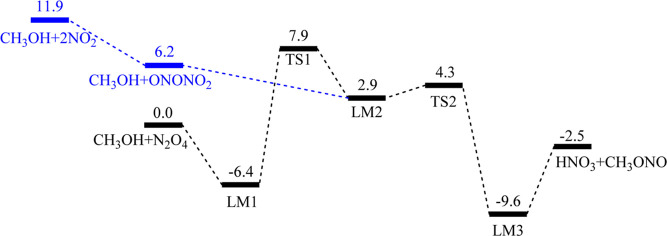 Figure 1
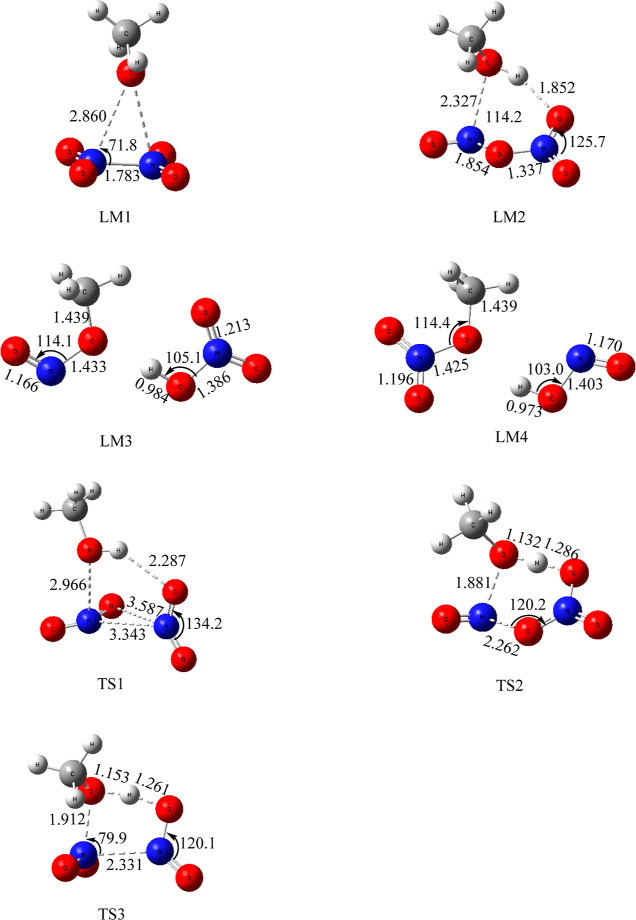 Figure 2
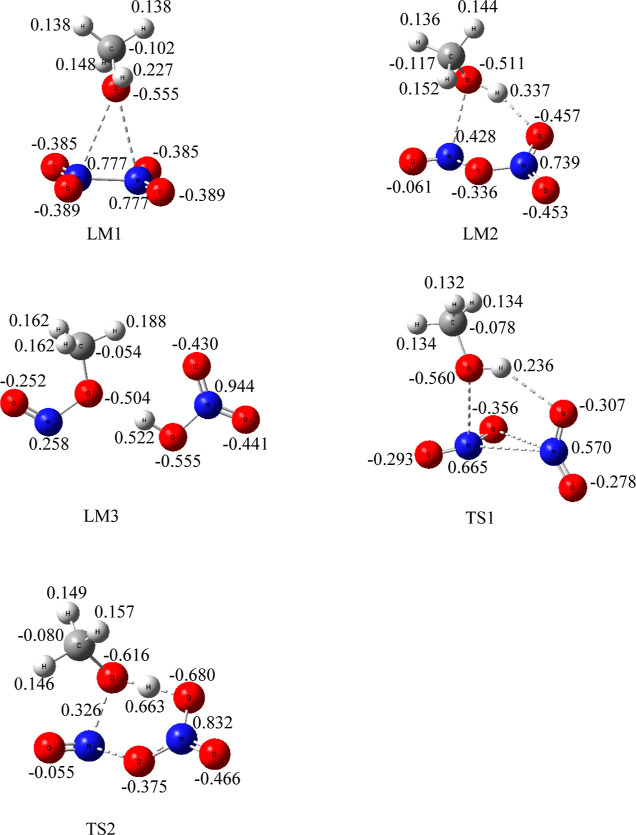 Figure 3
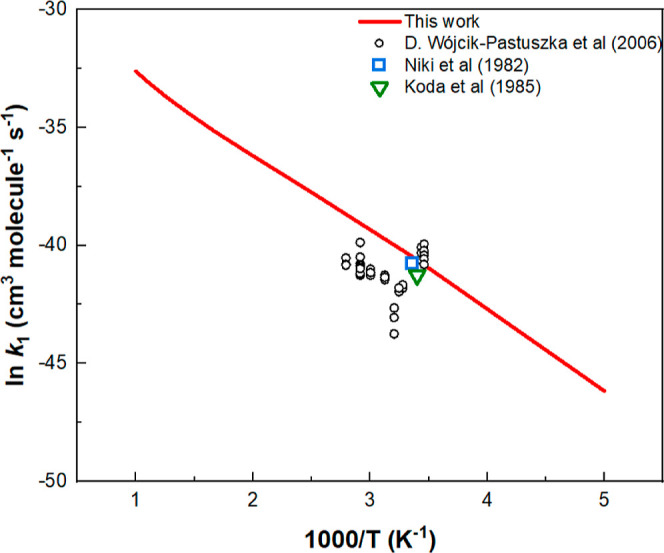 Figure 4
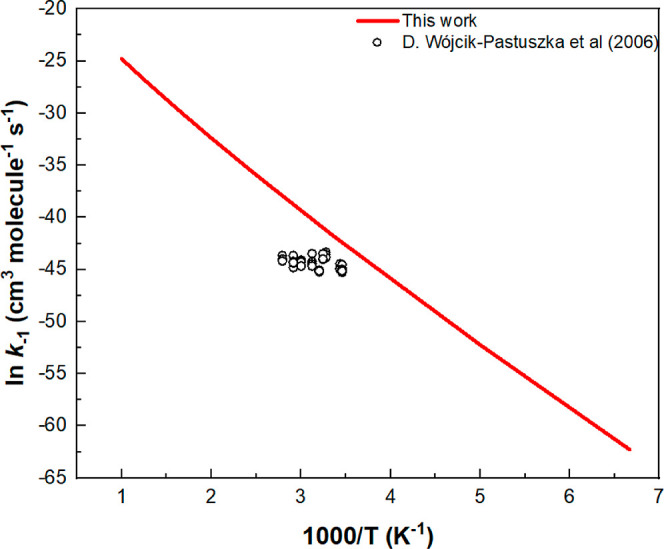 Figure 5
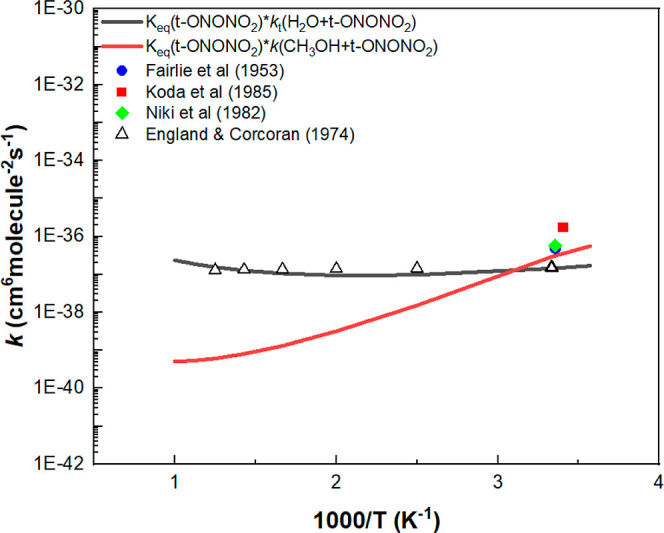 Figure 6
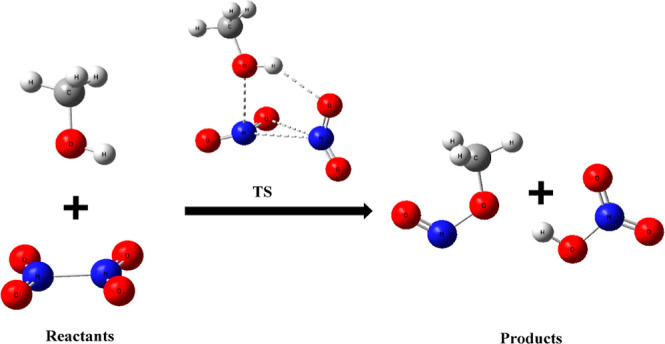 Figure 7
 Figure 8
 Figure 9
 Figure 10
 Figure 11
 Figure 12
 Figure 13
 Figure 14
 Figure 15
 Figure 16
 Figure 17
 Figure 18
Peer Reviews
No public reviews on file for this paper yet. If you reviewed it on a platform where reviews are public (OpenReview, ICLR, NeurIPS, ICML), you can paste yours below so the community can read it here.
Videos
No videos yet. Explain this paper in a talk, walkthrough, or lecture? Add one.
Taxonomy
TopicsAtmospheric chemistry and aerosols · Atmospheric Ozone and Climate · Catalytic Processes in Materials Science