Outcomes of Rehabilitation Strategies for Pulmonary Atresia with Ventricular Septal Defect: A Single Center’s Experience
Shuai Zhang, Jianrui Ma, Xiang Liu, Tong Tan, Wen Xie, Haozhong Liu, Huimin Wang, Hailong Qiu, Shusheng Wen, Jimei Chen, Jian Zhuang, Haiyun Yuan, Jianzheng Cen

TL;DR
This study compares two surgical techniques for treating a heart defect and finds one leads to better long-term repair rates.
Contribution
The study provides new evidence that RV-PA connection is superior to systemic-to-pulmonary shunt for initial treatment of PA/VSD.
Findings
RV-PA connection resulted in higher PaO2 and lower RBC, hemoglobin, and hematocrit levels.
RV-PA connection had a significantly higher 5-year complete repair rate (56%) compared to systemic-to-pulmonary shunt (36%).
Survival rates were similar between the two groups, but RV-PA connection was an independent predictor for complete repair.
Abstract
Both systemic-to-pulmonary shunt and right ventricle-pulmonary artery (RV-PA) connection are extensively applied to initially rehabilitate the pulmonary artery in pulmonary atresia with the ventricle septal defect (PA/VSD). However, which of these options is the most ideal for promoting pulmonary artery development and improving outcomes remains controversial. A total of 109 PA/VSD patients undergoing initial rehabilitative surgery at Guangdong Provincial People’s Hospital from 2010 to 2020 were enrolled in this study. A series of clinical data were collected to compare the perioperative and postoperative outcomes between systemic-to-pulmonary and RV-PA connection. The mean duration of follow-up was 61.1 months in the systemic-to-pulmonary shunt group and 70.3 months in the RV-PA connection group (p > 0.05). The RV-PA connection technique resulted in a significantly…
Genes, proteins, chemicals, diseases, species, mutations and cell lines named across the full text — each resolved to its canonical identifier and authoritative record.
Click any figure to enlarge with its caption.
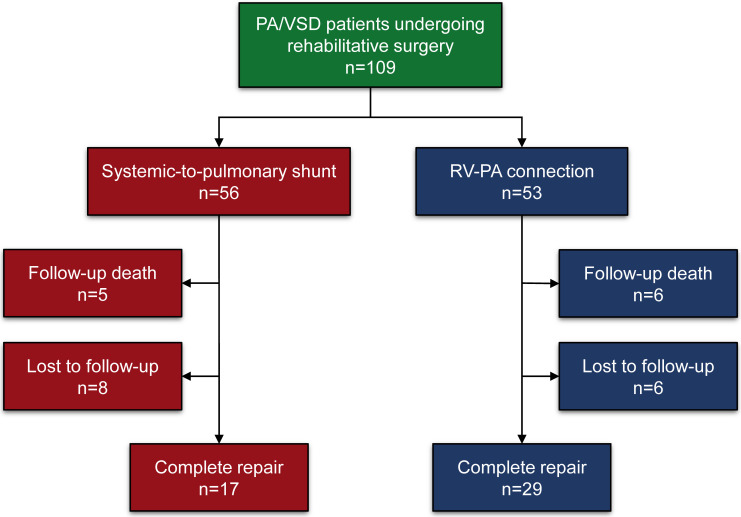 Figure 1
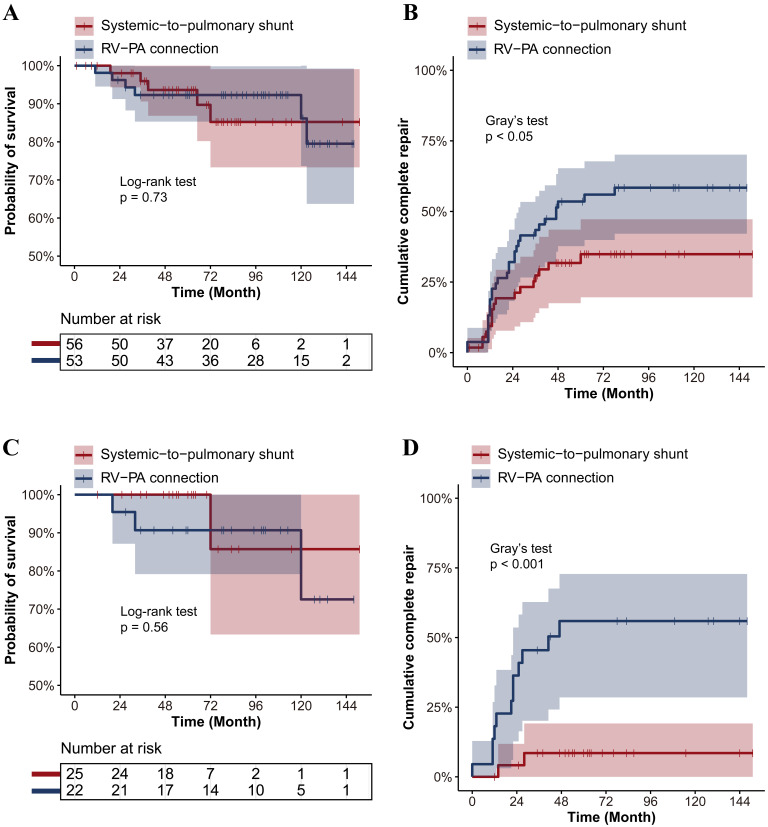 Figure 2
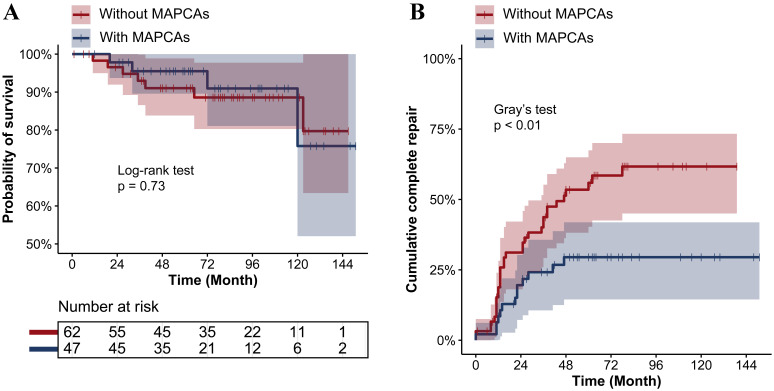 Figure 3
Peer Reviews
No public reviews on file for this paper yet. If you reviewed it on a platform where reviews are public (OpenReview, ICLR, NeurIPS, ICML), you can paste yours below so the community can read it here.
Videos
No videos yet. Explain this paper in a talk, walkthrough, or lecture? Add one.
Taxonomy
TopicsCongenital Heart Disease Studies · Congenital Diaphragmatic Hernia Studies · Tracheal and airway disorders