Prediction of Motor Recovery Using Diffusion Tensor Imaging and Regional Cerebral Blood Flow in Postoperative Brain Tumors
Chie Matsuura, Yuki Sakaeyama, Mitsuyoshi Abe, Masataka Mikai, Shuhei Kubota, Yutaka Fuchinoue, Sayaka Terazono, Kosuke Kondo, Naoyuki Harada, Nobuo Sugo

TL;DR
This study shows that brain imaging techniques can help predict whether patients with brain tumors will recover motor function after surgery.
Contribution
The study introduces a novel approach combining DTI parameters and rCBF to predict postoperative motor recovery in brain tumor patients.
Findings
DTI parameters and rCBF at the CST differ significantly between groups with and without motor recovery.
Higher rFA and lower rMD/rRD at the internal capsule correlate with better postoperative motor outcomes.
Increased rCBF at multiple CST regions is associated with motor recovery.
Abstract
Objective: To determine whether diffusion tensor image (DTI) parameters and regional cerebral blood flow (rCBF) serve to preoperatively predict postoperative motor outcomes in patients with brain tumors. Methods: We included 81 patients with brain tumors who underwent surgical treatment. Motor function was assessed using the manual muscle test in the upper and lower limbs at admission and discharge. Fractional anisotropy (FA), mean diffusivity (MD), axial diffusivity (AD), radial diffusivity (RD), and their ratios (rFA, rMD, rAD, and rRD) were measured at the corona radiata, internal capsule, and cerebral peduncle of the corticospinal tract (CST). In addition, DTI and single photon emission computed tomography (SPECT) were synthesized to measure rCBF at the CST. Result: Both DTI parameters and rCBF at the CST in the preoperative motor weakness group significantly differed from those…
Genes, proteins, chemicals, diseases, species, mutations and cell lines named across the full text — each resolved to its canonical identifier and authoritative record.
Click any figure to enlarge with its caption.
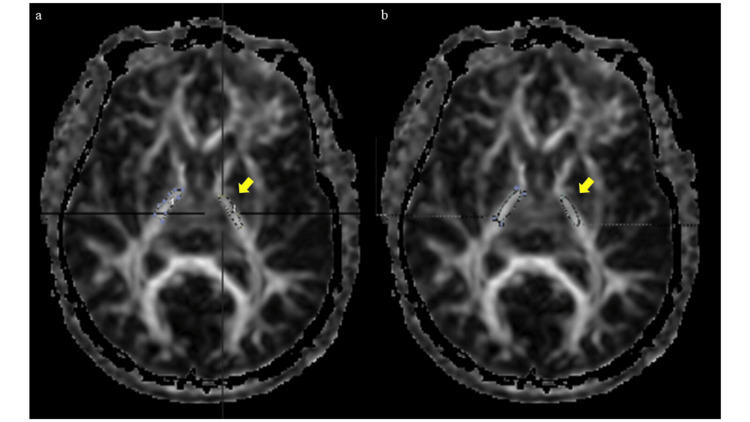 Figure 1
Peer Reviews
No public reviews on file for this paper yet. If you reviewed it on a platform where reviews are public (OpenReview, ICLR, NeurIPS, ICML), you can paste yours below so the community can read it here.
Videos
No videos yet. Explain this paper in a talk, walkthrough, or lecture? Add one.
Taxonomy
TopicsAdvanced Neuroimaging Techniques and Applications · Advanced MRI Techniques and Applications · MRI in cancer diagnosis