The relationship between serum transglutaminase-2 levels and the severity of chronic spontaneous urticaria
Omneya M. Zeyada, Zeinab A. Ashour, Omar A. Lotfy, Mayada M. Mahmoud

TL;DR
This study found that higher levels of an enzyme called transglutaminase-2 in the blood are linked to more severe symptoms in patients with chronic spontaneous urticaria.
Contribution
This is the first study in Egypt to investigate the relationship between serum transglutaminase-2 levels and the severity of chronic spontaneous urticaria.
Findings
Serum transglutaminase-2 levels were significantly higher in patients with chronic spontaneous urticaria compared to healthy controls.
Higher transglutaminase-2 levels correlated with more severe disease as measured by the urticaria activity score.
Serum transglutaminase-2 accurately classified patients into mild, moderate, and severe disease subgroups with high sensitivity and specificity.
Abstract
Chronic spontaneous urticaria (CSU) is an immunological disease that is depicted by high prevalence and eminent burden for patients and society that is attributable to the arbitrary nature of symptoms and inconsistent tools for assessment of activity and severity. Transglutaminase-2 (TG2) is a posttranslational enzyme that is pervasively expressed in many cells and tissue types including mast cells. It has various biological functions, and its role in allergic disorders has been highlighted and delineated through several postulated mechanisms. This case–control study aimed at determining the relationship between serum levels TG2 and severity of CSU. To the best of our knowledge, this is the first study in Egypt to determine the relationship between serum TG2 and severity of CSU. We enrolled 60 adult patients with confirmed diagnosis of CSU. According to urticaria activity score (UAS),…
Genes, proteins, chemicals, diseases, species, mutations and cell lines named across the full text — each resolved to its canonical identifier and authoritative record.
Click any figure to enlarge with its caption.
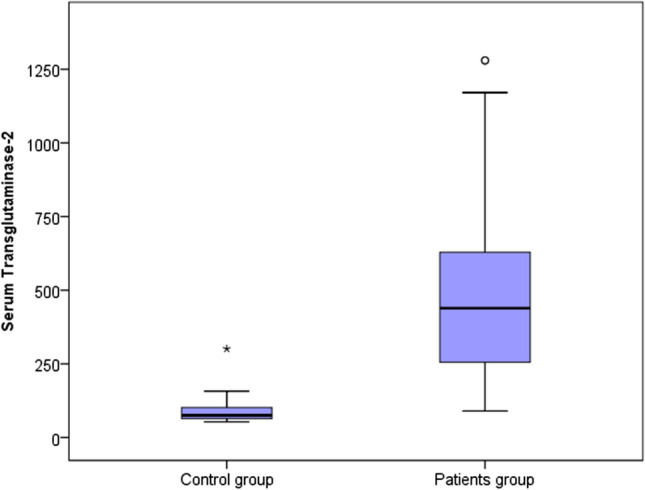 Figure 1
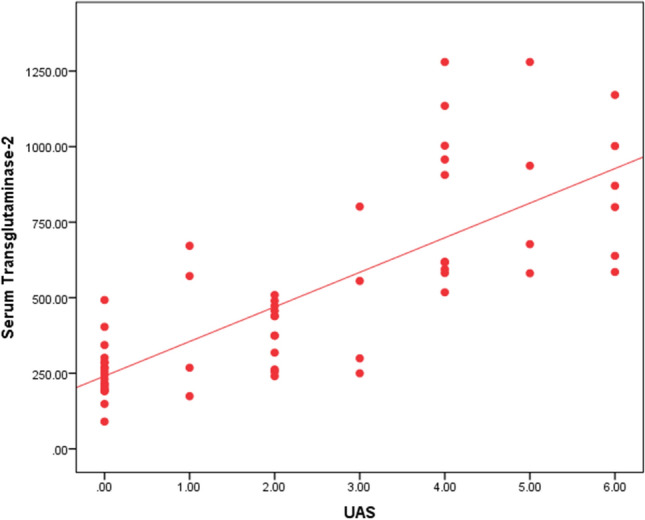 Figure 2
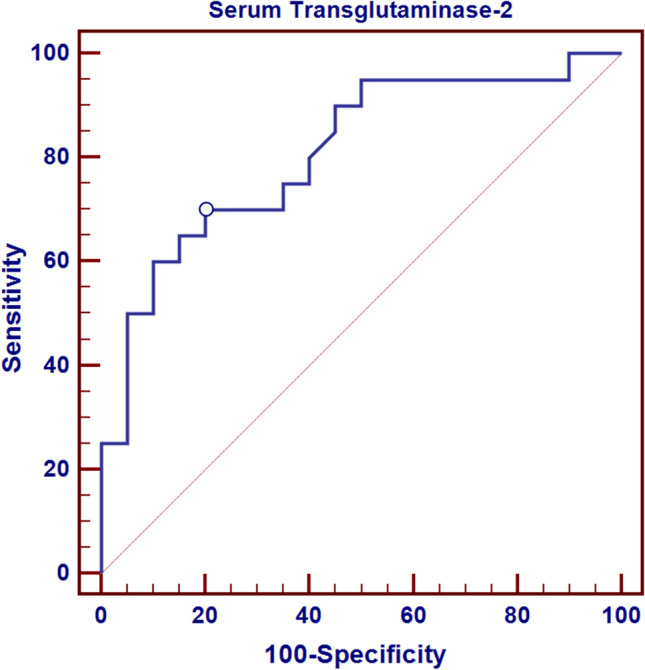 Figure 3
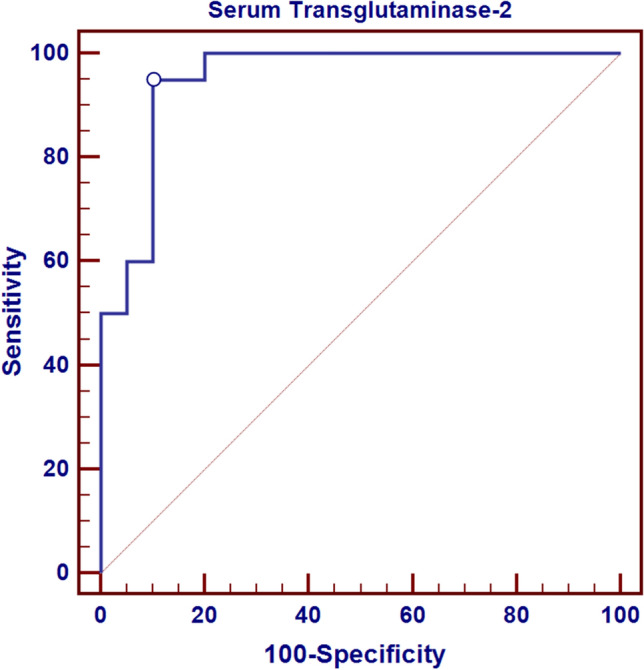 Figure 4
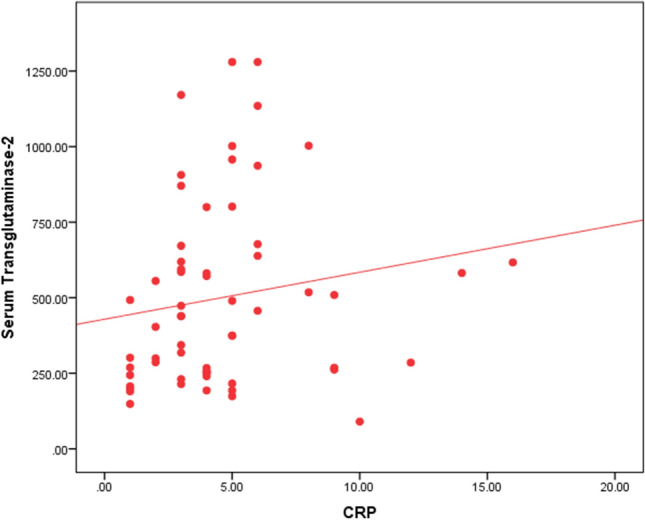 Figure 5
Peer Reviews
No public reviews on file for this paper yet. If you reviewed it on a platform where reviews are public (OpenReview, ICLR, NeurIPS, ICML), you can paste yours below so the community can read it here.
Videos
No videos yet. Explain this paper in a talk, walkthrough, or lecture? Add one.
Taxonomy
TopicsUrticaria and Related Conditions · Autoimmune Bullous Skin Diseases · Coagulation, Bradykinin, Polyphosphates, and Angioedema