Testing spatial transferability of species distribution models reveals differing habitat preferences for an endangered delphinid (Cephalorhynchus hectori) in Aotearoa, New Zealand
Steph Bennington, Peter W. Dillingham, Scott D. Bourke, Stephen M. Dawson, Elisabeth Slooten, William J. Rayment

TL;DR
This study shows that habitat preferences of Hector's dolphins vary by region, so conservation models need local data to be accurate.
Contribution
The study demonstrates that a one-size-fits-all model for species distribution is not suitable for Hector's dolphins due to differing habitat preferences.
Findings
SDMs for two dolphin populations performed well locally but poorly when transferred to other areas.
The model for the Timaru population performed poorly both locally and when transferred.
Combining data from different areas improved model performance only when low and high density regions were combined.
Abstract
Species distribution models (SDMs) can be used to predict distributions in novel times or space (termed transferability) and fill knowledge gaps for areas that are data poor. In conservation, this can be used to determine the extent of spatial protection required. To understand how well a model transfers spatially, it needs to be independently tested, using data from novel habitats. Here, we test the transferability of SDMs for Hector's dolphin (Cephalorhynchus hectori), a culturally important (taonga) and endangered, coastal delphinid, endemic to Aotearoa New Zealand. We collected summer distribution data from three populations from 2021 to 2023. Using Generalised Additive Models, we built presence/absence SDMs for each population and validated the predictive ability of the top models (with TSS and AUC). Then, we tested the transferability of each top model by predicting the…
Genes, proteins, chemicals, diseases, species, mutations and cell lines named across the full text — each resolved to its canonical identifier and authoritative record.
Click any figure to enlarge with its caption.
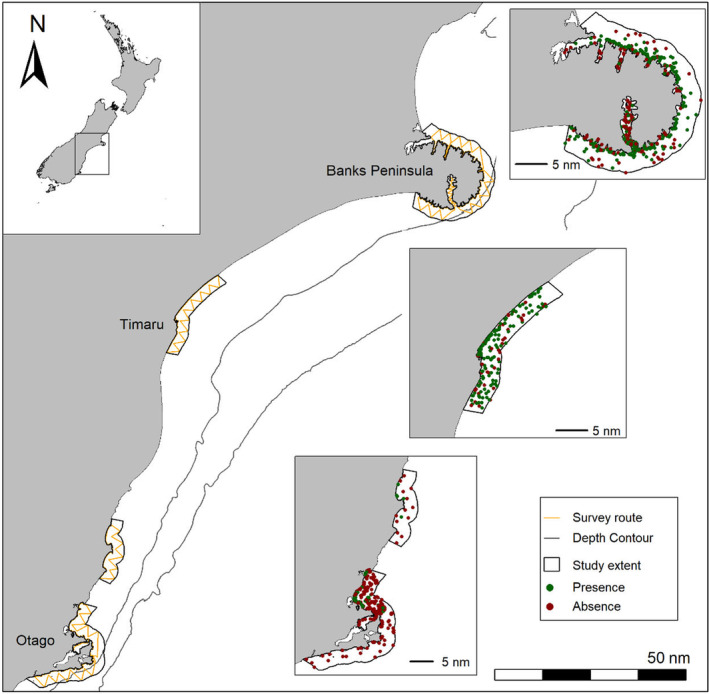 Figure 1
 Figure 2
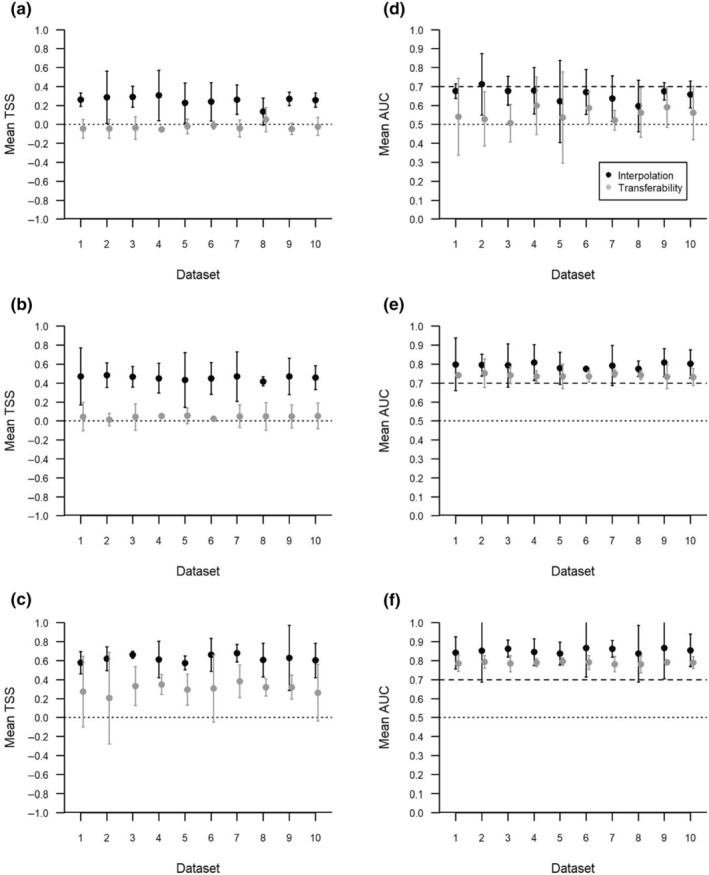 Figure 3
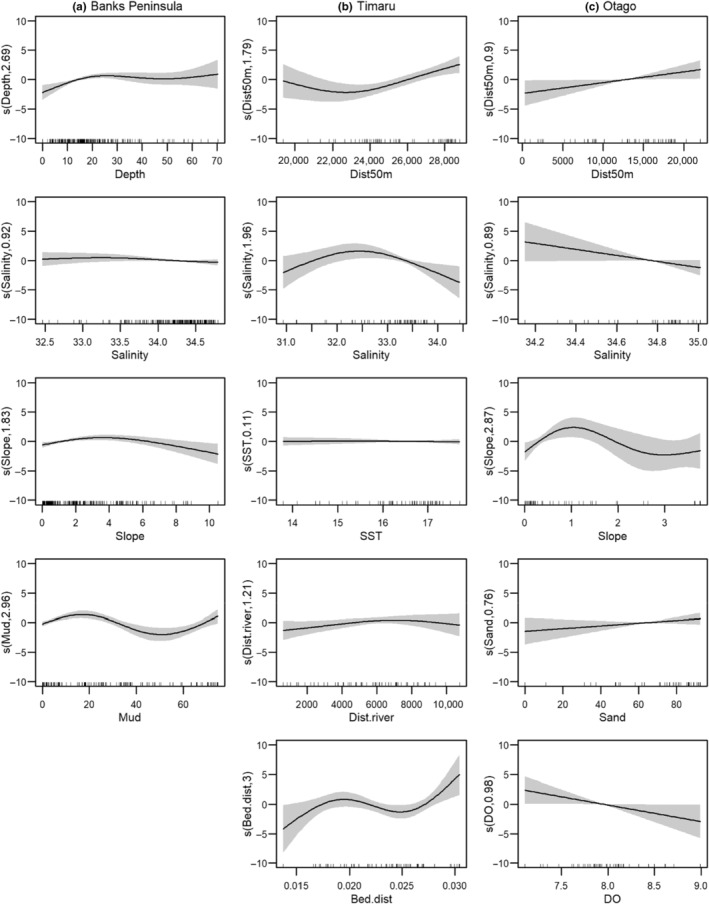 Figure 4
 Figure 5
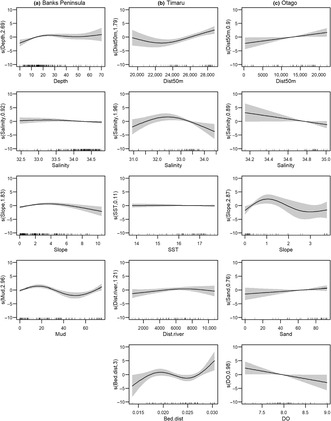 Figure 6
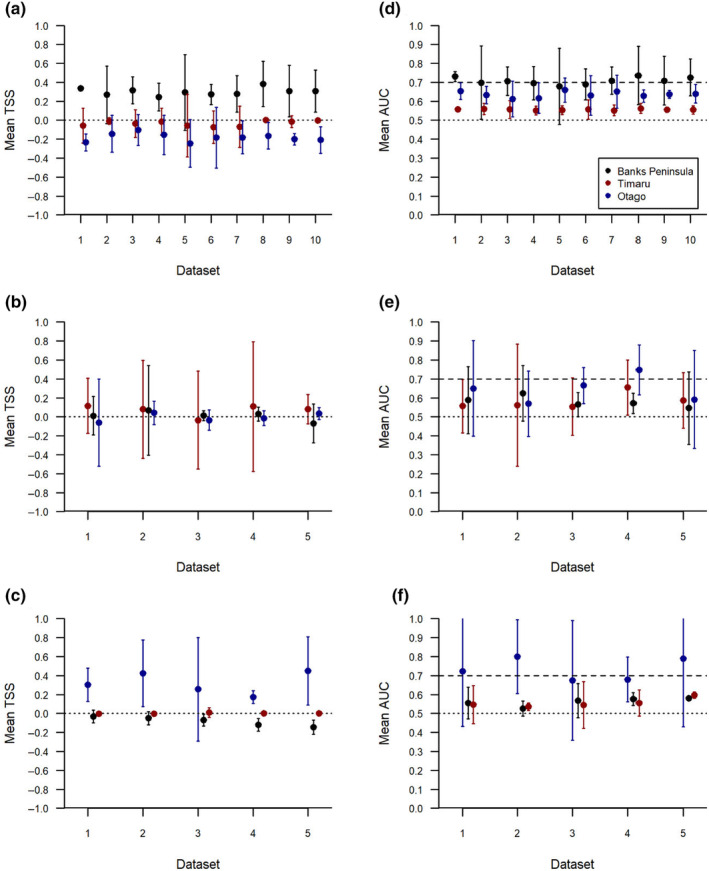 Figure 7
Peer Reviews
No public reviews on file for this paper yet. If you reviewed it on a platform where reviews are public (OpenReview, ICLR, NeurIPS, ICML), you can paste yours below so the community can read it here.
Videos
No videos yet. Explain this paper in a talk, walkthrough, or lecture? Add one.
Taxonomy
TopicsLinguistics and Language Studies · Linguistics and Education Research · Literature, Culture, and Criticism