Nematocida displodere mechanosensitive ion channel of small conductance 2 assembles into a unique 6-channel super-structure in vitro
Alexandra Berg, Ronnie P.-A. Berntsson, Jonas Barandun, Israel Silman, Israel Silman, Israel Silman

TL;DR
This paper reveals a unique structure of a mechanosensitive ion channel from a microsporidian pathogen, which forms a compact, six-channel superstructure.
Contribution
The study presents the first cryo-EM structure of MscS2 from Nematocida displodere, revealing a novel 6-channel superstructure.
Findings
MscS2 assembles into a unique superstructure with six heptameric channels.
The structure resembles an asymmetric, flexible six-way cross joint.
MscS2 retains a heptameric membrane channel despite extreme compaction.
Abstract
Mechanosensitive ion channels play an essential role in reacting to environmental signals and sustaining cell integrity by facilitating ion flux across membranes. For obligate intracellular pathogens like microsporidia, adapting to changes in the host environment is crucial for survival and propagation. Despite representing a eukaryote of extreme genome reduction, microsporidia have expanded the gene family of mechanosensitive ion channels of small conductance (mscS) through repeated gene duplication and horizontal gene transfer. All microsporidian genomes characterized to date contain mscS genes of both eukaryotic and bacterial origin. Here, we investigated the cryo-electron microscopy structure of the bacterially derived mechanosensitive ion channel of small conductance 2 (MscS2) from Nematocida displodere, an intracellular pathogen of Caenorhabditis elegans. MscS2 is the most compact…
Genes, proteins, chemicals, diseases, species, mutations and cell lines named across the full text — each resolved to its canonical identifier and authoritative record.
Click any figure to enlarge with its caption.
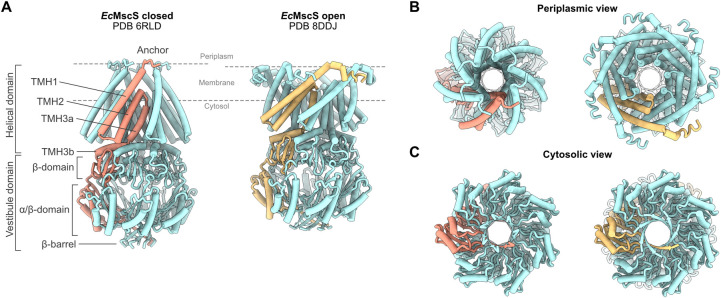 Figure 1
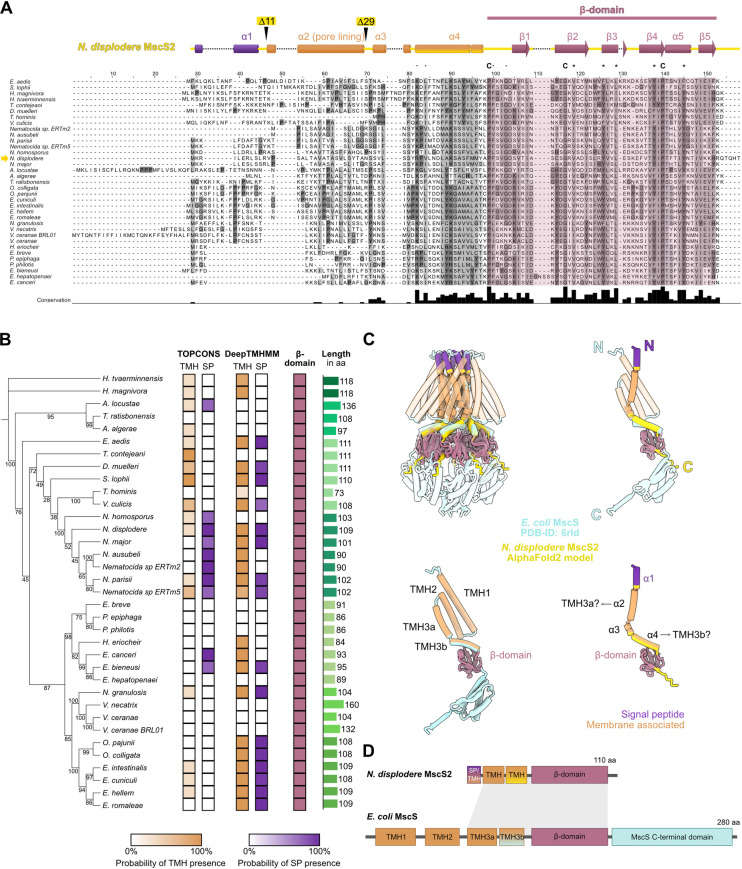 Figure 2
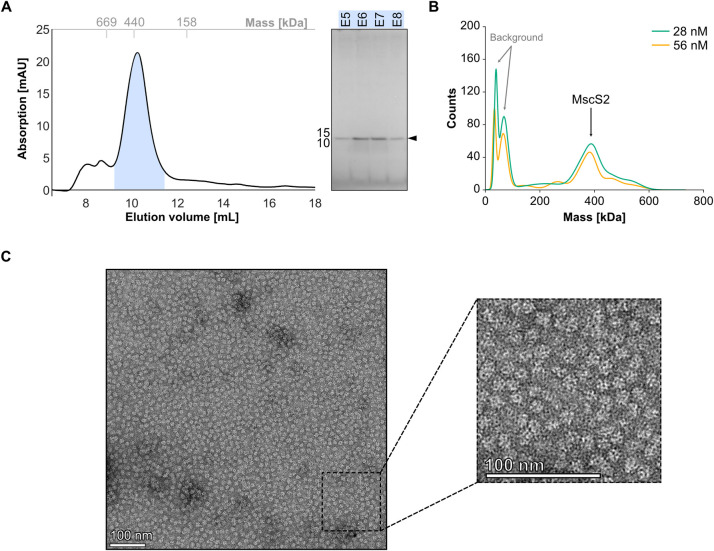 Figure 3
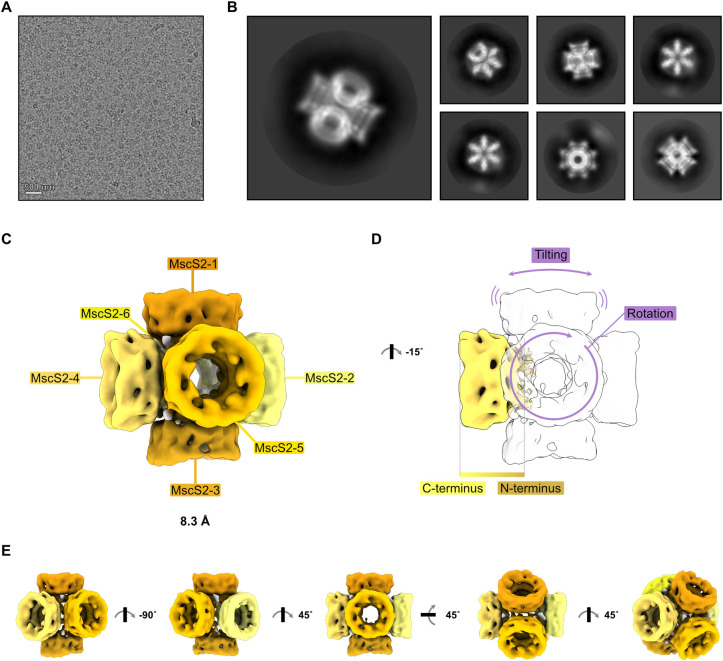 Figure 4
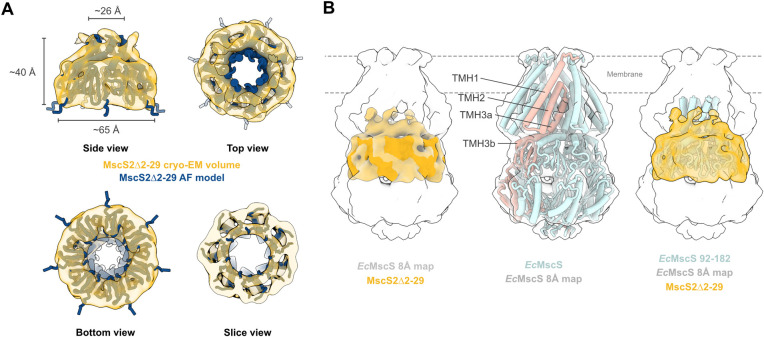 Figure 5
Peer Reviews
No public reviews on file for this paper yet. If you reviewed it on a platform where reviews are public (OpenReview, ICLR, NeurIPS, ICML), you can paste yours below so the community can read it here.
Videos
No videos yet. Explain this paper in a talk, walkthrough, or lecture? Add one.
Taxonomy
TopicsRadiation Detection and Scintillator Technologies · Nuclear Physics and Applications · Medical Imaging Techniques and Applications