Accurate Prediction of Three-Dimensional Humanoid Avatars for Anthropometric Modeling
Steven Heymsfield, Cassidy McCarthy, Michael Wong, Jasmine Brown, Sophia Ramirez, Shengping Yang, Jonathan Bennett, John Shepherd

TL;DR
This paper shows that 3D human avatars predicted using simple measurements like age, weight, and body fat can accurately represent body dimensions, matching those from detailed 3D scans.
Contribution
The novel contribution is demonstrating that manifold regression can predict accurate 3D avatars using accessible clinical data without requiring 3D scanning.
Findings
High correlations (R² 0.75–0.99) between predicted and ground-truth anthropometric measurements.
Concordance correlation coefficients ranged from 0.80–0.99 with small bias in most measurements.
Mean waist-to-hip ratio predictions were non-significantly different from actual measurements.
Abstract
To evaluate the hypothesis that anthropometric dimensions derived from a person’s manifold-regression predicted three-dimensional (3D) humanoid avatar are accurate when compared to their actual circumference, volume, and surface area measurements acquired with a ground-truth 3D optical imaging method. Avatars predicted using this approach, if accurate with respect to anthropometric dimensions, can serve multiple purposes including patient metabolic disease risk stratification in clinical settings. Manifold regression 3D avatar prediction equations were developed on a sample of 570 adults who completed 3D optical scans, dual-energy X-ray absorptiometry (DXA), and bioimpedance analysis (BIA) evaluations. A new prospective sample of 84 adults had ground-truth measurements of 6 body circumferences, 7 volumes, and 7 surface areas with a 20-camera 3D reference scanner. 3D humanoid avatars…
Genes, proteins, chemicals, diseases, species, mutations and cell lines named across the full text — each resolved to its canonical identifier and authoritative record.
Click any figure to enlarge with its caption.
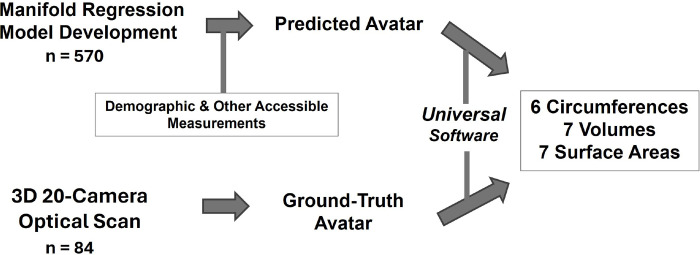 Figure 1
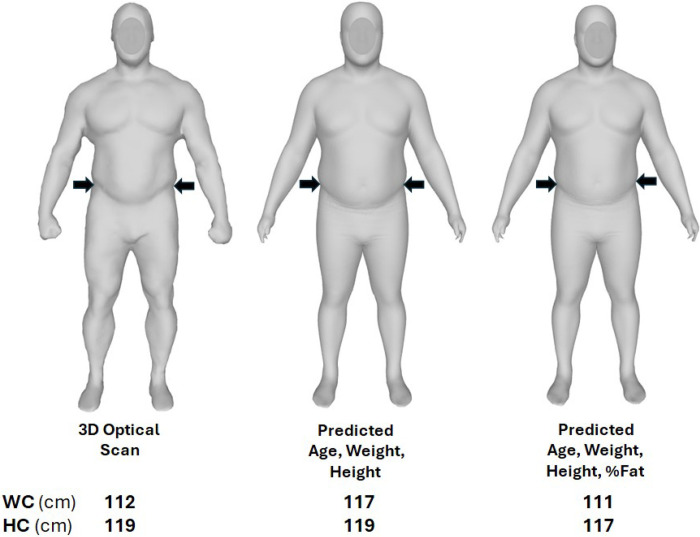 Figure 2
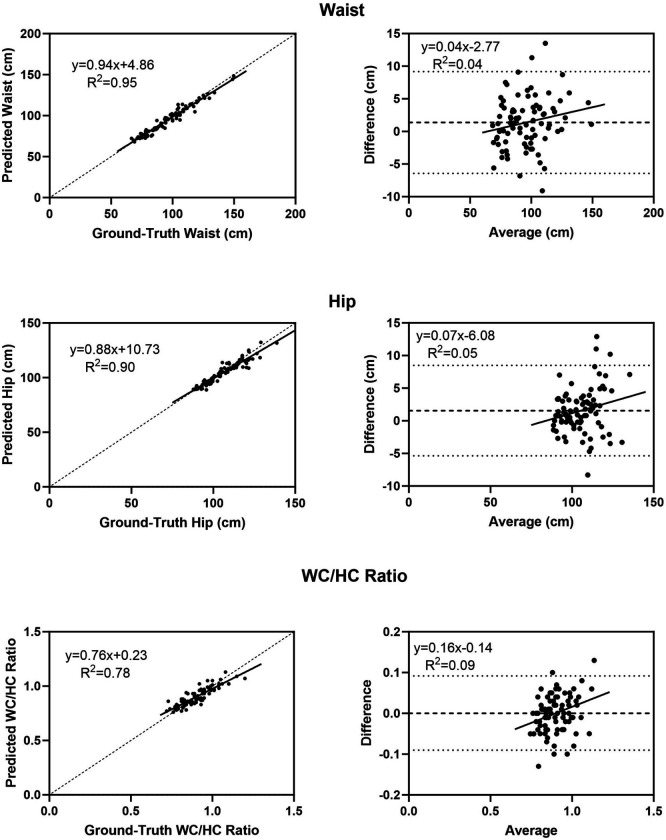 Figure 3
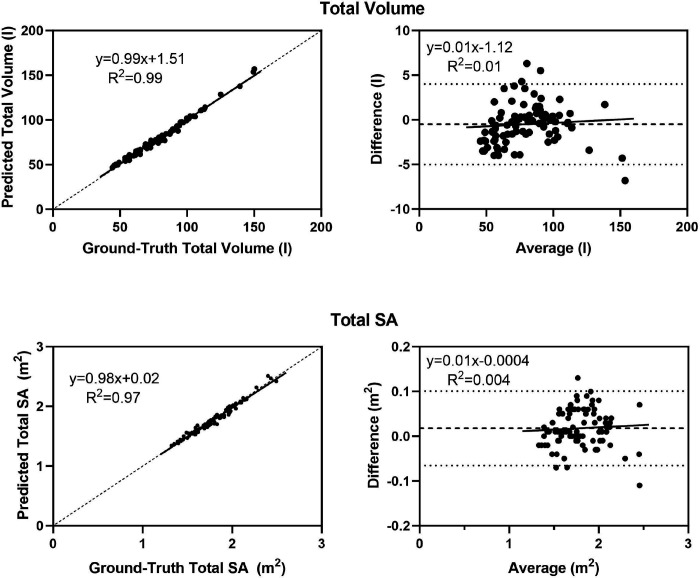 Figure 4
Peer Reviews
No public reviews on file for this paper yet. If you reviewed it on a platform where reviews are public (OpenReview, ICLR, NeurIPS, ICML), you can paste yours below so the community can read it here.
Videos
No videos yet. Explain this paper in a talk, walkthrough, or lecture? Add one.
Taxonomy
TopicsBody Composition Measurement Techniques · Thermoregulation and physiological responses · Nutrition and Health in Aging