On the detection of population heterogeneity in causation between two variables: Finite mixture modeling of data collected from twin pairs
Philip Vinh, Brad Verhulst, Conor V Dolan, Michael C Neale, Hermine HM Maes

TL;DR
This paper introduces a new method using finite mixture models to detect varying causal directions in twin data, which can help understand complex psychiatric comorbidities.
Contribution
The novel contribution is extending the Direction of Causation model to a mixture distribution model for detecting causal heterogeneity in twin data.
Findings
The mixCLPM model can detect heterogeneity in causal directions within twin data.
Simulations show the model's potential to accurately model varying causal directions.
This approach allows for individual-level likelihood estimation of causal directions.
Abstract
Causal inference is inherently complex, often dependent on key assumptions that are sometimes overlooked. One such assumption is the potential for unidirectional or bidirectional causality, while another is population homogeneity, which suggests that the causal direction between two variables remains consistent across the study sample. Discerning these processes requires meticulous data collection through an appropriate research design and the use of suitable software to define and fit alternative models. In psychiatry, the co-occurrence of different disorders is common and can stem from various origins. A patient diagnosed with two disorders might have one recognized as primary and the other as secondary, suggesting the existence of two types of comorbidity within the population. For example, in some individuals, depression might lead to substance use, while in others, substance use…
Genes, proteins, chemicals, diseases, species, mutations and cell lines named across the full text — each resolved to its canonical identifier and authoritative record.
Click any figure to enlarge with its caption.
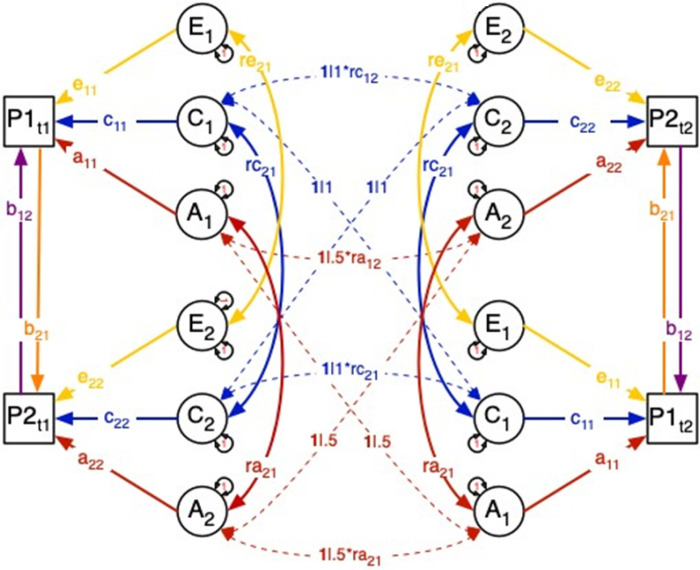 Figure 1
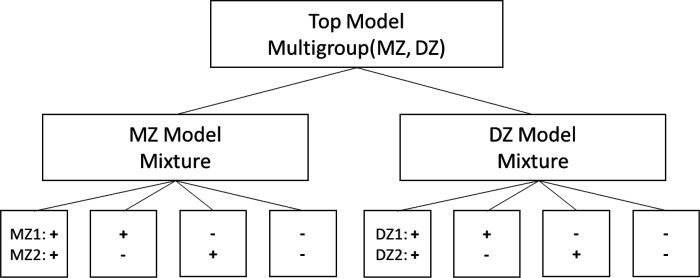 Figure 2
Peer Reviews
No public reviews on file for this paper yet. If you reviewed it on a platform where reviews are public (OpenReview, ICLR, NeurIPS, ICML), you can paste yours below so the community can read it here.
Videos
No videos yet. Explain this paper in a talk, walkthrough, or lecture? Add one.
Taxonomy
TopicsAdvanced Causal Inference Techniques · Mental Health Research Topics · Cognitive Abilities and Testing