Aggressive Prostate Cancer After a 14-Year Gonadotropin Therapy: A Case Report
Fumie Yoshioka, Hiroshi Kiuchi, Testuji Soda, Akira Tsujimura, Kenichiro Sekii

TL;DR
A man with low testosterone developed aggressive prostate cancer decades after hormone therapy, highlighting the need for long-term PSA monitoring.
Contribution
This case report highlights the potential for aggressive prostate cancer development despite long-term low PSA levels during hormone therapy.
Findings
A patient with hypogonadotropic hypogonadism developed advanced prostate cancer 20 years after starting gonadotropin therapy.
PSA levels initially remained low but later increased sharply, leading to a diagnosis of metastatic prostate cancer.
Treatment with enzalutamide and radium-223 chloride reduced bone metastases and lowered PSA levels.
Abstract
A 40-year-old man with a four-year history of infertility was referred to our department. The semen analysis revealed low motility, and the blood test showed low luteinizing hormone levels. Gonadotropin therapy was initiated upon the diagnosis of hypogonadotropic hypogonadism. During treatment, serum prostate-specific antigen (PSA) was consistently low (1.4-1.9 ng/mL). Fourteen years after the start of treatment, at 54 years old, PSA was abruptly elevated (3.5 ng/mL), and gonadotropin therapy was discontinued due to possible prostate cancer. After cessation, PSA decreased temporarily but then gradually increased to 7.6 ng/mL, but the patient requested PSA follow-up. Twenty years after discontinuation of gonadotropin therapy, PSA increased sharply to 65.9 ng/mL. A prostate biopsy revealed adenocarcinoma with a Gleason score of 4+5. A bone scan showed multiple bone metastases, leading to…
Genes, proteins, chemicals, diseases, species, mutations and cell lines named across the full text — each resolved to its canonical identifier and authoritative record.
Click any figure to enlarge with its caption.
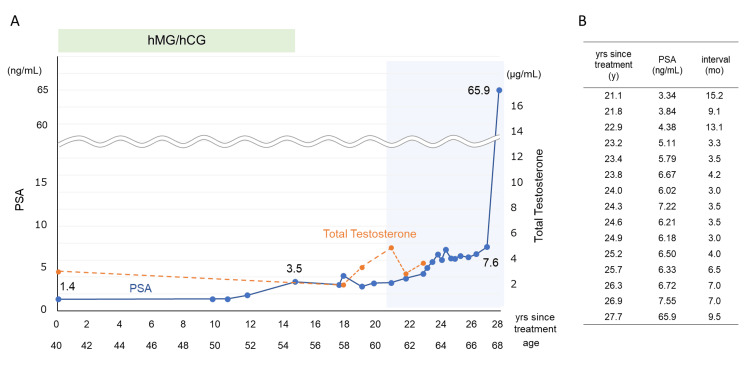 Figure 1
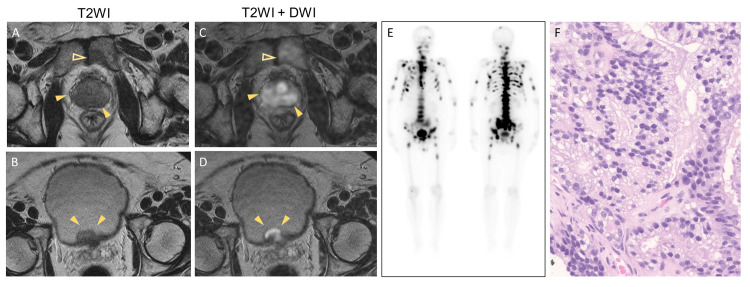 Figure 2
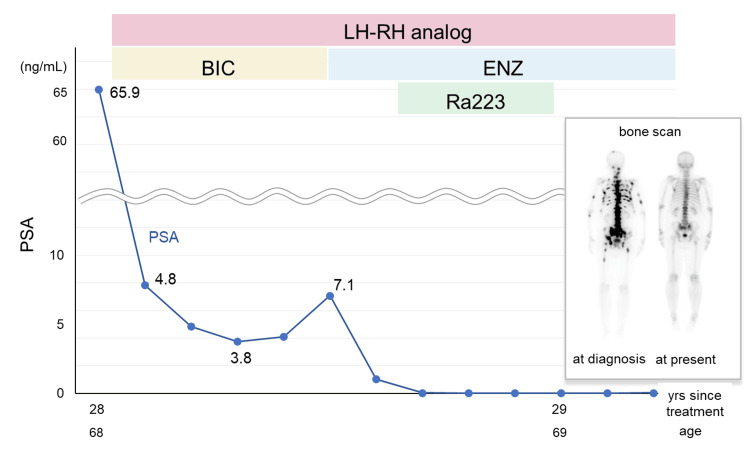 Figure 3
Peer Reviews
No public reviews on file for this paper yet. If you reviewed it on a platform where reviews are public (OpenReview, ICLR, NeurIPS, ICML), you can paste yours below so the community can read it here.
Videos
No videos yet. Explain this paper in a talk, walkthrough, or lecture? Add one.
Taxonomy
TopicsHormonal and reproductive studies · Prostate Cancer Treatment and Research · Sexual Differentiation and Disorders