University students’ preferences of learning modes post COVID-19-associated lockdowns: In-person, online, and blended
Kosha J. Mehta, Javier Aula-Blasco, Julia Mantaj

TL;DR
This study explores university students' preferences for in-person, online, and blended learning modes after the pandemic, finding that discipline and study level influence preferences more than gender.
Contribution
The study identifies how discipline and study level influence learning mode preferences, challenging assumptions about gender-based differences.
Findings
In-person mode was the most preferred overall, with Bioscience and Sports & Exercise Science students showing the highest preference.
Blended learning was preferred by Language Education, Computer Science, and Psychology students.
Study level and discipline, not biological sex, were significant predictors of learning mode preferences.
Abstract
Online teaching accelerated during COVID-19-associated lockdowns. At that time, it was assumed that university students wanted to revert to in-person sessions at the earliest opportunity. However, when in-person sessions were re-introduced, student attendance was not as high as expected. Therefore, we examined students’ preferences of learning modes. Students (n = 968) from different UK universities, degree cohorts, study levels and biological sexes were given four learning-mode options: Face-to-face sessions for lectures and tutorials (in-person), Live online sessions for lectures and tutorials (Online-synchronous), Pre-recorded lectures and live online tutorials (Online-mixed-asynchronous-synchronous), and Pre-recorded lectures and face-to-face tutorials (Blended: in-person and online-asynchronous). Students ranked these options as per their preference via an online anonymous survey.…
Genes, proteins, chemicals, diseases, species, mutations and cell lines named across the full text — each resolved to its canonical identifier and authoritative record.
Click any figure to enlarge with its caption.
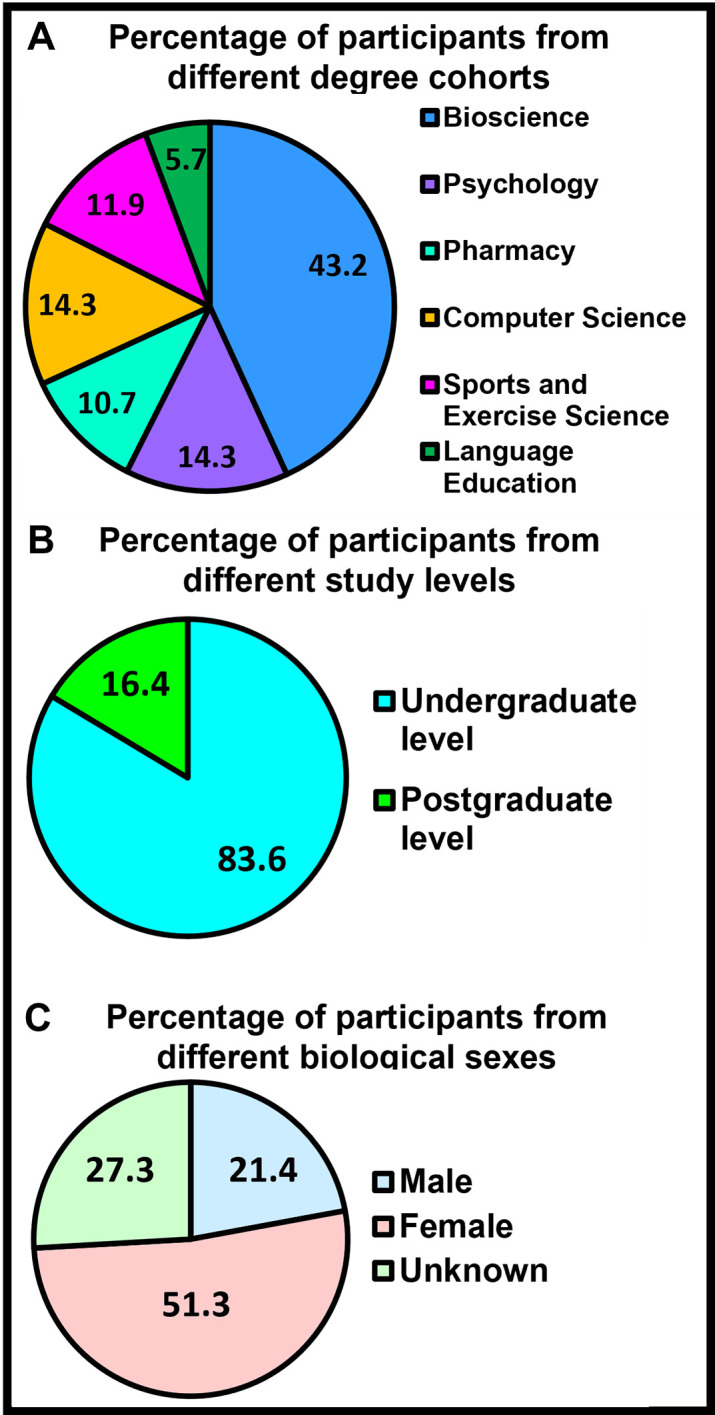 Figure 1
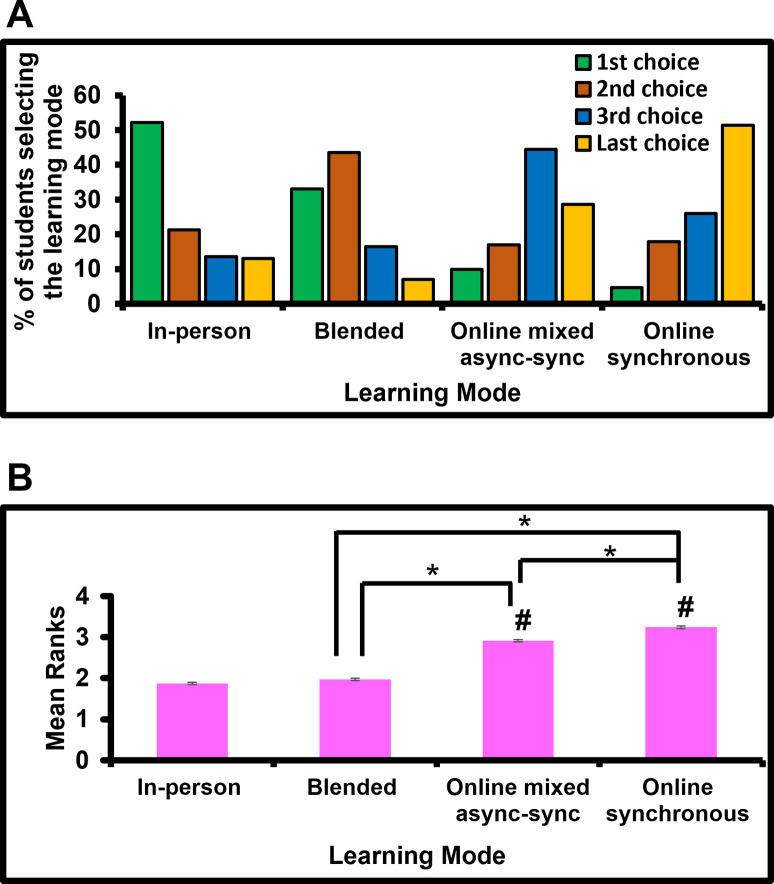 Figure 2
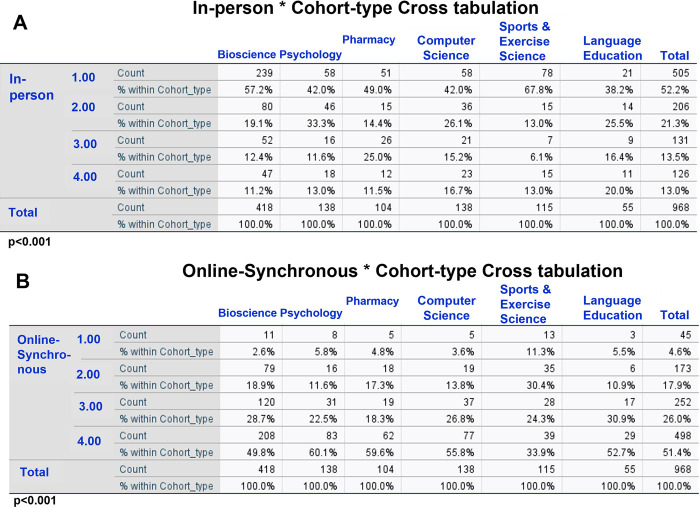 Figure 3
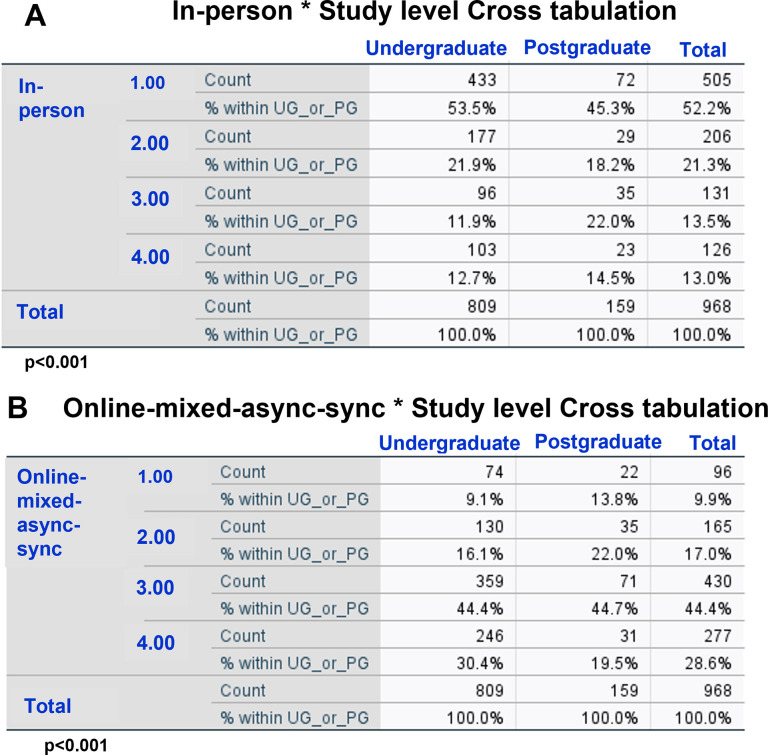 Figure 4
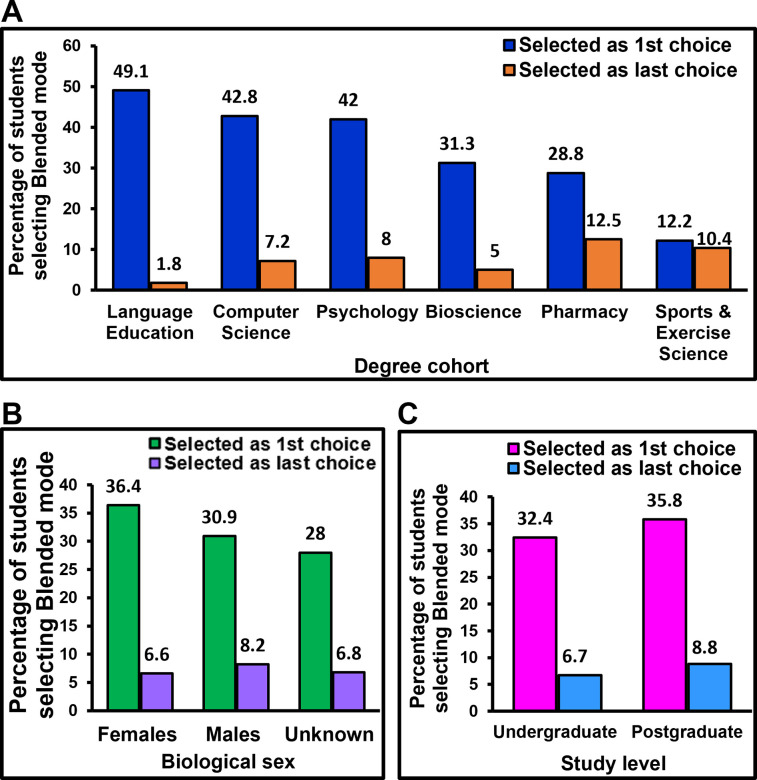 Figure 5
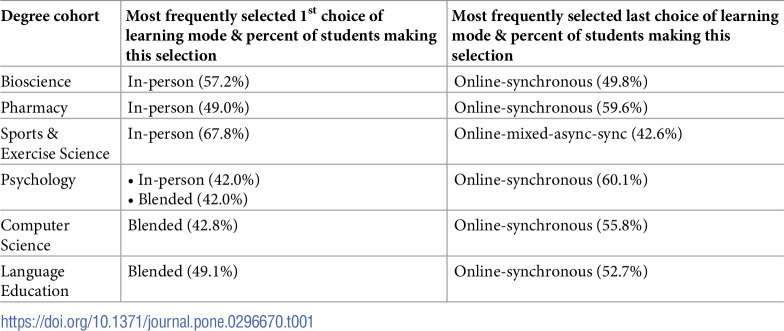 Figure 6
Peer Reviews
No public reviews on file for this paper yet. If you reviewed it on a platform where reviews are public (OpenReview, ICLR, NeurIPS, ICML), you can paste yours below so the community can read it here.
Videos
No videos yet. Explain this paper in a talk, walkthrough, or lecture? Add one.
Taxonomy
TopicsInnovations in Educational Methods · COVID-19 and Mental Health · Innovative Teaching Methods