High prevalence of ALPK3 premature terminating variants in Korean hypertrophic cardiomyopathy patients
Seung Woo Ryu, Won Chan Jeong, Geu Ru Hong, Jung Sun Cho, Soo Yong Lee, Hyungseop Kim, Jeong Yoon Jang, Sun Hwa Lee, Dae-Hwan Bae, Jae Yeong Cho, Ji Hee Kim, Kyung-Hee Kim, Jang Won Son, Beomman Han, Go Hun Seo, Hane Lee

TL;DR
This study found that a specific genetic variant in ALPK3 is strongly associated with hypertrophic cardiomyopathy in Korean patients.
Contribution
The study confirms the association of ALPK3 premature terminating variants with hypertrophic cardiomyopathy in a Korean population.
Findings
Monoallelic PTVs in ALPK3 are significantly enriched in Korean HCMP patients.
The odds ratio score for ALPK3 PTVs in Korean HCMP patients is 10–21.
ALPK3 PTV carriers are suggested as a risk group for developing HCMP.
Abstract
The alpha-protein kinase 3 (ALPK3) gene (OMIM: 617608) is associated with autosomal recessive familial hypertrophic cardiomyopathy-27 (CMH27, OMIM: 618052). Recently, several studies have shown that monoallelic premature terminating variants (PTVs) in ALPK3 are associated with adult-onset autosomal dominant hypertrophic cardiomyopathy (HCMP). However, these studies were performed on patient cohorts mainly from European Caucasian backgrounds. To determine if this finding is replicated in the Korean HCMP cohort, we evaluated 2,366 Korean patients with non-syndromic HCMP using exome sequencing and compared the cohort dataset with three independent population databases. We observed that monoallelic PTVs in ALPK3 were also significantly enriched in Korean patients with HCMP with an odds ratio score of 10–21. We suggest that ALPK3 PTV carriers be considered a risk group for developing HCMP…
Genes, proteins, chemicals, diseases, species, mutations and cell lines named across the full text — each resolved to its canonical identifier and authoritative record.
Click any figure to enlarge with its caption.
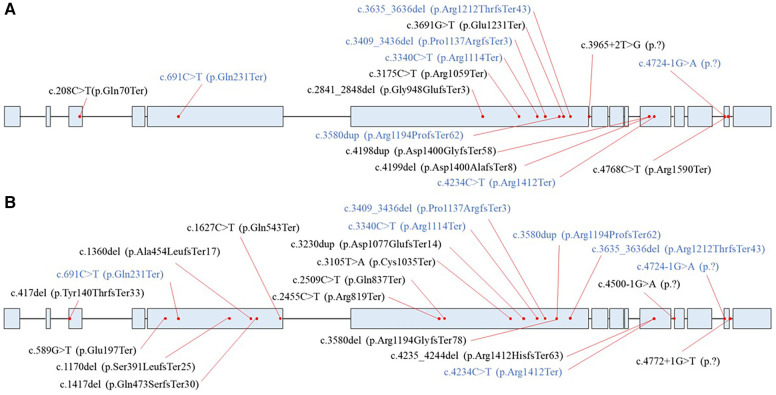 Figure 1
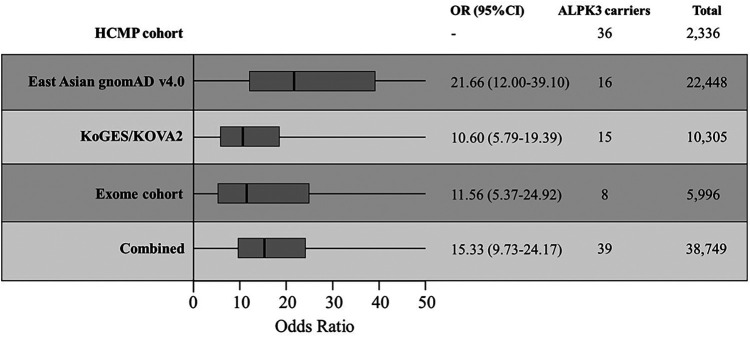 Figure 2
Peer Reviews
No public reviews on file for this paper yet. If you reviewed it on a platform where reviews are public (OpenReview, ICLR, NeurIPS, ICML), you can paste yours below so the community can read it here.
Videos
No videos yet. Explain this paper in a talk, walkthrough, or lecture? Add one.
Taxonomy
TopicsUrbanism, Landscape, and Tourism Studies