Similar Quality of Visual Working Memory Representations between Negative and Positive Attentional Templates
Matthieu Chidharom, Mahsa Zafarmand, Nancy B. Carlisle

TL;DR
This study shows that negative and positive attentional templates are similarly represented in visual working memory, despite their different effects on attention.
Contribution
The study reveals that the quality of visual working memory representations is similar for negative and positive attentional templates.
Findings
Participants showed no significant difference in memory precision between positive and negative cues.
Higher visual working memory quality from negative cues improved attentional guidance away from distractors.
There was no difference in memory precision across all three cue types (positive, negative, neutral).
Abstract
Visual working memory (VWM) plays an important role during visual search, with some theories suggesting an equivalence between working memory representations and guidance from attentional templates. However, recent work has shown that participants can also use ‘negative templates’, the foreknowledge of distractor-features stored in VWM, to guide attention away from distractors during visual search. These negative templates must also be represented in working memory, but the question remains whether the quality of the working memory representations underlying negative and positive templates are similar, in spite of their opposite impacts on attention. In this study, participants (N = 33) engaged in a visual search task for a shape-defined target after receiving a positive cue (target color), negative cue (distractor color) or neutral cue (non-informative). In 20% of the trials, a…
Genes, proteins, chemicals, diseases, species, mutations and cell lines named across the full text — each resolved to its canonical identifier and authoritative record.
Click any figure to enlarge with its caption.
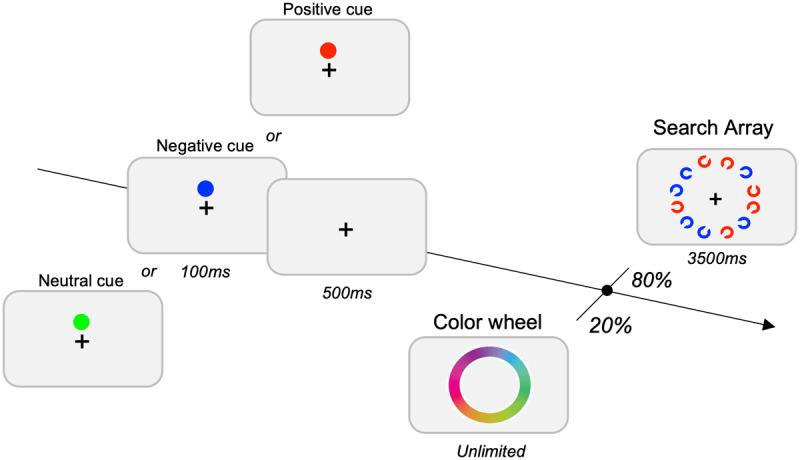 Figure 1
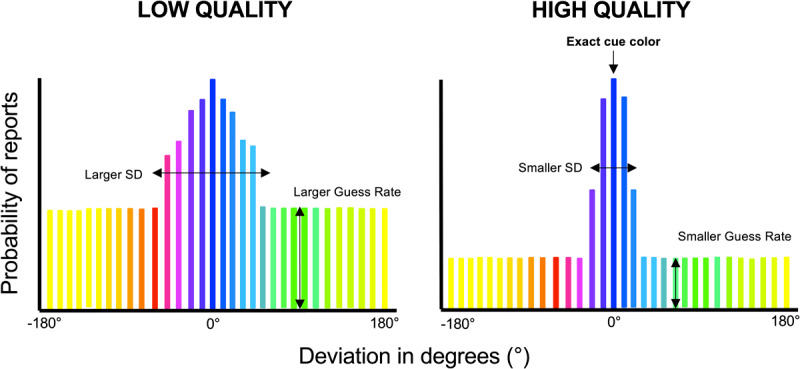 Figure 2
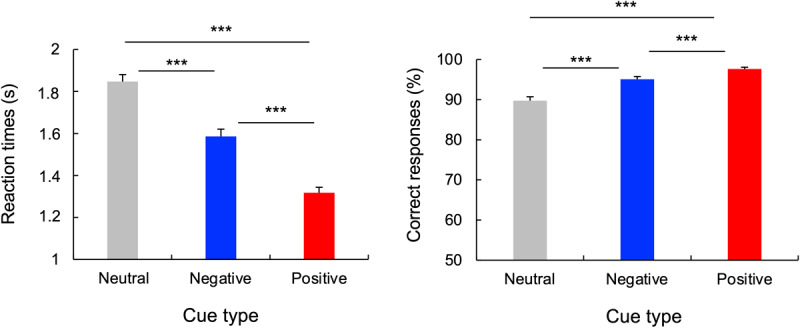 Figure 3
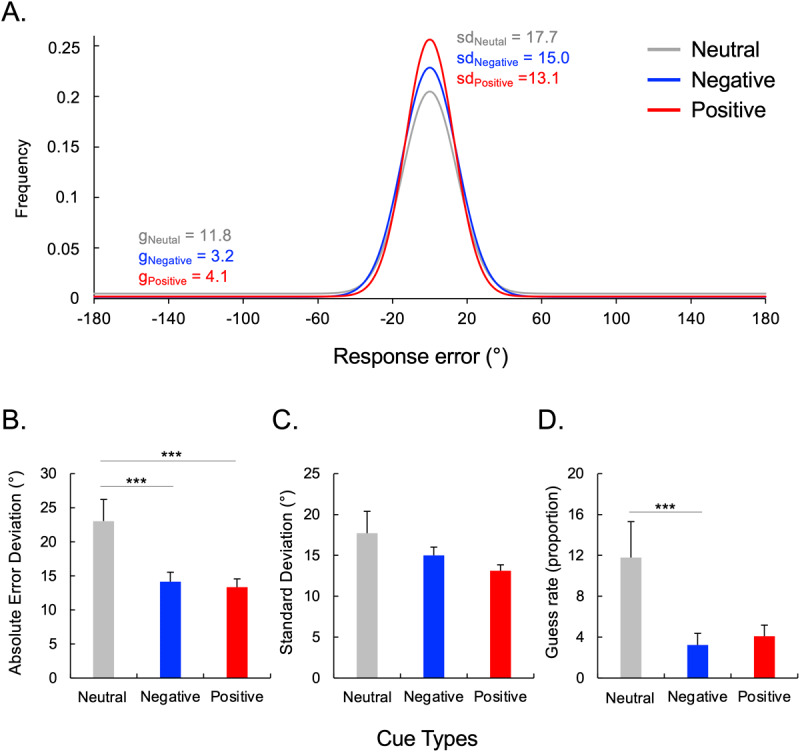 Figure 4
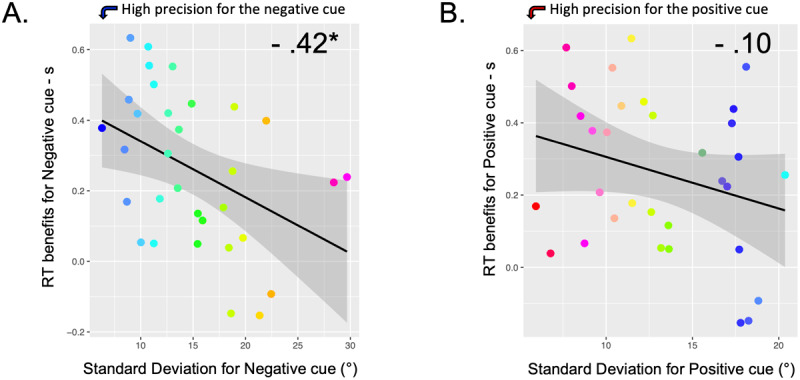 Figure 5
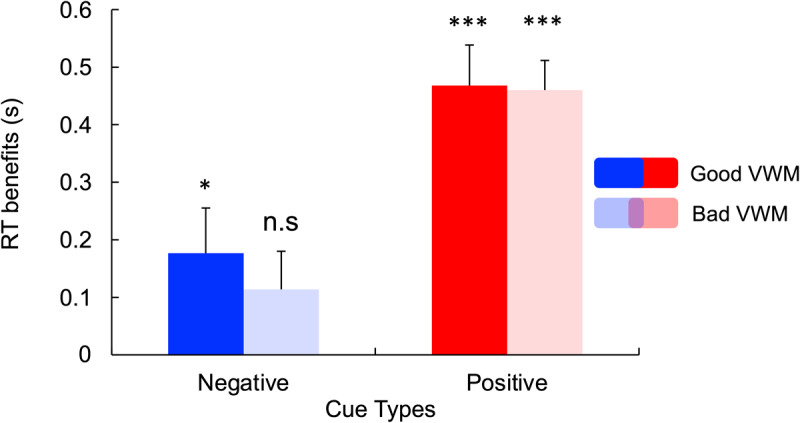 Figure 6
Peer Reviews
No public reviews on file for this paper yet. If you reviewed it on a platform where reviews are public (OpenReview, ICLR, NeurIPS, ICML), you can paste yours below so the community can read it here.
Videos
No videos yet. Explain this paper in a talk, walkthrough, or lecture? Add one.
Taxonomy
TopicsNeural and Behavioral Psychology Studies · Creativity in Education and Neuroscience · Mind wandering and attention