Skin Deep: An Overlap of Delusions
Khulood Abdulraouf Almarzooqi, Dimitre Dimitrov, Khaled Alharmoodi

TL;DR
The paper discusses a case where a woman believes she is infested with scabies and fibers, linking it to Morgellons disease and delusional infestation.
Contribution
The paper presents a case suggesting Morgellons disease may be a variant of delusional infestation.
Findings
A 40-year-old female presented with a belief in scabies infestation and fibers from her skin.
Morgellons disease overlaps with delusional infestation and may not be a separate condition.
Insects remain the most common alleged source of infestation in such cases.
Abstract
Delusional infestation (DI) describes a fixed, false belief where a person believes that they are infested with living or inanimate pathogens despite the absence of medical evidence for such infestation. Descriptions of alleged pathogens have evolved over time, incorporating inanimate objects such as fibrous strands. With the emergence of Morgellons disease and its controversy, we report a case of a 40-year-old female presenting with a strong belief of scabies infestation along with fibers emerging from her skin. Further, although insects are still the most alleged source of infestation, the overlap of Morgellons disease and the delusion of infestation supports it as a DI variant and questions the notion of its existence as a separate diagnostic entity.
Genes, proteins, chemicals, diseases, species, mutations and cell lines named across the full text — each resolved to its canonical identifier and authoritative record.
Click any figure to enlarge with its caption.
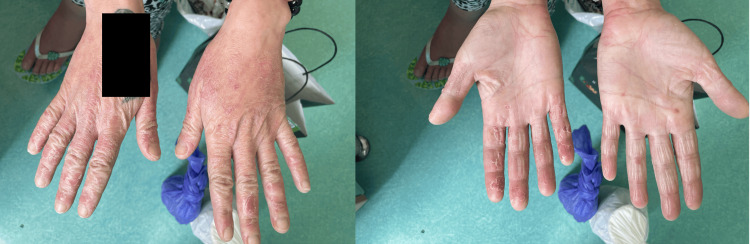 Figure 1
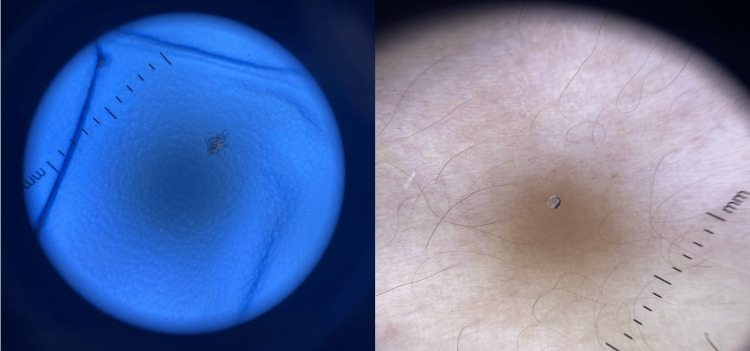 Figure 2
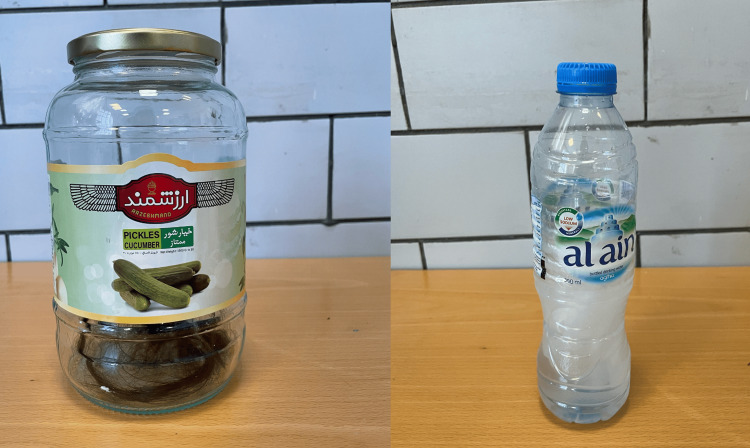 Figure 3
Peer Reviews
No public reviews on file for this paper yet. If you reviewed it on a platform where reviews are public (OpenReview, ICLR, NeurIPS, ICML), you can paste yours below so the community can read it here.
Videos
No videos yet. Explain this paper in a talk, walkthrough, or lecture? Add one.
Taxonomy
TopicsBody Image and Dysmorphia Studies · Historical Psychiatry and Medical Practices · Mental Health and Psychiatry