Endoscopic vacuum therapy (eVAC) combined with continuous perianastomotic irrigation for prevention of anastomotic leak after surgical ampullectomy
Olga Meier (Adamenko), Carlo Ferrari, Jonas Peter Ehrsam, Annamaria Porreca, Stefan Seewald, Stefan Groth, Jean-Pierre Gutzwiller, Jan Schmidt

TL;DR
This study explores using endoscopic vacuum therapy and irrigation to reduce anastomotic leaks after a specific surgical procedure for periampullary lesions.
Contribution
The first demonstration of a prophylactic endoluminal vacuum therapy and irrigation approach to reduce anastomotic leak after transduodenal ampullectomy.
Findings
Anastomotic leak rates were 6.2% in the eVAC-CPI group versus 19.0% in the historical cohort.
The eVAC-CPI group showed a trend toward fewer severe post-operative complications and acute pancreatitis cases.
The device was well tolerated with no vacuum/irrigation-related complications.
Abstract
Transduodenal surgical ampullectomy (tAMP) with papillary reimplantation is a valid alternative to pancreaticoduodenectomy for lesions of the periampullary region not amenable to endoscopic resection. As tAMP is burdened by high rates of biliopancreatic-enteric anastomotic leak, we tested preventive endoluminal vacuum therapy (eVAC) combined with post-operative continuous perianastomotic irrigation (CPI) to reduce such anastomotic leak. Between 10/2013 and 09/2023, 37 patients undergoing laparotomic tAMP (with or without jejunal transposition) and papillary reimplantation at Hirslanden Klinik Zurich were retrospectively analysed; of these, 16 received prophylactic eVAC combined with CPI, while the remaining represented the historical cohort. The eVAC-CPI-group and the historical-cohort were homogeneous in demographic characteristics. Surgery in the prophylactic eVAC-CPI-group lasted…
Genes, proteins, chemicals, diseases, species, mutations and cell lines named across the full text — each resolved to its canonical identifier and authoritative record.
Click any figure to enlarge with its caption.
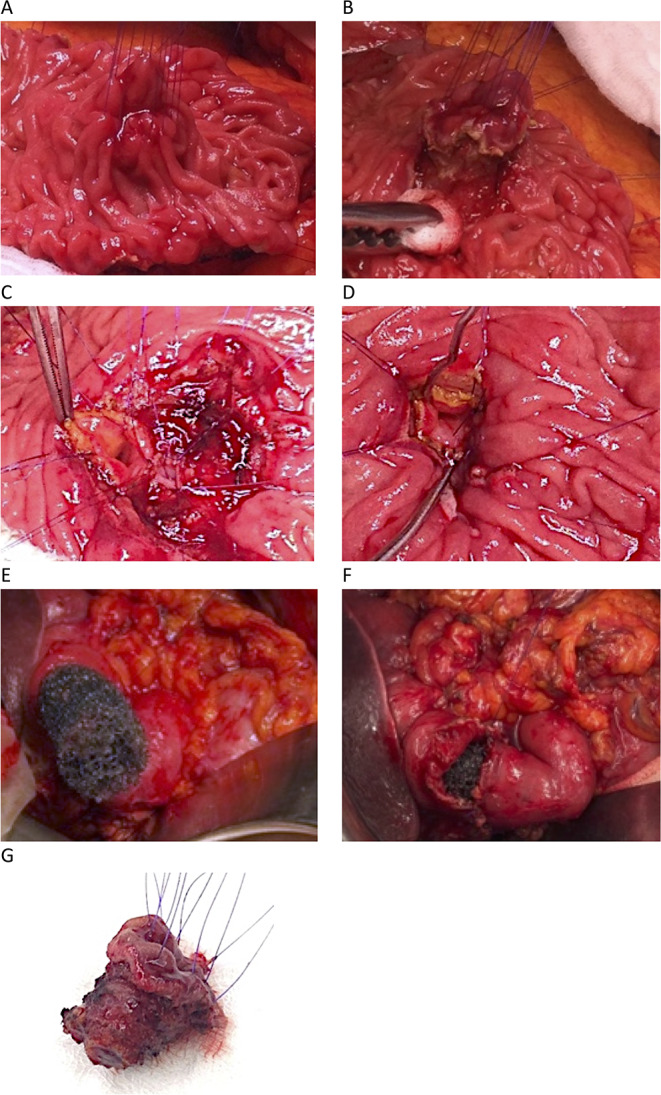 Figure 1
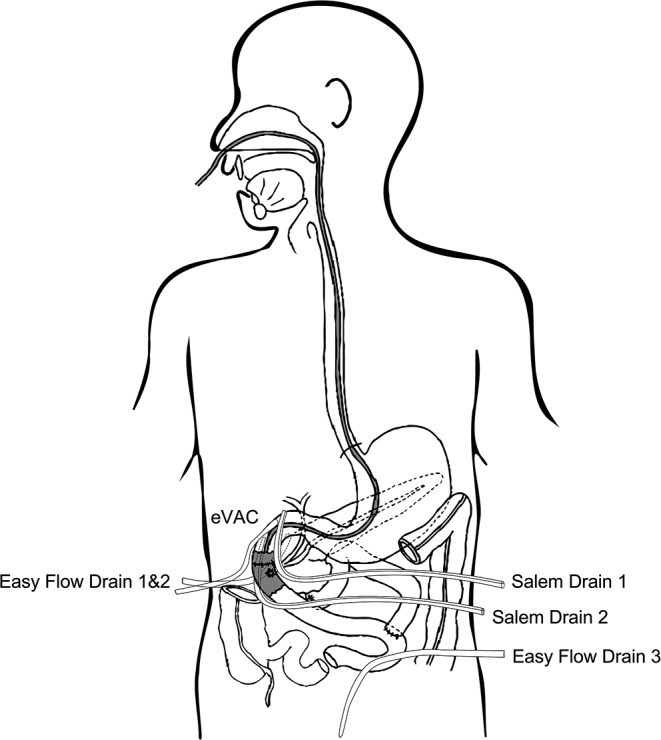 Figure 2
Peer Reviews
No public reviews on file for this paper yet. If you reviewed it on a platform where reviews are public (OpenReview, ICLR, NeurIPS, ICML), you can paste yours below so the community can read it here.
Videos
No videos yet. Explain this paper in a talk, walkthrough, or lecture? Add one.
Taxonomy
TopicsPancreatic and Hepatic Oncology Research · Gallbladder and Bile Duct Disorders · Esophageal and GI Pathology