Implementation of a novel computer assisted telephone follow-up model for older patients after emergency department discharge in an Asian population
Yen-Chiang Lee, Sam Yu-Chieh Ho, Tian-Hoe Tan, Chung-Han Ho, Kang-Ting Tsai, Pei-Chi Yang, Chien-Chin Hsu, Hung-Jung Lin, Chia-Ti Wang, Chien-Cheng Huang

TL;DR
A new computer-assisted telephone follow-up model for older patients after emergency department discharge was tested in Taiwan, showing lower medical costs and higher satisfaction, though with a higher short-term hospitalization risk.
Contribution
A novel computer-assisted telephone follow-up model was implemented and evaluated for older Asian patients after emergency department discharge.
Findings
The TFU cohort had lower total medical expenditure within one month compared to the non-TFU cohort.
The TFU cohort showed higher patient satisfaction scores.
The TFU cohort had a higher risk of hospitalization within one month compared to the non-TFU cohort.
Abstract
While the impact of telephone follow-up (TFU) for older emergency department (ED) patients is controversial, its effects on the Asian population remain uncertain. In this study, we evaluated the effectiveness of a novel computer assisted TFU model specifically for this demographic. At a Taiwanese tertiary medical center, we developed a TFU protocol that included a referral and case management system within the ED hospital information system. We provided TFU to older discharged patients between April 1, 2021, and May 31, 2021. We compared this cohort with a non-TFU cohort of older ED patients and analyzed demographic characteristics and post-ED discharge outcomes. The TFU model was successfully implemented, with 395 patients receiving TFU and 191 without TFU. TFU patients (median age: 76 years, male proportion: 48.9%) differed from non-TFU patients (median age: 74 years, male…
Genes, proteins, chemicals, diseases, species, mutations and cell lines named across the full text — each resolved to its canonical identifier and authoritative record.
Click any figure to enlarge with its caption.
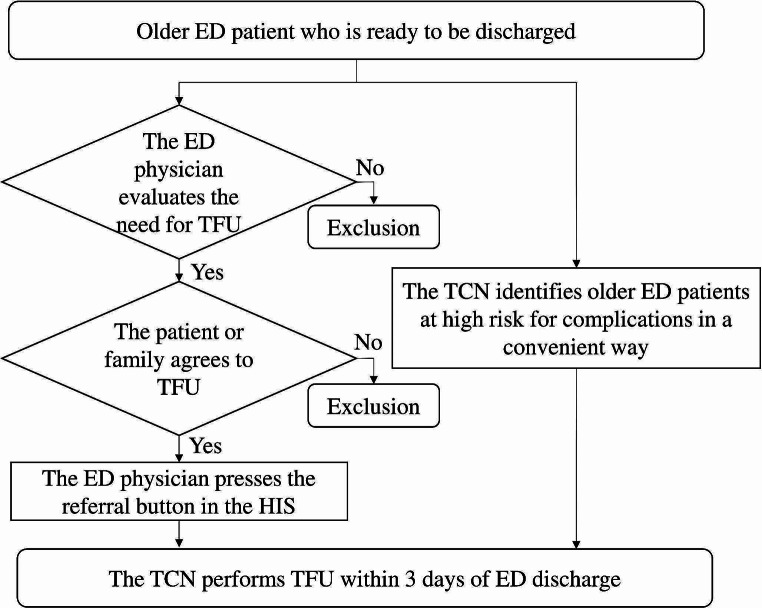 Figure 1
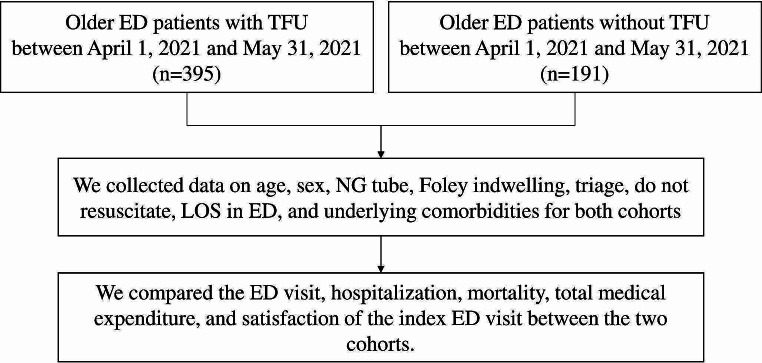 Figure 2
Peer Reviews
No public reviews on file for this paper yet. If you reviewed it on a platform where reviews are public (OpenReview, ICLR, NeurIPS, ICML), you can paste yours below so the community can read it here.
Videos
No videos yet. Explain this paper in a talk, walkthrough, or lecture? Add one.
Taxonomy
TopicsEmergency and Acute Care Studies · Healthcare Systems and Technology · Chronic Disease Management Strategies