Admission blood glucose and 30-day mortality in patients with acute decompensated heart failure: prognostic significance in individuals with and without diabetes
Jing Hu, Hongyi Yang, Meng Yu, Changhui Yu, Jiajun Qiu, Guobo Xie, Guotai Sheng, Maobin Kuang, Yang Zou

TL;DR
High blood sugar at hospital admission is linked to higher 30-day death risk in heart failure patients, especially those with diabetes.
Contribution
This study identifies admission blood glucose as a strong predictor of mortality in acute heart failure patients, with distinct thresholds for those with and without diabetes.
Findings
Admission blood glucose is independently associated with 30-day mortality in acute decompensated heart failure patients.
A U-shaped relationship exists between blood glucose and mortality in non-diabetic patients, with lowest risk at 5-7 mmol/L.
Inflammation mediates a significant portion of the mortality risk linked to high blood glucose in both diabetic and non-diabetic patients.
Abstract
Diabetes is a significant risk factor for acute heart failure, associated with an increased risk of mortality. This study aims to analyze the prognostic significance of admission blood glucose (ABG) on 30-day mortality in Chinese patients with acute decompensated heart failure (ADHF), with or without diabetes. This retrospective study included 1,462 participants from the JX-ADHF1 cohort established between January 2019 to December 2022. We conducted multivariate cox regression, restricted cubic spline, receiver operating characteristic curve analysis, and mediation analysis to explore the association and potential mechanistic pathways (inflammation, oxidative stress, and nutrition) between ABG and 30-day mortality in ADHF patients, with and without diabetes. During the 30-day follow-up, we recorded 20 (5.36%) deaths in diabetic subjects and 33 (3.03%) in non-diabetics. Multivariate…
Genes, proteins, chemicals, diseases, species, mutations and cell lines named across the full text — each resolved to its canonical identifier and authoritative record.
Click any figure to enlarge with its caption.
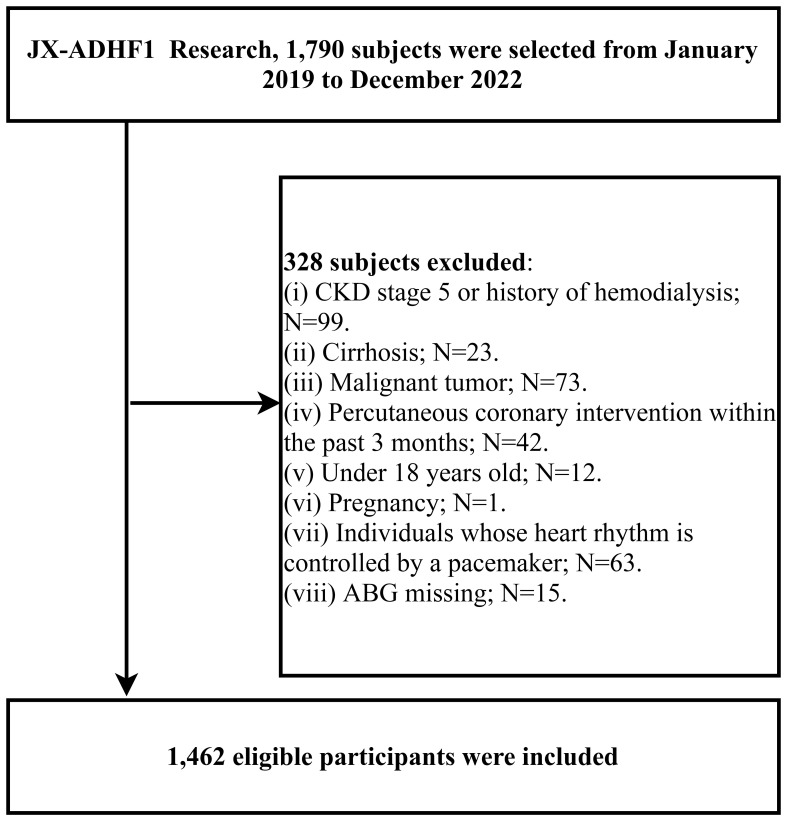 Figure 1
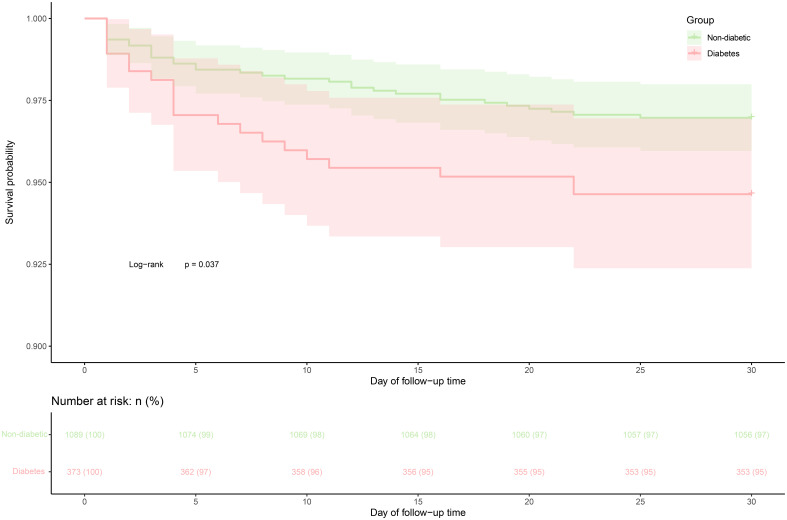 Figure 2
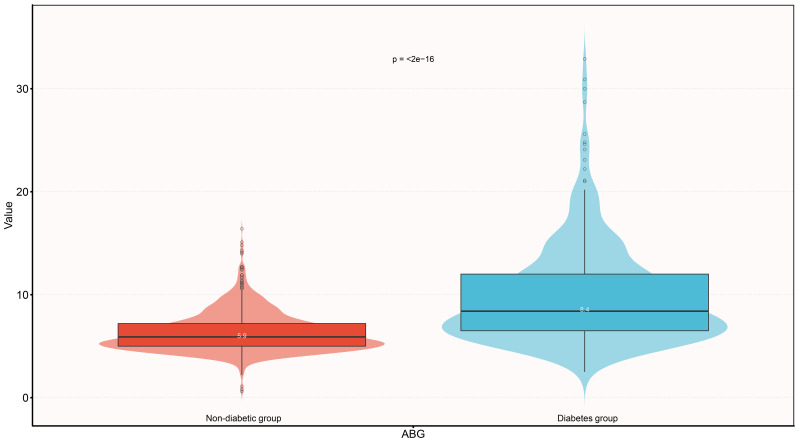 Figure 3
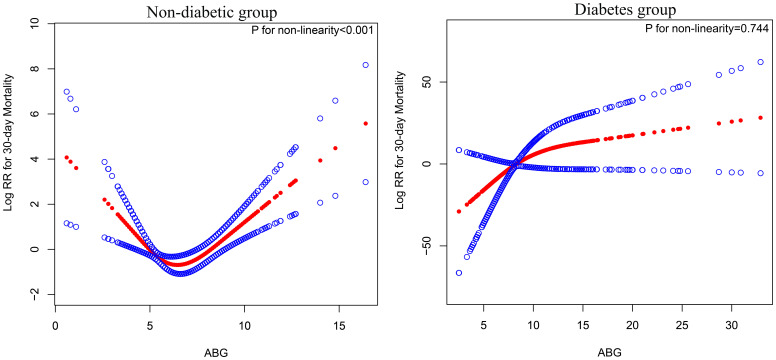 Figure 4
Peer Reviews
No public reviews on file for this paper yet. If you reviewed it on a platform where reviews are public (OpenReview, ICLR, NeurIPS, ICML), you can paste yours below so the community can read it here.
Videos
No videos yet. Explain this paper in a talk, walkthrough, or lecture? Add one.
Taxonomy
TopicsMicrobial infections and disease research · Nail Diseases and Treatments · Poxvirus research and outbreaks