Ethnic Differences, Lung Cancer Risk, and Association of NRF2 Gene Polymorphism with Gemcitabine-Based Chemotherapy
Tirumalasetty Devika, Ganesapandian Mahalakshmi, K Mythili, Katiboina Srinivasa Rao, Suresh Kumar Srinivasamurthy, Dubashi Biswajit, Deepak Gopal Shewade

TL;DR
This study examines how a specific gene variant in South Indian lung cancer patients affects their response to gemcitabine chemotherapy, finding no significant associations with cancer risk or treatment outcomes.
Contribution
The study investigates the role of the NRF2 gene polymorphism in gemcitabine-based chemotherapy outcomes in South Indian lung cancer patients.
Findings
The minor allele frequency of the NRF2-617 C>A SNP was 12.8% in healthy individuals and 14.2% in cancer patients.
NRF2 gene polymorphism showed no significant association with lung cancer risk, treatment response, toxicity, or survival in South Indian patients.
Allele frequencies of NRF2 were similar to South Asian populations but divergent from African, American, and East Asian populations.
Abstract
Introduction: The cancer burden is rising every year. Lung cancer is one of the most common cancers and non-small cell lung cancer is the most common type. Chemotherapy based on platinum drugs and third-generation nucleoside anti-metabolites such as gemcitabine are used widely. Gemcitabine has a complex metabolic pathway, with many mechanisms contributing to its cytotoxicity. Derangements in the metabolic pathway genes contribute to drug resistance and toxicity with this drug. Association studies including these genetic polymorphisms in the metabolic pathway, clinical outcomes, and cancer risk reported inter-individual differences. Thus, the aim of this study was to ascertain the role of these genetic variants in South Indian cancer patients treated with gemcitabine-based therapy. Methods: The study was done with 184 healthy volunteers for frequency establishment and 123 cancer…
Genes, proteins, chemicals, diseases, species, mutations and cell lines named across the full text — each resolved to its canonical identifier and authoritative record.
Click any figure to enlarge with its caption.
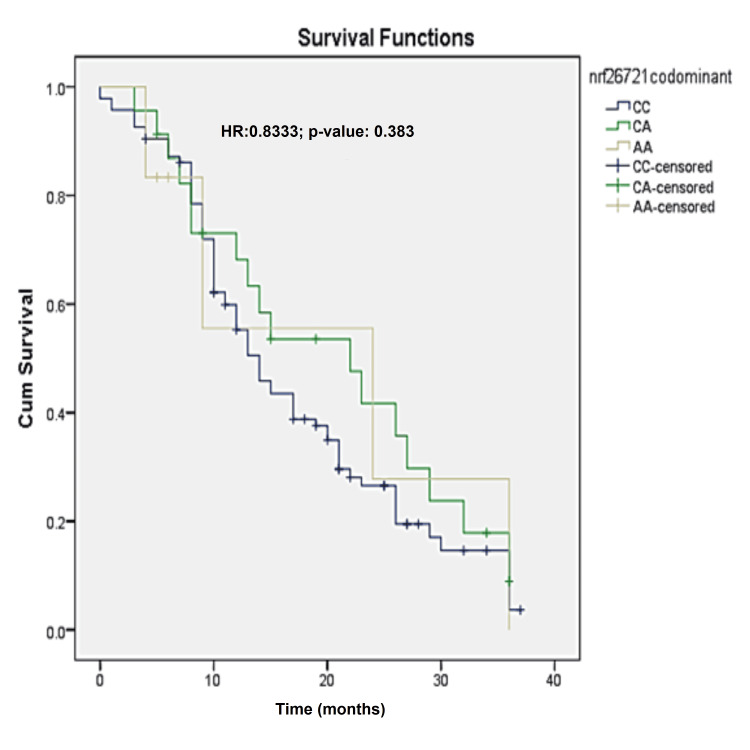 Figure 1
Peer Reviews
No public reviews on file for this paper yet. If you reviewed it on a platform where reviews are public (OpenReview, ICLR, NeurIPS, ICML), you can paste yours below so the community can read it here.
Videos
No videos yet. Explain this paper in a talk, walkthrough, or lecture? Add one.
Taxonomy
TopicsGenomics, phytochemicals, and oxidative stress · Glutathione Transferases and Polymorphisms · Lung Cancer Treatments and Mutations