Aleutian disease: Risk factors and ImmunAD strategy for genetic improvement of tolerance in American mink (Neogale vison)
Seyed Milad Vahedi, Siavash Salek Ardestani, Mohammad Hossein Banabazi, K. Fraser Clark

TL;DR
This study identifies risk factors for Aleutian disease in mink and proposes a new strategy to genetically improve tolerance to the disease.
Contribution
A novel ImmunAD strategy is introduced for genetic improvement of disease tolerance in American mink.
Findings
Age over 1 year, male sex, and year of sampling are significant risk factors for Aleutian disease.
ImmunAD has moderate-to-high heritability, with higher values in CIEP-positive animals.
High-coordinated immune responders show better breeding values for pelt quality and harvest length.
Abstract
Aleutian disease (AD) is a devastating infectious disease in American mink (Neogale vison) industry caused by Aleutian mink disease virus (AMDV). Two crucial steps toward controlling infectious diseases in farm animals are: (i) assessment of the infection risk factors to minimize the likelihood of infection and (ii) selection of animals with superior immune responses against pathogens to build tolerant farms. This study aimed to investigate AD risk factors and evaluate a novel “ImmunAD” approach for genetic improvement of AD tolerance. Phenotypic records and pedigree information of 1,366 and 24,633 animals were included in this study. The risk of animal’s age, sex, color type, and year of sampling on AMDV infection was assessed using a logistic regression model and counter immune-electrophoresis (CIEP) test results. ImmunAD phenotype was calculated based on AMDVG enzyme-linked…
Genes, proteins, chemicals, diseases, species, mutations and cell lines named across the full text — each resolved to its canonical identifier and authoritative record.
Click any figure to enlarge with its caption.
 Figure 1
 Figure 2
 Figure 3
 Figure 4
 Figure 5
 Figure 6
 Figure 7
 Figure 8
 Figure 9
 Figure 10
 Figure 11
 Figure 12
 Figure 13
 Figure 14
 Figure 15
 Figure 16
 Figure 17
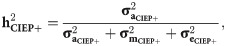 Figure 18
 Figure 19
 Figure 20
 Figure 21
 Figure 22
 Figure 23
 Figure 24
 Figure 25
 Figure 26
 Figure 27
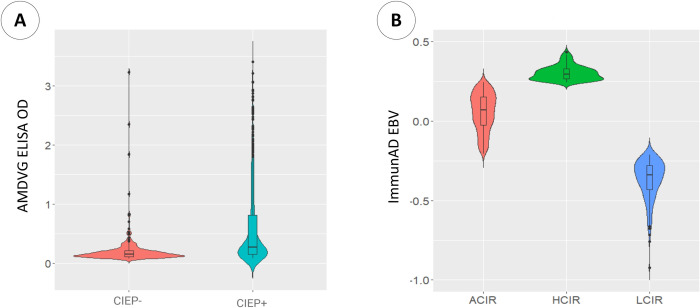 Figure 28
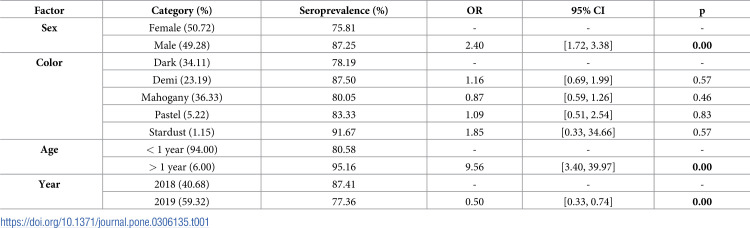 Figure 29
 Figure 30
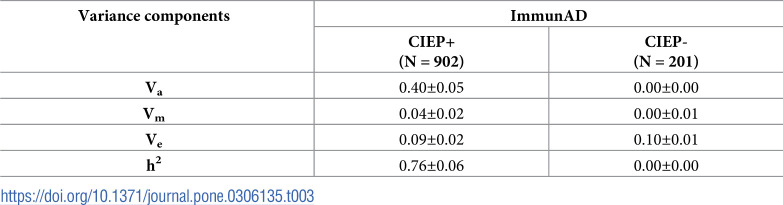 Figure 31
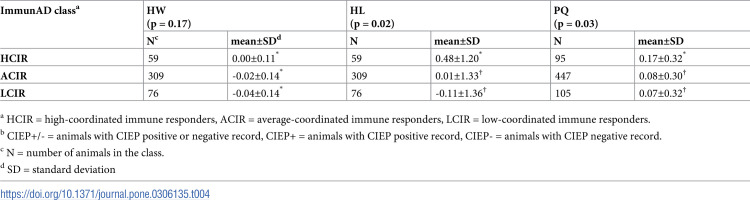 Figure 32
Peer Reviews
No public reviews on file for this paper yet. If you reviewed it on a platform where reviews are public (OpenReview, ICLR, NeurIPS, ICML), you can paste yours below so the community can read it here.
Videos
No videos yet. Explain this paper in a talk, walkthrough, or lecture? Add one.
Taxonomy
TopicsHerpesvirus Infections and Treatments · Animal Disease Management and Epidemiology · Animal Virus Infections Studies