A 10-year review of isoniazid-resistant TB management in Uzbekistan 2009-2020
M.L. Rekart, P. Thit, M. Oluya, S. Moe, T. Hasan, N. Parpieva, K. Safaev, A. Khristusev, T. Zinaida, J. Singh, S. Allamuratova, I. Azamat, C.G. Restrepo, N. Sitali, J. Achar, J.L. Alvaraez, A. Sinha

TL;DR
This study reviews 10 years of managing isoniazid-resistant TB in Uzbekistan, finding that a specific drug regimen is effective and safer than others.
Contribution
The study evaluates real-world effectiveness of the WHO-recommended regimen for isoniazid-resistant TB in Uzbekistan over a decade.
Findings
The 6REZLfx regimen achieved a 92.0% treatment success rate with short duration and no resistance amplification.
Regimens containing injections had lower success and higher loss to follow-up compared to non-injection regimens.
Unsuccessful outcomes were more common in older patients, males, and those with diabetes or smear-positive TB.
Abstract
Isoniazid (INH, H) resistance is the most common drug-resistant TB pattern, with treatment success rates lower than those in drug-susceptible TB. The WHO recommends a 6-month regimen of rifampicin (RIF, R), ethambutol (EMB, E), pyrazinamide (PZA, Z), and levofloxacin (Lfx) (6REZLfx) for INH-resistant, RIF-susceptible TB (HRRS-TB). Uzbekistan has a high burden of TB (62/100,000 population) and multidrug-resistant TB (12/100,000 population). We conducted a retrospective, descriptive study of microbiologically confirmed HRRS-TB using routinely collected programmatic data from 2009 to 2020. We included 854 HRRS-TB cases. Treatment success was 80.2% overall. For REZLfx, the treatment success rate was 92.0% over a short treatment duration, with no amplifications to RIF or second-line anti-TB drug resistance. We documented 46 regimens with REZLfx plus linezolid (success 87.0%) and 539…
Genes, proteins, chemicals, diseases, species, mutations and cell lines named across the full text — each resolved to its canonical identifier and authoritative record.
Click any figure to enlarge with its caption.
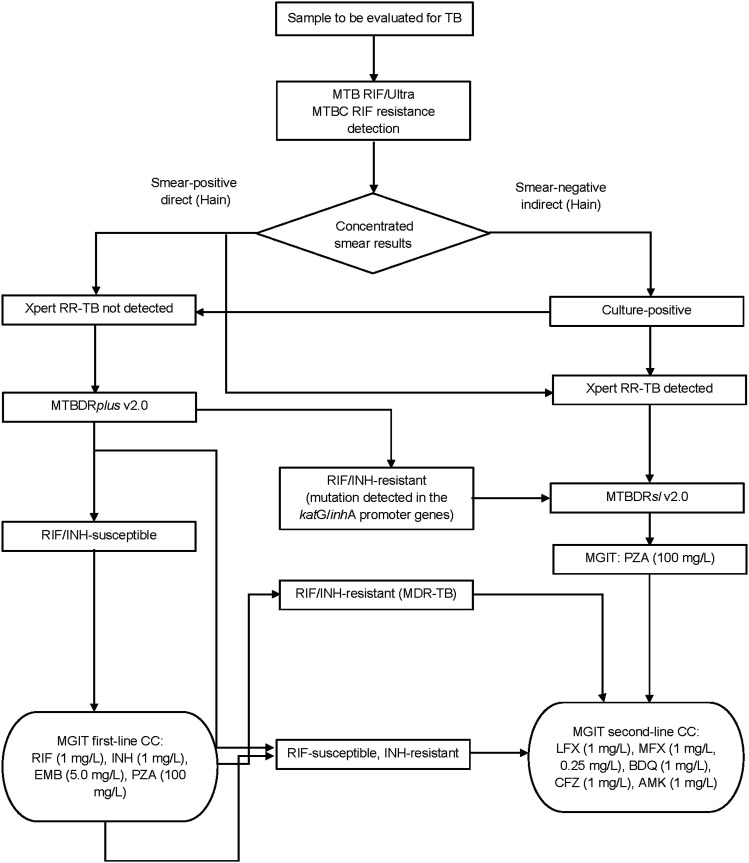 Figure 1
Peer Reviews
No public reviews on file for this paper yet. If you reviewed it on a platform where reviews are public (OpenReview, ICLR, NeurIPS, ICML), you can paste yours below so the community can read it here.
Videos
No videos yet. Explain this paper in a talk, walkthrough, or lecture? Add one.
Taxonomy
TopicsTuberculosis Research and Epidemiology · Pneumonia and Respiratory Infections · Mycobacterium research and diagnosis