Evaluating the interactions between vibrational modes and electronic transitions using frontier orbital energy derivatives
Lisa A. Schröder, Harry L. Anderson, Igor Rončević

TL;DR
The paper introduces a low-cost computational method to identify vibrations strongly linked to electronic structure using orbital energy derivatives.
Contribution
A novel low-cost method is proposed to identify vibrations coupled to electronic structure using frontier orbital energy derivatives.
Findings
Vibrational effects on electronic transitions can be modeled even at zero kelvin.
Frontier orbital energy derivatives serve as a diagnostic for identifying strongly coupled vibrations.
The proposed method reduces computational cost by avoiding many geometry-distorted calculations.
Abstract
Vibrations affect molecular optoelectronic properties, even at zero kelvin. Accounting for these effects using computational modelling is costly, as it requires many calculations at geometries distorted from equilibrium. Here, we propose a low-cost method for identifying vibrations most strongly coupled to the electronic structure, based on using orbital energy derivatives as a diagnostic. Frontier orbital energy derivatives can be used to identify vibrations strongly coupled to electronic structure.
Genes, proteins, chemicals, diseases, species, mutations and cell lines named across the full text — each resolved to its canonical identifier and authoritative record.
Click any figure to enlarge with its caption.
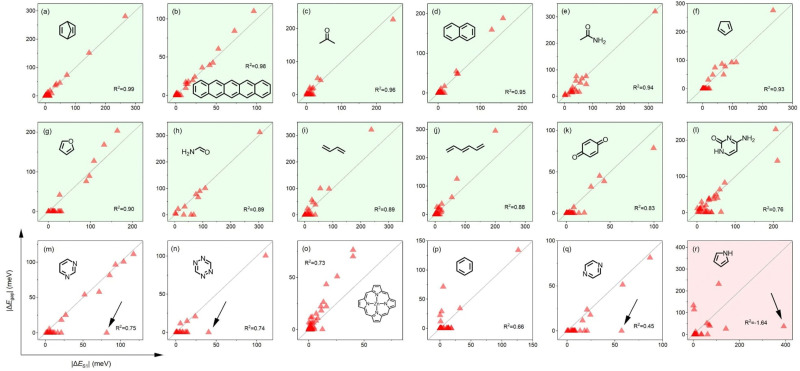 Figure 1
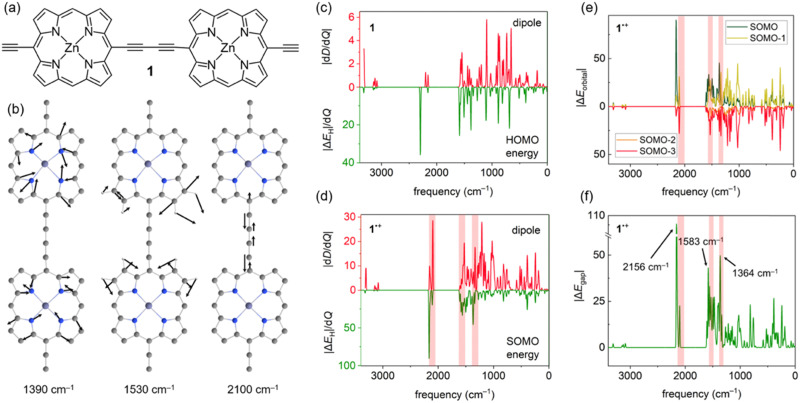 Figure 2
 Figure 3
 Figure 4
Peer Reviews
No public reviews on file for this paper yet. If you reviewed it on a platform where reviews are public (OpenReview, ICLR, NeurIPS, ICML), you can paste yours below so the community can read it here.
Videos
No videos yet. Explain this paper in a talk, walkthrough, or lecture? Add one.
Taxonomy
TopicsAdvanced Chemical Physics Studies · Catalysis and Oxidation Reactions · Molecular Junctions and Nanostructures