Evidence for an Association Between a pH-Dependent Potassium Channel, TWIK-1, and the Accuracy of Smooth Pursuit Eye Movements
Gary Bargary, Jenny M. Bosten, Adam J. Lawrance-Owen, Patrick T. Goodbourn, John D. Mollon

TL;DR
This study finds a genetic link between the potassium channel TWIK-1 and the accuracy of smooth eye movements in healthy individuals.
Contribution
A strong genetic association between TWIK-1 and smooth pursuit eye movement accuracy is identified for the first time.
Findings
A strong association (P = 3.55 × 10⁻¹¹) was found between RMSE and chromosomal region 1q42.2.
Each additional copy of the A allele at rs701232 decreased RMSE by 0.29 standard deviation.
The association with TWIK-1 was not affected by a perceptual covariate, suggesting it is not sensory-based.
Abstract
Within the healthy population there is a large variation in the ability to perform smooth pursuit eye movements. Our purpose was to investigate the genetic and physiological bases for this variation. We carried out a whole-genome association study, recording smooth pursuit movements for 1040 healthy volunteers by infrared oculography. The primary phenotypic measure was root mean square error (RMSE) of eye position relative to target position. Secondary measures were pursuit gain, frequency of catch-up saccades, and frequency of anticipatory saccades. Ten percent of participants, chosen randomly, were tested twice, giving estimates of test-retest reliability. No significant association was found with three genes previously identified as candidate genes for variation in smooth pursuit: DRD3, COMT, NRG1. A strong association (P = 3.55 × 10⁻¹¹) was found between RMSE and chromosomal…
Genes, proteins, chemicals, diseases, species, mutations and cell lines named across the full text — each resolved to its canonical identifier and authoritative record.
Click any figure to enlarge with its caption.
 Figure 1
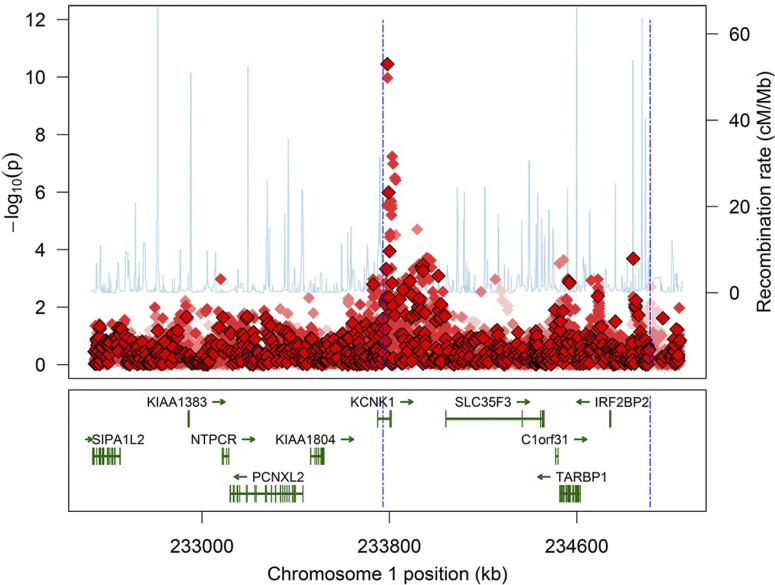 Figure 2
 Figure 3
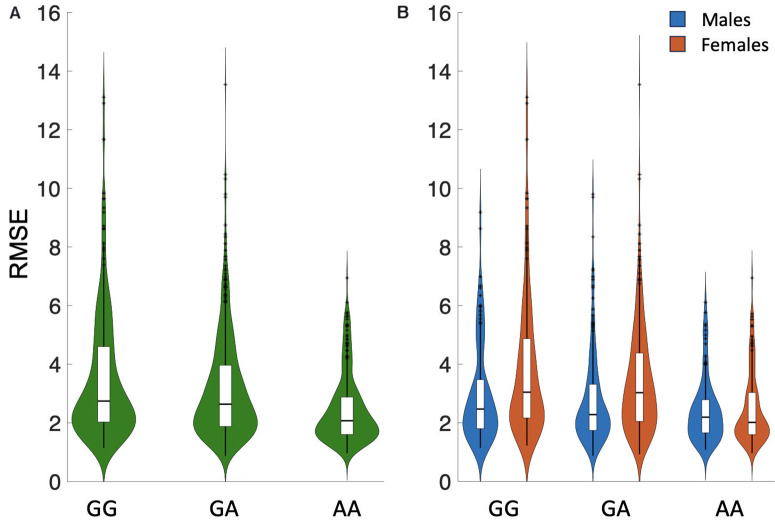 Figure 4
Peer Reviews
No public reviews on file for this paper yet. If you reviewed it on a platform where reviews are public (OpenReview, ICLR, NeurIPS, ICML), you can paste yours below so the community can read it here.
Videos
No videos yet. Explain this paper in a talk, walkthrough, or lecture? Add one.
Taxonomy
TopicsIon channel regulation and function · Nicotinic Acetylcholine Receptors Study · EEG and Brain-Computer Interfaces