Bacterial genomes recovered from litter’s metagenomes in Amazonian Dark Earths
Anderson Santos de Freitas, Luís Felipe Guandalin Zagatto, Gabriel Silvestre Rocha, Thierry Alexandre Pellegrinetti, Letícia de Cássia Malho Alves, Vitor Moreira de Lara, Jéssica Adriele Mandro, Guilherme Lucio Martins, Aleksander Westphal Muniz, Rogério Eiji Hanada

TL;DR
This study identifies 27 bacterial genomes from soil samples in Brazil's Amazonian Dark Earths, revealing diverse bacterial communities.
Contribution
The study contributes new bacterial genomes from understudied Amazonian Dark Earths, expanding knowledge of microbial diversity in this region.
Findings
27 bacterial genomes were assembled from litter samples in Amazonian Dark Earths.
The genomes belong to diverse bacterial phyla, including Pseudomonadota and Actinomycetota.
This dataset provides insights into microbial communities in secondary forests over Amazonian Dark Earths.
Abstract
Here, we report 27 metagenome-assembled bacterial genomes (MAGs) from litter samples of a secondary forest located in Brazil over an Amazonian Dark Earth pool. The data set includes members from the phyla Pseudomonadata (14 MAGs), Actinomycetota (7 MAGs), Bacteroidota (4 MAGs), Bacillota (1 MAG), and Bdellovibrionota (1 MAG).
Genes, proteins, chemicals, diseases, species, mutations and cell lines named across the full text — each resolved to its canonical identifier and authoritative record.
Click any figure to enlarge with its caption.
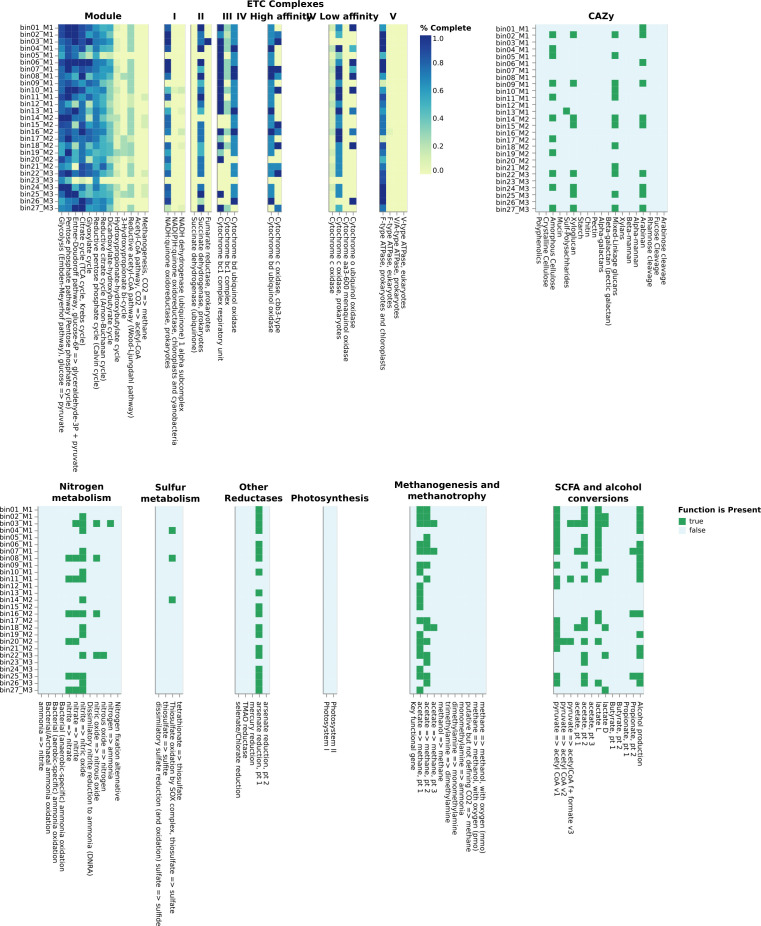 Figure 1
Peer Reviews
No public reviews on file for this paper yet. If you reviewed it on a platform where reviews are public (OpenReview, ICLR, NeurIPS, ICML), you can paste yours below so the community can read it here.
Videos
No videos yet. Explain this paper in a talk, walkthrough, or lecture? Add one.
Taxonomy
TopicsGenomics and Phylogenetic Studies · Microbial Community Ecology and Physiology · Environmental DNA in Biodiversity Studies