Endobronchial Ulceration: A Different Manifestation of Antineutrophil Cytoplasmic Antibodies (ANCA)-Associated Vasculitis
Ana Sara Gonçalves, Filipa Menezes Freitas, Cláudia Sousa, João Carvalho, Vítor Teixeira

TL;DR
A 66-year-old man with GPA showed endobronchial ulcers linked to ANCA-associated vasculitis, treated with immunosuppression and Avacopan.
Contribution
Highlights endobronchial ulceration as a novel manifestation of GPA and the use of Avacopan in treatment.
Findings
Endobronchial ulcers were observed in a GPA patient during bronchoscopy.
S. aureus was identified in biopsies, potentially linked to GPA relapses.
Avacopan was used successfully for GPA and MPA treatment.
Abstract
Vasculitis with pulmonary involvement is often associated with antineutrophil cytoplasmic antibody (ANCA). We describe a case involving a 66-year-old male patient diagnosed with granulomatosis with polyangiitis (GPA). Following the onset of hemoptysis, bronchoscopy revealed endobronchial ulcers correlated with GPA. Bronchial biopsies and bronchoalveolar lavage identified Staphylococcus aureus (S. aureus), which is associated with GPA relapses. The patient began immunosuppression to induce remission, and Avacopan was subsequently introduced for the treatment of GPA and microscopic polyangiitis (MPA).
Genes, proteins, chemicals, diseases, species, mutations and cell lines named across the full text — each resolved to its canonical identifier and authoritative record.
Click any figure to enlarge with its caption.
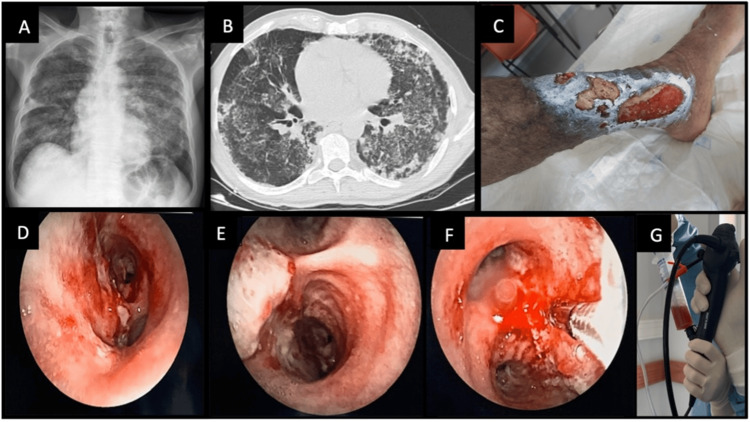 Figure 1
Peer Reviews
No public reviews on file for this paper yet. If you reviewed it on a platform where reviews are public (OpenReview, ICLR, NeurIPS, ICML), you can paste yours below so the community can read it here.
Videos
No videos yet. Explain this paper in a talk, walkthrough, or lecture? Add one.
Taxonomy
TopicsVasculitis and related conditions · Coagulation, Bradykinin, Polyphosphates, and Angioedema · Heparin-Induced Thrombocytopenia and Thrombosis