Steady-state pharmacokinetics of lamivudine in end-stage kidney failure persons with detectable and undetectable HIV-1 RNA in peritoneal dialysis effluent
Teboho Mooko, Feziwe Busiswa Bisiwe, Enkosi Mondleki, Molefi Daniel Morobadi, Perpetual Chikobvu, Martin Munene Nyaga, Asis Bala, Dominique Goedhals, Thabiso Rafaki Petrus Mofokeng, Gabre Kemp, Kwazi Celani Zwakele Ndlovu

TL;DR
This study examines how lamivudine behaves in the blood and dialysis fluid of HIV patients with kidney failure, finding that drug levels are therapeutic even when HIV is detectable in dialysis fluid.
Contribution
The study shows that HIV shedding in dialysis fluid is not due to poor lamivudine absorption or dosing.
Findings
Lamivudine exposure in blood was higher than in dialysis fluid across all doses.
Therapeutic drug levels were maintained in serum despite detectable HIV in dialysis fluid for some patients.
Higher lamivudine doses did not consistently prevent HIV shedding into dialysis fluid.
Abstract
Renally adjusted lamivudine dosages are effective. However, some of the kidney failure patients managed with lamivudine-containing regimens are failing to suppress HIV in peritoneal dialysis (CAPD) effluent. The steady-state lamivudine pharmacokinetics among these patients was evaluated. This overnight open-label pharmacokinetic study enrolled participants living with HIV and managed with CAPD. Lamivudine levels in blood serum and CAPD effluent samples were quantified using liquid chromatography coupled with a mass spectrometer. Pharmacokinetic measures were obtained through non-compartmental analysis. Twenty-eight participants were recruited with a median antiretroviral (ARV) drug duration of 8 (IQR,4.5–10.5) years and a CAPD duration of 13.3 (IQR,3.3–31.9) months. 14.3% (4/28) had detectable unsuppressed HIV-1 viral load in CAPD effluents. The majority (78,6%,22/28) of participants…
Genes, proteins, chemicals, diseases, species, mutations and cell lines named across the full text — each resolved to its canonical identifier and authoritative record.
Click any figure to enlarge with its caption.
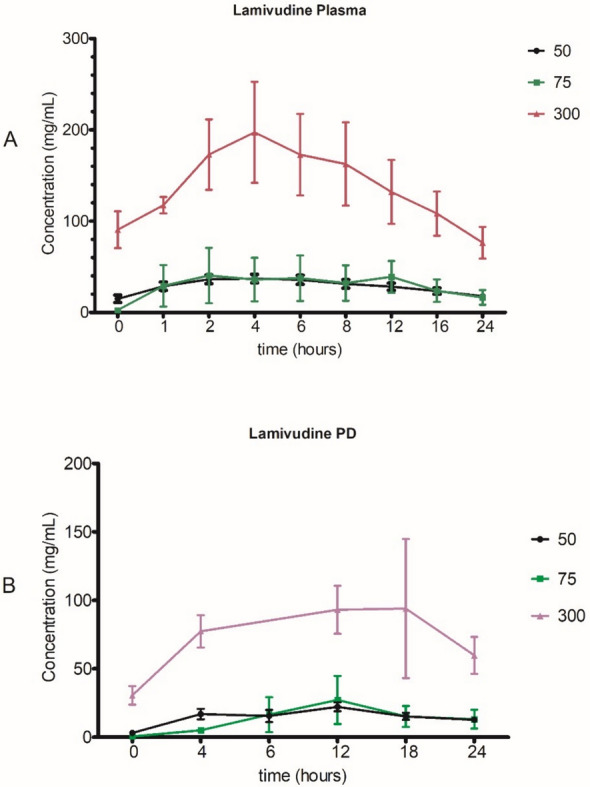 Figure 1
Peer Reviews
No public reviews on file for this paper yet. If you reviewed it on a platform where reviews are public (OpenReview, ICLR, NeurIPS, ICML), you can paste yours below so the community can read it here.
Videos
No videos yet. Explain this paper in a talk, walkthrough, or lecture? Add one.
Taxonomy
TopicsHIV/AIDS drug development and treatment · HIV/AIDS Research and Interventions · Pharmacological Effects and Toxicity Studies