A second chance for first impressions: evidence for altered impression updating in borderline personality disorder
Kevin Konegen, Georg Halbeisen, Georgios Paslakis

TL;DR
People with borderline personality disorder (BPD) struggle to update their impressions of others in a stable way, leading to unstable social interactions.
Contribution
The study identifies reduced contextualization of self-relevant information as a novel mechanism underlying impression updating in BPD.
Findings
Individuals with BPD showed updated impression ratings in a new context only for self-relevant behaviors.
Controls maintained stable initial impressions across contexts for both self- and other-relevant behaviors.
More severe BPD symptoms correlated with greater impression updating in self-relevant scenarios.
Abstract
Individuals with borderline personality disorder (BPD) frequently alter between idealizing and devaluing other persons, which has been linked to an increased tendency to update self-relevant beliefs and impressions. We hypothesized that increased impression updating could stem from reduced attitude contextualization, i.e., a process in which impression-disconfirming information is linked to contextual cues. Individuals diagnosed with BPD and controls (recruited online, with unknown diagnostic status) completed an impression formation paradigm. They first learned about the positive or negative behaviors of others in one Context A (e.g., Person 1 is helpful), followed by learning about behaviors of the opposite valence in a second Context B (Person 1 is rude). We also manipulated between participants whether the observed behaviors were directed toward the study participants…
Genes, proteins, chemicals, diseases, species, mutations and cell lines named across the full text — each resolved to its canonical identifier and authoritative record.
Click any figure to enlarge with its caption.
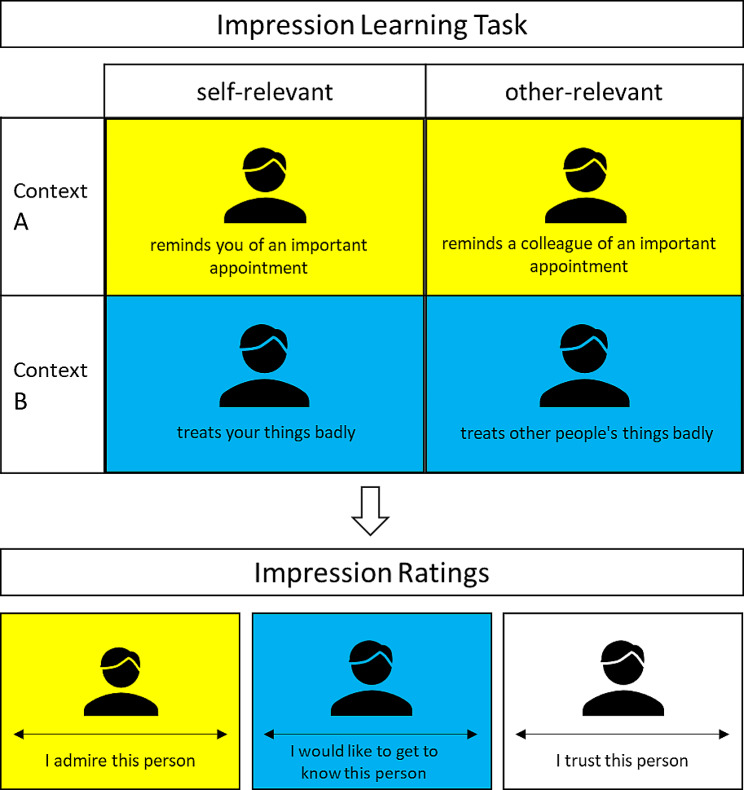 Figure 1
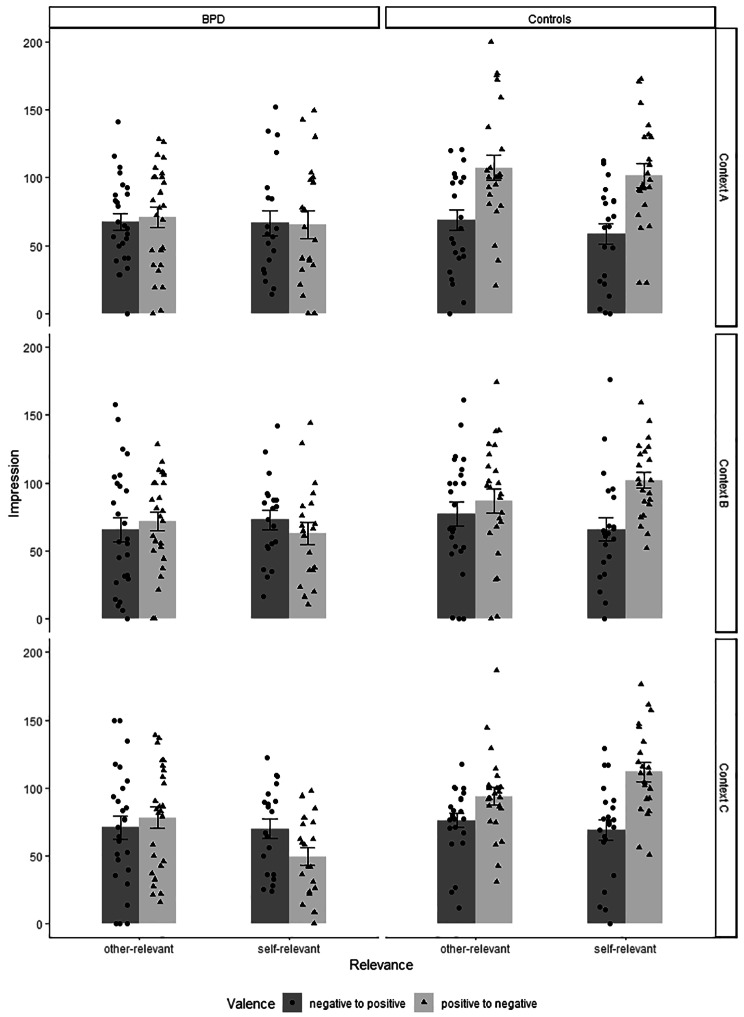 Figure 2
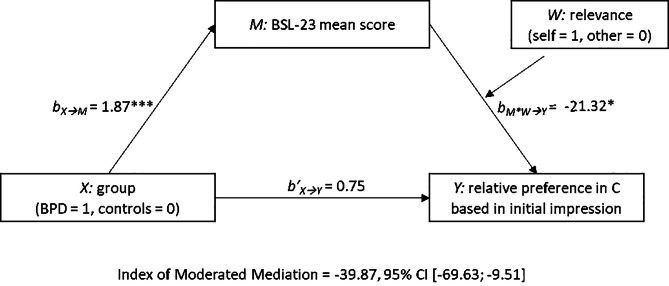 Figure 3
Peer Reviews
No public reviews on file for this paper yet. If you reviewed it on a platform where reviews are public (OpenReview, ICLR, NeurIPS, ICML), you can paste yours below so the community can read it here.
Videos
No videos yet. Explain this paper in a talk, walkthrough, or lecture? Add one.
Taxonomy
TopicsPersonality Disorders and Psychopathology · Child and Adolescent Psychosocial and Emotional Development · Anxiety, Depression, Psychometrics, Treatment, Cognitive Processes