Effects of stimulus onset asynchrony on cognitive control in healthy adults
Abdolvahed Narmashiri, Rasool Abedanzadeh, Rasool Abedanzadeh, Rasool Abedanzadeh

TL;DR
This study explores how the timing of stimuli affects cognitive control in healthy adults using specific tasks.
Contribution
The study reveals how stimulus onset asynchrony influences single-mode and dual mechanisms of cognitive control.
Findings
Extended SOA improved reaction times in Go trials, indicating better task performance with more preparation time.
No-Go trials showed higher accuracy than Go trials across all SOA levels, suggesting strong inhibition processes.
Proactive control was evident in AY trials with prolonged reaction times, showing strategies to maintain task-relevant information.
Abstract
The efficiency of cognitive control in healthy adults can be influenced by various factors, including the stimulus onset asynchrony (SOA) effect and strategy training. To address these issues, our study aims to investigate the impact of SOA on single-mode cognitive control using the Go/No-Go task, as well as the manifestation of proactive control within dual mechanisms of cognitive control through the AX-CPT task. In single-mode cognitive control, extending SOA led to significantly enhanced reaction times (RTs) during Go trials, suggesting improved task performance with increased preparation time. Moreover, the analysis revealed consistently higher accuracy rates in No-Go trials than to Go trials across all SOA levels, indicating robust inhibition processes unaffected by SOA variations. In the dual mechanisms of cognitive control, significant variations in RT and accuracy were observed…
Genes, proteins, chemicals, diseases, species, mutations and cell lines named across the full text — each resolved to its canonical identifier and authoritative record.
Click any figure to enlarge with its caption.
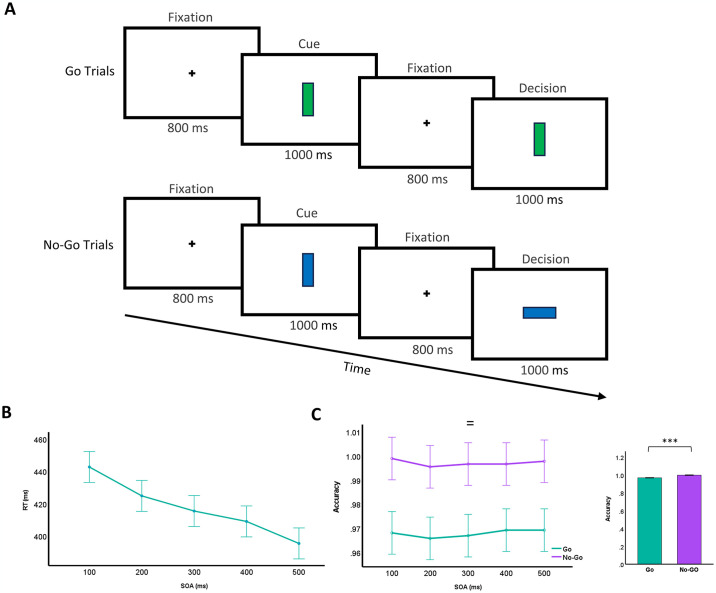 Figure 1
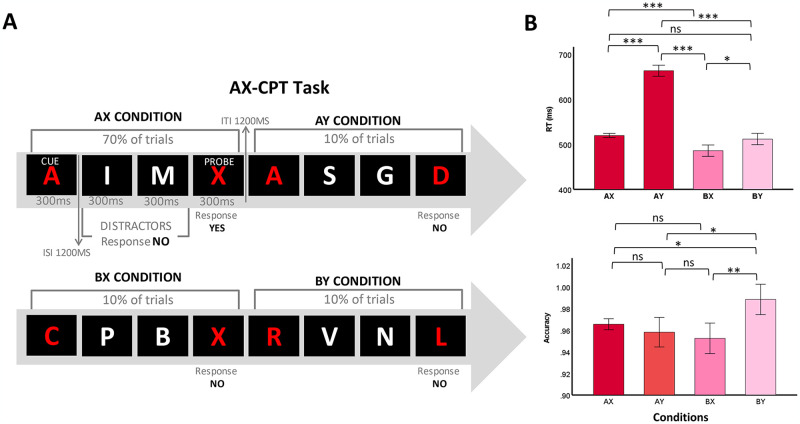 Figure 2
Peer Reviews
No public reviews on file for this paper yet. If you reviewed it on a platform where reviews are public (OpenReview, ICLR, NeurIPS, ICML), you can paste yours below so the community can read it here.
Videos
No videos yet. Explain this paper in a talk, walkthrough, or lecture? Add one.
Taxonomy
TopicsNeural and Behavioral Psychology Studies · EEG and Brain-Computer Interfaces · Functional Brain Connectivity Studies