Rancid rumors or Native wisdom: Evaluating the efficacy of animal fats as insect repellents attributed to historic-period Native Americans
Delaram Esmaeili, Keyla R. Salas, Hailey A. Luker, Soumi Mitra, Claudia J. Galvan, F. Omar Holguin, Sophie Whyms, Immo A. Hansen, August G. Costa

TL;DR
This study tests if rancid animal fats used by Native Americans can repel mosquitoes, finding some are effective but only for a short time.
Contribution
The study experimentally validates traditional Native American use of rancid animal fats as mosquito repellents using controlled laboratory methods.
Findings
Rancid fats from cod, bear, and alligator repel mosquitoes but only briefly.
Neither fresh nor rancid animal fats repel ticks.
The findings support ethnohistorical accounts of Native American mosquito repellent practices.
Abstract
Little is known about Native American adaptations to blood-sucking arthropods prior to and following European contact. Multiple accounts starting in the 16th century suggest that rancid animal grease was employed by Gulf Coast indigenes as a mosquito repellent. Although many Native American ethnobotanical remedies for biting insects have been recorded, the use of animal products for this purpose is not well documented. Moreover, few traditional Native American mosquito repellents have been examined using controlled laboratory methods for repellency testing. In this study, we tested the repellent efficacy of fats derived from alligator, bear, cod, and shark that were aged to various stages of rancidity. Using yellow fever mosquitoes, (Aedes aegypti), we performed an arm-in-cage assay to measure the complete protection times resulted from these fats, when applied to human skin. We used a…
Genes, proteins, chemicals, diseases, species, mutations and cell lines named across the full text — each resolved to its canonical identifier and authoritative record.
Click any figure to enlarge with its caption.
 Figure 1
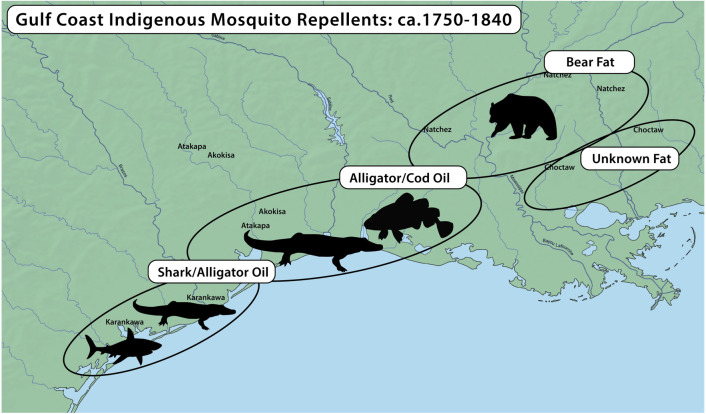 Figure 2
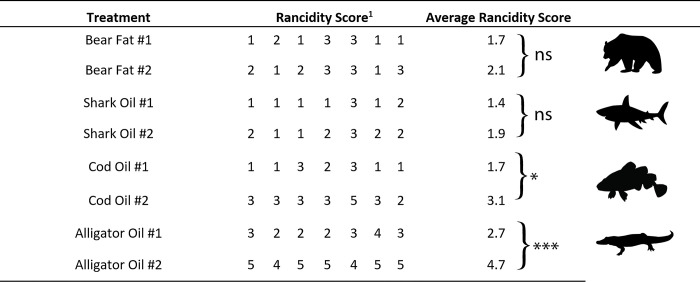 Figure 3
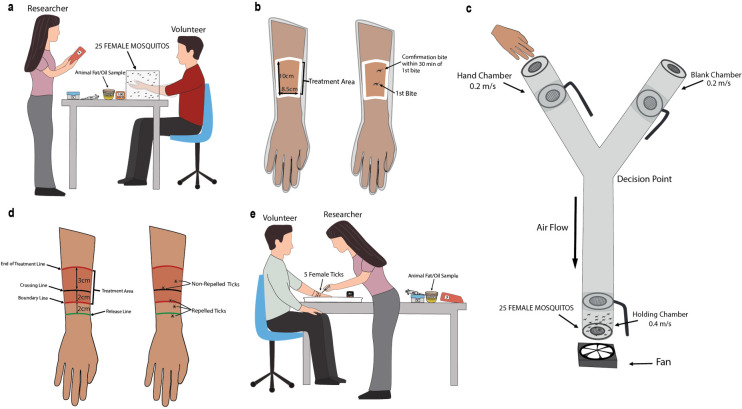 Figure 4
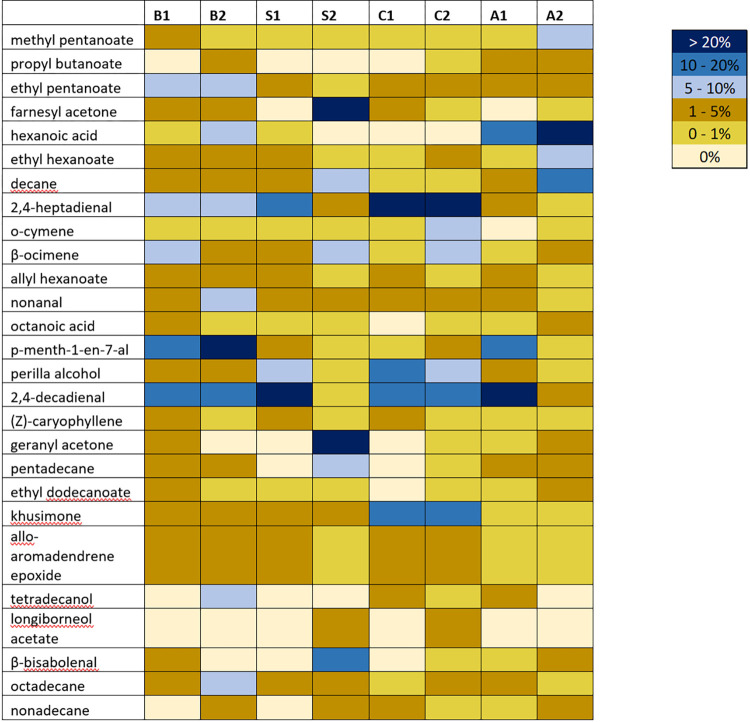 Figure 5
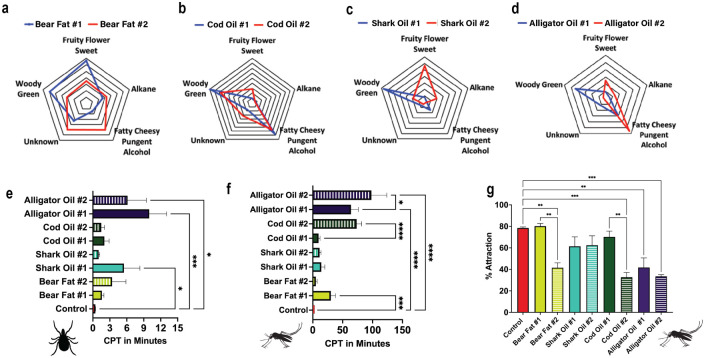 Figure 6
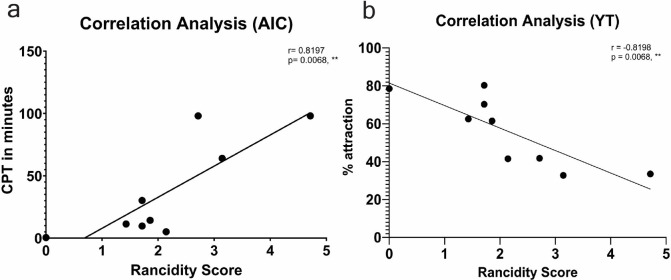 Figure 7
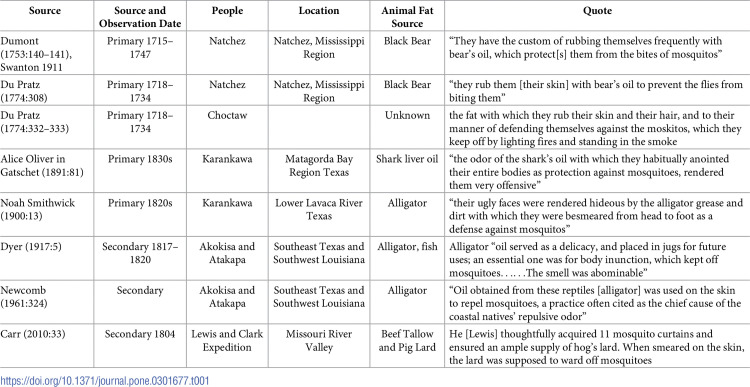 Figure 8
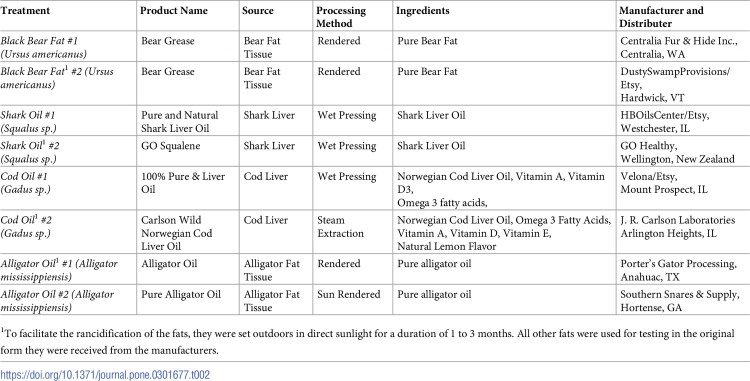 Figure 9
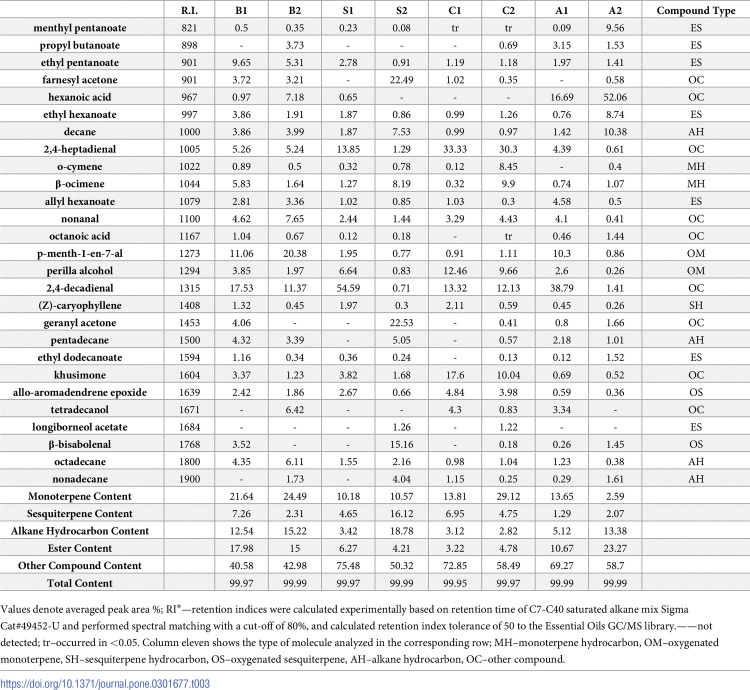 Figure 10
Peer Reviews
No public reviews on file for this paper yet. If you reviewed it on a platform where reviews are public (OpenReview, ICLR, NeurIPS, ICML), you can paste yours below so the community can read it here.
Videos
No videos yet. Explain this paper in a talk, walkthrough, or lecture? Add one.
Taxonomy
TopicsPlant and animal studies · Insect Utilization and Effects · Species Distribution and Climate Change