Automated cell type annotation and exploration of single-cell signaling dynamics using mass cytometry
Dimitrios Kleftogiannis, Sonia Gavasso, Benedicte Sjo Tislevoll, Nisha van der Meer, Inga K.F. Motzfeldt, Monica Hellesøy, Stein-Erik Gullaksen, Emmanuel Griessinger, Oda Fagerholt, Andrea Lenartova, Yngvar Fløisand, Jan Jacob Schuringa, Bjørn Tore Gjertsen, Inge Jonassen

TL;DR
This paper introduces a new bioinformatics framework for analyzing CyTOF data, enabling automated cell type annotation and predicting patient survival in leukemia using machine learning.
Contribution
The Scaffold framework automates cell type annotation and uses signaling dynamics to improve patient stratification in CyTOF data.
Findings
Scaffold achieves a good balance between sensitivity and specificity for automated cell type annotation.
Signaling protein interactions predicted short-term survival in leukemia patients using XGBoost.
CyTOF data analysis with machine learning improves standard risk-stratification methods.
Abstract
Mass cytometry by time-of-flight (CyTOF) is an emerging technology allowing for in-depth characterization of cellular heterogeneity in cancer and other diseases. Unfortunately, high-dimensional analyses of CyTOF data remain quite demanding. Here, we deploy a bioinformatics framework that tackles two fundamental problems in CyTOF analyses namely (1) automated annotation of cell populations guided by a reference dataset and (2) systematic utilization of single-cell data for effective patient stratification. By applying this framework on several publicly available datasets, we demonstrate that the Scaffold approach achieves good trade-off between sensitivity and specificity for automated cell type annotation. Additionally, a case study focusing on a cohort of 43 leukemia patients reported salient interactions between signaling proteins that are sufficient to predict short-term survival at…
Genes, proteins, chemicals, diseases, species, mutations and cell lines named across the full text — each resolved to its canonical identifier and authoritative record.
Click any figure to enlarge with its caption.
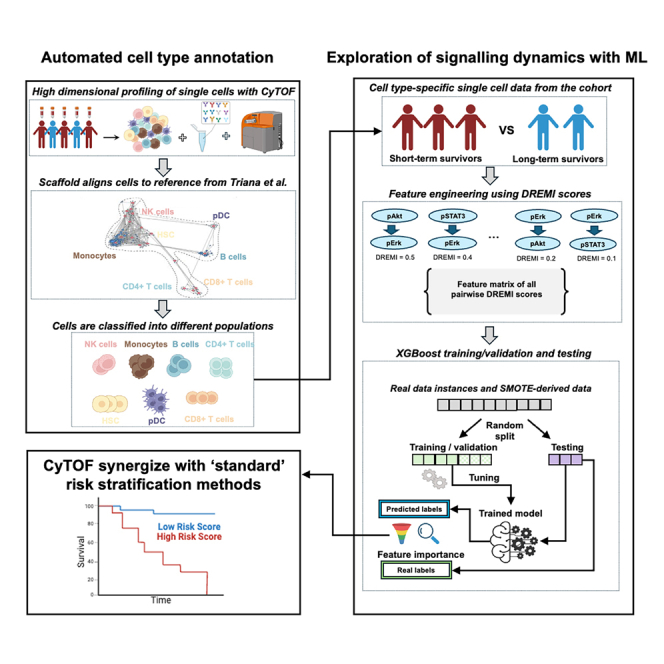 Figure 1
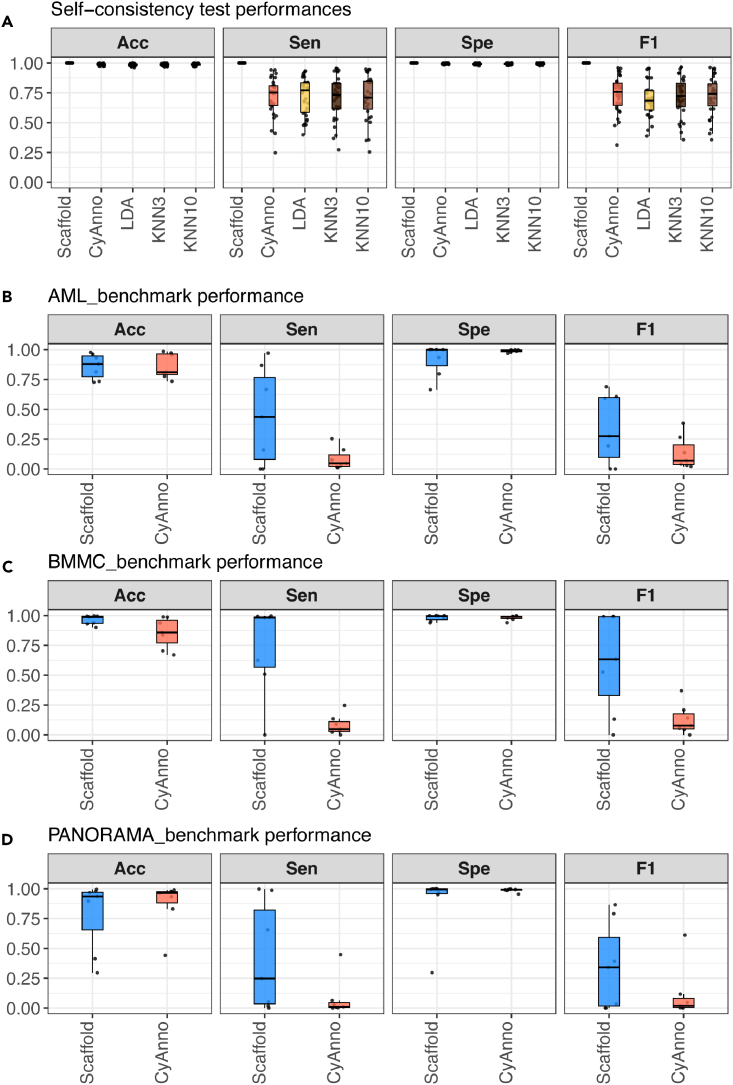 Figure 2
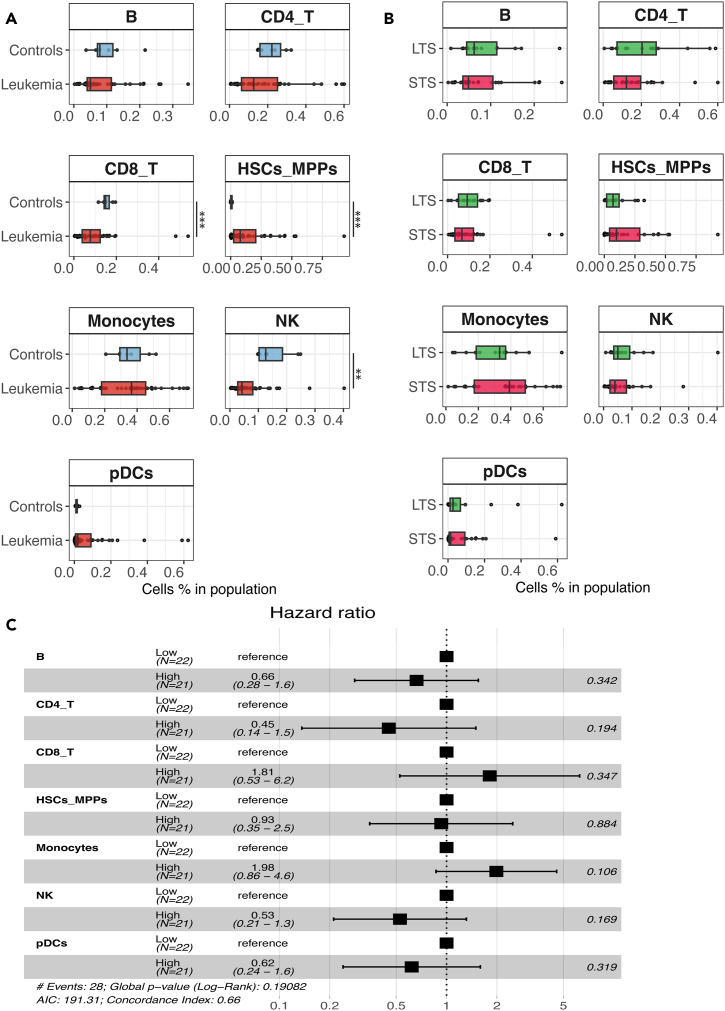 Figure 3
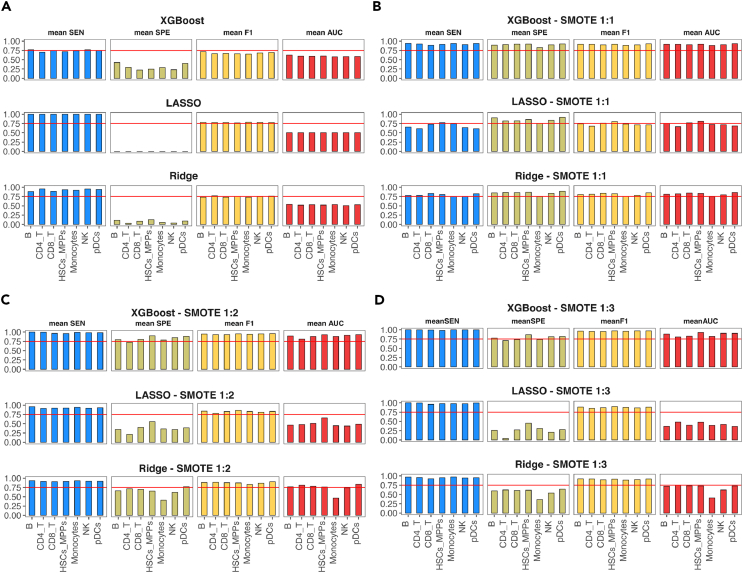 Figure 4
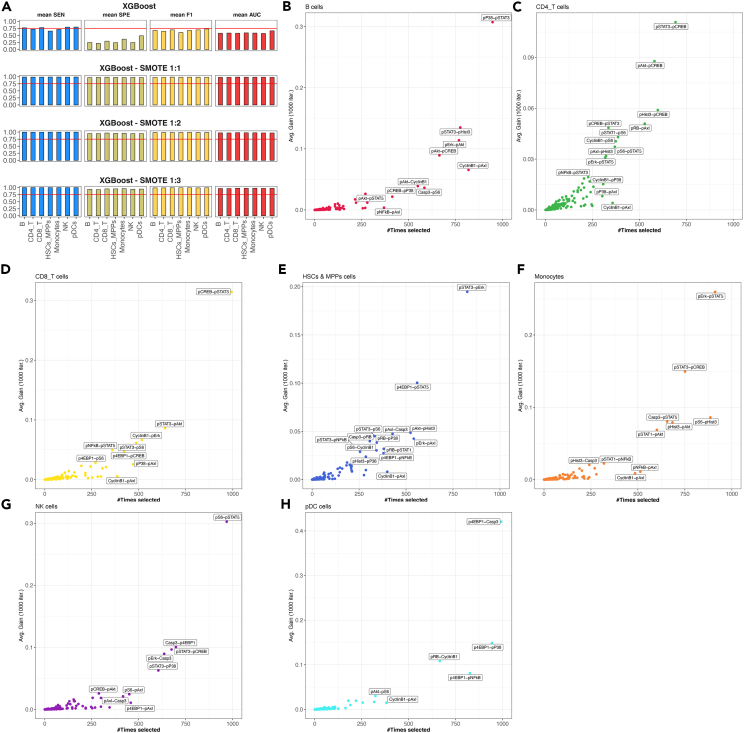 Figure 5
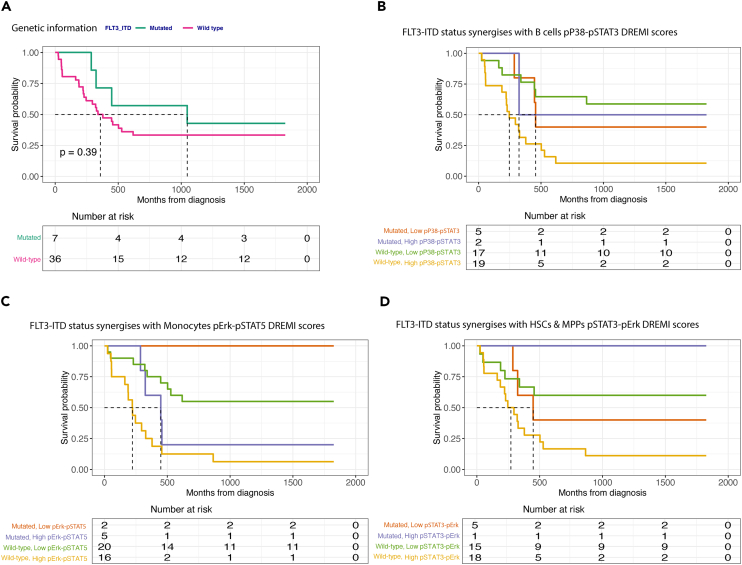 Figure 6
Peer Reviews
No public reviews on file for this paper yet. If you reviewed it on a platform where reviews are public (OpenReview, ICLR, NeurIPS, ICML), you can paste yours below so the community can read it here.
Videos
No videos yet. Explain this paper in a talk, walkthrough, or lecture? Add one.
Taxonomy
TopicsSingle-cell and spatial transcriptomics · Cell Image Analysis Techniques · Gene expression and cancer classification