Hydroxyl carboxylate anion catalyzed depolymerization of biopolyesters and transformation to chemicals
Yanfei Zhao, Hui Zhang, Fengtian Wu, Rongxiang Li, Minhao Tang, Yusi Wang, Wei Zeng, Buxing Han, Zhimin Liu

TL;DR
A new method uses ionic liquids to break down biopolyesters into useful chemicals without metals and at low temperatures.
Contribution
A novel metal-free protocol using hydroxyl carboxylate anions to depolymerize biopolyesters into chemicals under mild conditions.
Findings
Hydroxyl carboxylate anions activate ester groups via hydrogen bonding to initiate depolymerization.
Ionic liquids like 1-ethyl-3-methylimidazolium glycolate convert PGA into glycolic acid, esters, and amides efficiently.
The process works at low temperatures (e.g., 40 °C) and produces high yields of target chemicals.
Abstract
Upcycling biopolyesters (e.g., polyglycolic acid, PGA) into chemicals is an interesting and challenging topic. Herein, we report a novel protocol to upgrade biopolyesters derived from hydroxyl carboxylic acids over ionic liquids with a hydroxyl carboxylate anion (e.g., glycolate, lactate) into various chemicals under metal-free conditions. It is found that as hydrogen-bond donors and acceptors, hydroxyl carboxylate anions can readily activate the ester group via hydrogen bonding and decompose biopolyesters via autocatalyzed-transesterification to form hydroxyl carboxylate anion-based intermediates. These intermediates can react with various nucleophiles (e.g. H2O, methanol, amines and hydrazine) to access the corresponding acids, esters and amides under mild conditions (e.g., 40 °C). For example, 1-ethyl-3-methylimidazolium glycolate can achieve complete transformation of PGA into…
Genes, proteins, chemicals, diseases, species, mutations and cell lines named across the full text — each resolved to its canonical identifier and authoritative record.
Click any figure to enlarge with its caption.
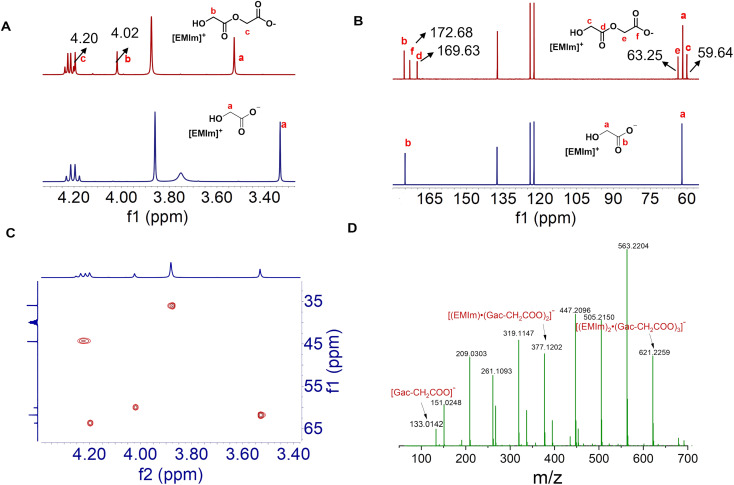 Figure 1
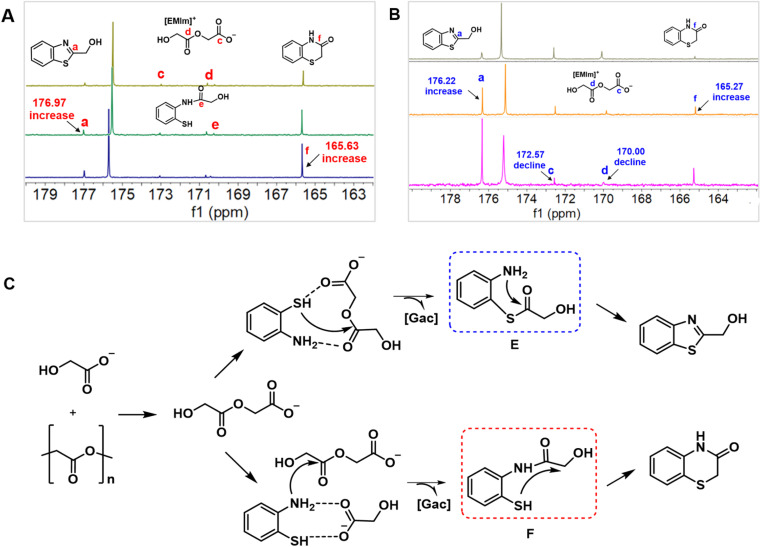 Figure 2
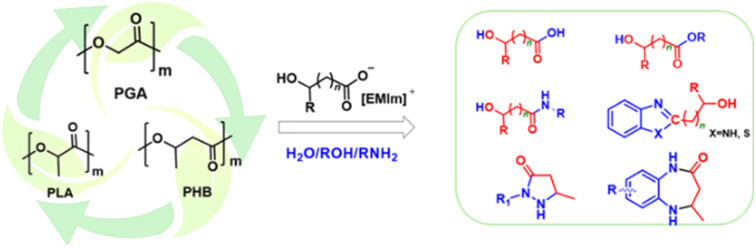 Figure 3
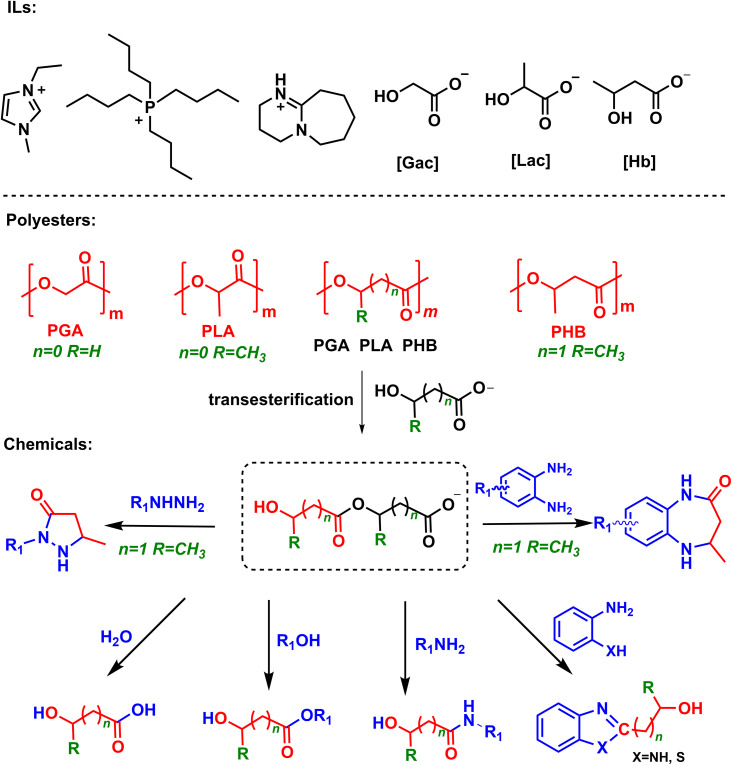 Figure 4
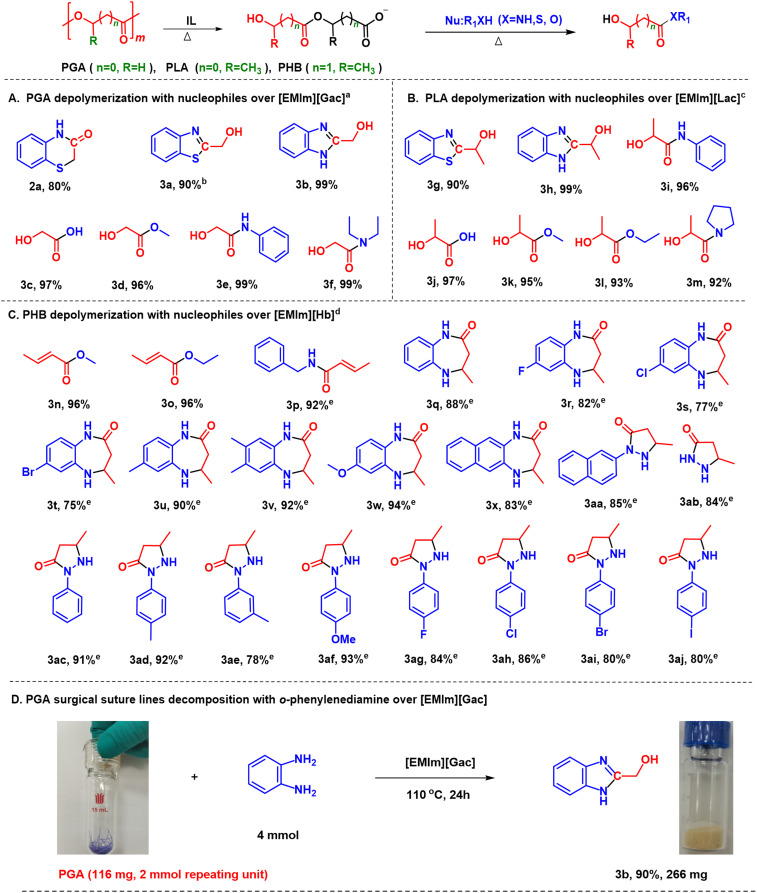 Figure 5
Peer Reviews
No public reviews on file for this paper yet. If you reviewed it on a platform where reviews are public (OpenReview, ICLR, NeurIPS, ICML), you can paste yours below so the community can read it here.
Videos
No videos yet. Explain this paper in a talk, walkthrough, or lecture? Add one.
Taxonomy
TopicsCarbon dioxide utilization in catalysis · Catalysis for Biomass Conversion · Ionic liquids properties and applications