Cooperation and social organization depend on weighing private and public reputations
Matteo Cavaliere, Guoli Yang, Carsten K. W. De Dreu, Jörg Gross

TL;DR
The paper explores how cooperation and social organization depend on balancing personal experiences and public reputation information from friends and enemies.
Contribution
The study introduces evolutionary agent-based simulations to analyze how different information prioritization strategies affect cooperation and social stability.
Findings
Prioritizing public information and using friend-and-enemy heuristics leads to polarization cycles and defector invasions.
Using friend-focused heuristics and private experiences results in stable and prosperous cooperative populations.
Combining personal experiences with friends' opinions promotes large-scale cooperation.
Abstract
To avoid exploitation by defectors, people can use past experiences with others when deciding to cooperate or not (‘private information’). Alternatively, people can derive others’ reputation from ‘public’ information provided by individuals within the social network. However, public information may be aligned or misaligned with one’s own private experiences and different individuals, such as ‘friends’ and ‘enemies’, may have different opinions about the reputation of others. Using evolutionary agent-based simulations, we examine how cooperation and social organization is shaped when agents (1) prioritize private or public information about others’ reputation, and (2) integrate others’ opinions using a friend-focused or a friend-and-enemy focused heuristic (relying on reputation information from only friends or also enemies, respectively). When agents prioritize public information and…
Genes, proteins, chemicals, diseases, species, mutations and cell lines named across the full text — each resolved to its canonical identifier and authoritative record.
Click any figure to enlarge with its caption.
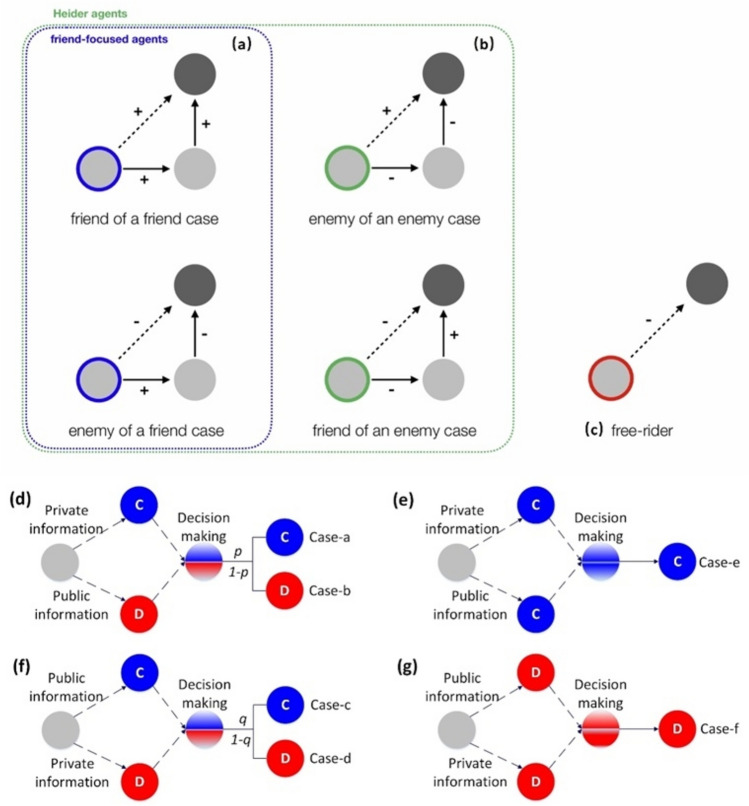 Figure 1
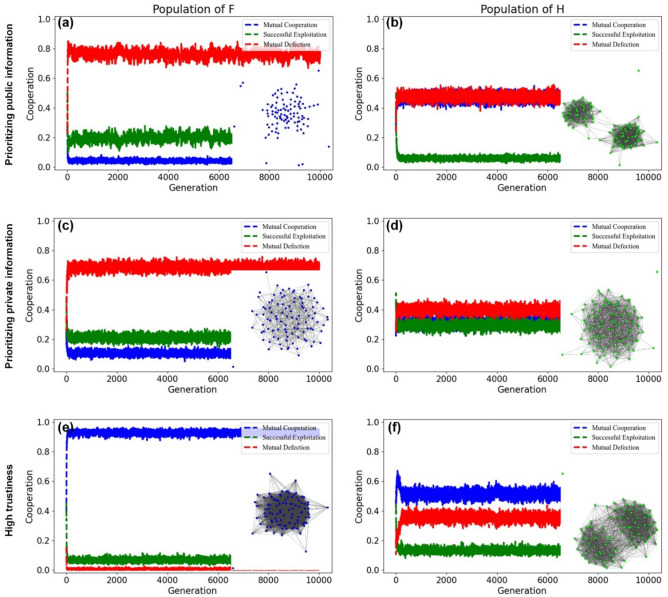 Figure 2
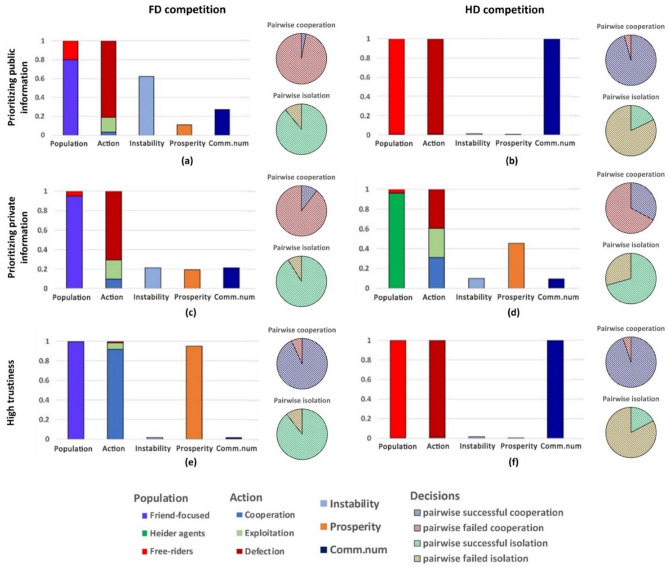 Figure 3
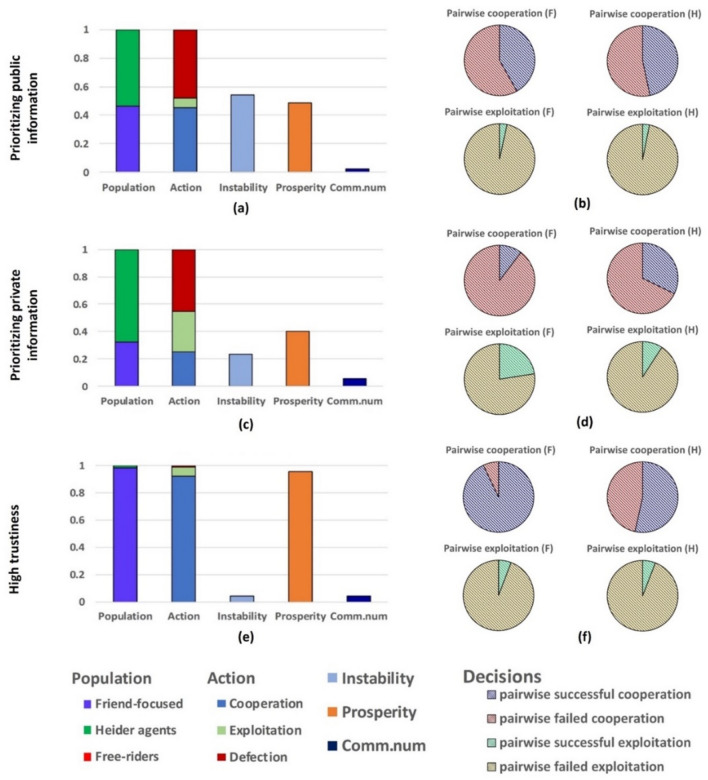 Figure 4
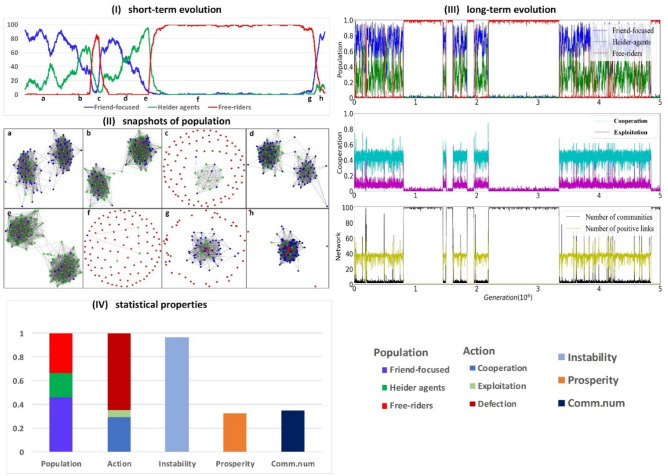 Figure 5
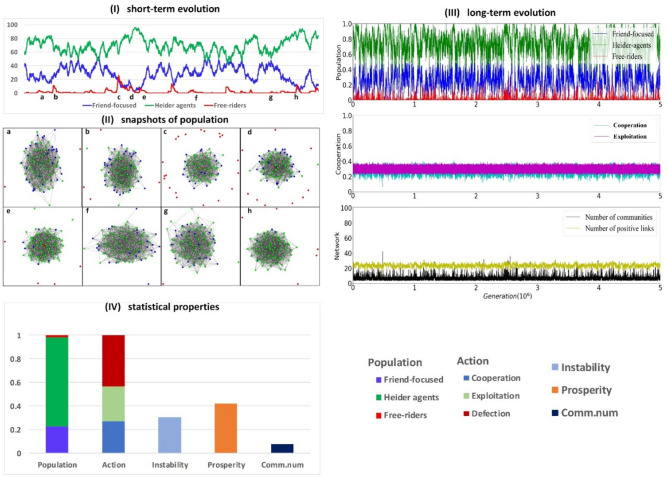 Figure 6
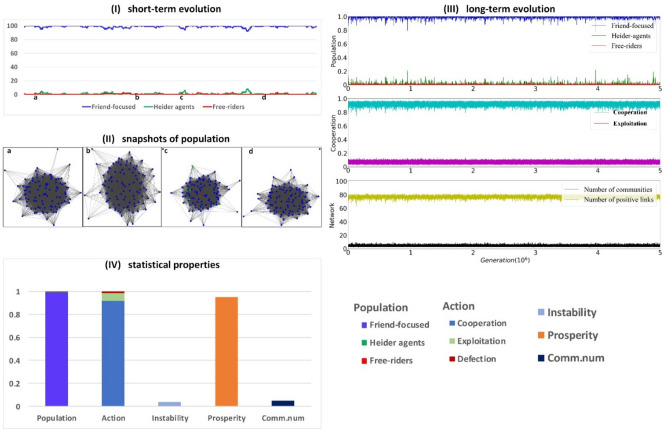 Figure 7
Peer Reviews
No public reviews on file for this paper yet. If you reviewed it on a platform where reviews are public (OpenReview, ICLR, NeurIPS, ICML), you can paste yours below so the community can read it here.
Videos
No videos yet. Explain this paper in a talk, walkthrough, or lecture? Add one.
Taxonomy
TopicsEvolutionary Game Theory and Cooperation · Experimental Behavioral Economics Studies · Cultural Differences and Values