TACSTD2 in gelatinous drop-like corneal dystrophy: variant functional analysis and expression in the cornea after limbal stem cell transplantation
Liubov O. Skorodumova, Ekaterina N. Grafskaia, Daria D. Kharlampieva, Dmitry I. Maltsev, Tatiana V. Petrova, Alexandra V. Kanygina, Elena V. Fedoseeva, Pavel V. Makarov, Boris E. Malyugin

TL;DR
This study investigates a rare eye disease called gelatinous drop-like corneal dystrophy (GDLD), focusing on a genetic variant in the TACSTD2 gene and its role in amyloid buildup in the cornea, even after a stem cell transplant.
Contribution
The study provides experimental evidence that amyloid recurrence in GDLD can occur after limbal stem cell transplantation despite normal TACSTD2 expression in donor cells.
Findings
A homozygous deletion in the TACSTD2 gene was found in a GDLD patient, leading to loss of transmembrane domain and protein mislocalization.
Post-transplant corneal samples showed wild-type TACSTD2 expression in donor cells, but amyloid deposition still occurred.
The recurrence of amyloid suggests that donor cell replacement alone may not prevent disease progression in GDLD.
Abstract
Gelatinous drop-like corneal dystrophy (GDLD) is a rare autosomal recessive eye disease. GDLD is characterized by the loss of barrier function in corneal epithelial cells (CECs) and amyloid deposition due to pathogenic variants in the TACSTD2 gene. Limbal stem cell transplantation (LSCT) has been suggested as an effective therapeutic alternative for patients with GDLD. However, despite LSCT, amyloid deposition recurs in some patients. The pathogenesis of recurrence is poorly studied. We present the case of a patient with GDLD. Genetic analysis revealed a homozygous deletion, NM_002353.3:c.653del, in the TACSTD2 gene. Functional analysis in a cell model system revealed the loss of the transmembrane domain and subcellular protein mislocalization. The patient with GDLD underwent direct allogeneic LSCT with epithelial debridement followed by deep anterior lamellar keratoplasty 10 months…
Genes, proteins, chemicals, diseases, species, mutations and cell lines named across the full text — each resolved to its canonical identifier and authoritative record.
Click any figure to enlarge with its caption.
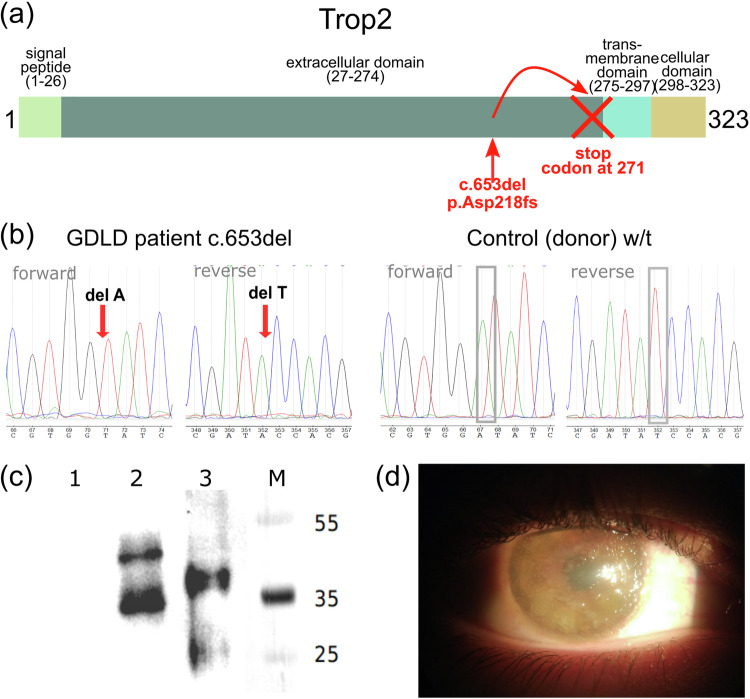 Figure 1
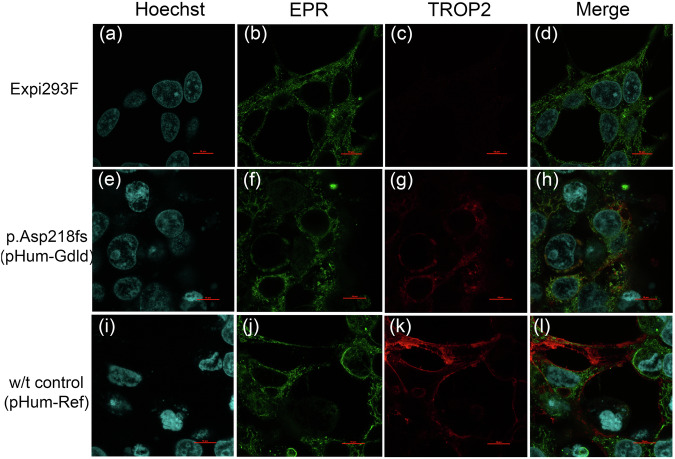 Figure 2
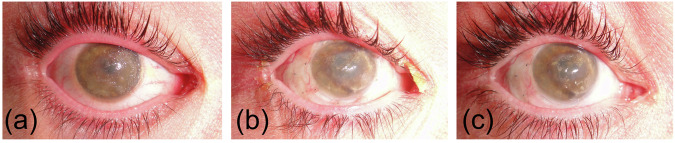 Figure 3
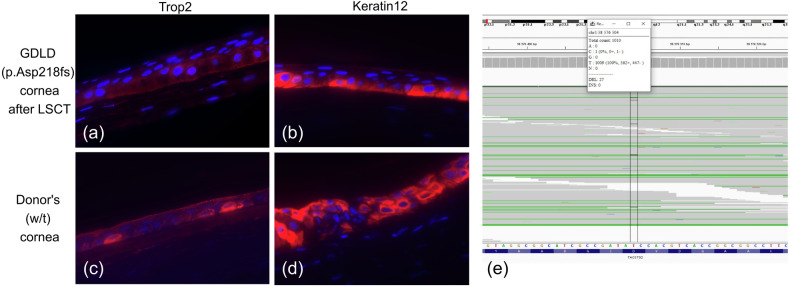 Figure 4
Peer Reviews
No public reviews on file for this paper yet. If you reviewed it on a platform where reviews are public (OpenReview, ICLR, NeurIPS, ICML), you can paste yours below so the community can read it here.
Videos
No videos yet. Explain this paper in a talk, walkthrough, or lecture? Add one.
Taxonomy
TopicsCorneal Surgery and Treatments · Corneal surgery and disorders · Ocular Surface and Contact Lens