The efficacy of the food-grade antimicrobial xanthorrhizol against Staphylococcus aureus is associated with McsL channel expression
Elena A. Mordukhova, Jongwan Kim, Haiyan Jin, Kyoung Tai No, Jae-Gu Pan

TL;DR
Xanthorrhizol, a natural compound, kills Staphylococcus aureus by targeting the McsL channel, showing potential as a new antimicrobial.
Contribution
Xanthorrhizol's mechanism of action is linked to the McsL channel in S. aureus, offering a novel antimicrobial strategy.
Findings
Xanthorrhizol reduces cell volume and causes cytoplasm efflux in S. aureus, suggesting McsL channel activation.
S. aureus lacking McsL is more resistant to xanthorrhizol, confirming the channel's role in susceptibility.
Xanthorrhizol enhances the effect of dihydrostreptomycin, an antibiotic that also targets McsL.
Abstract
The emergence and spread of multidrug-resistant Staphylococcus aureus strains demonstrates the urgent need for new antimicrobials. Xanthorrhizol, a plant-derived sesquiterpenoid compound, has a rapid killing effect on methicillin-susceptible strains and methicillin-resistant strains of S. aureus achieving the complete killing of staphylococcal cells within 2 min using 64 μg/mL xanthorrhizol. However, the mechanism of its action is not yet fully understood. The S. aureus cells treated with xanthorrhizol were studied using optical diffraction tomography. Activity of xanthorrhizol against the wild-type and mscL null mutant of S. aureus ATCC 29213 strain was evaluated in the time-kill assay. Molecular docking was conducted to predict the binding of xanthorrhizol to the SaMscL protein. Xanthorrhizol treatment of S. aureus cells revealed a decrease in cell volume, dry weight, and refractive…
Genes, proteins, chemicals, diseases, species, mutations and cell lines named across the full text — each resolved to its canonical identifier and authoritative record.
Click any figure to enlarge with its caption.
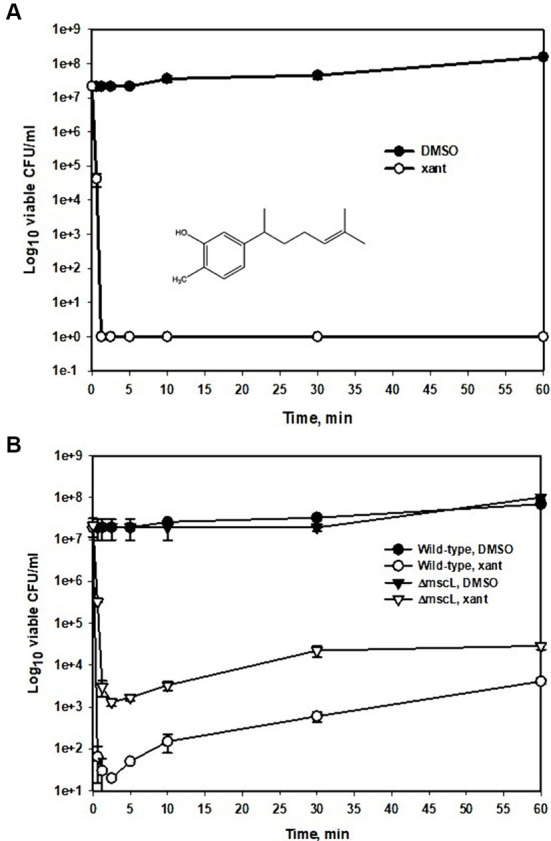 Figure 1
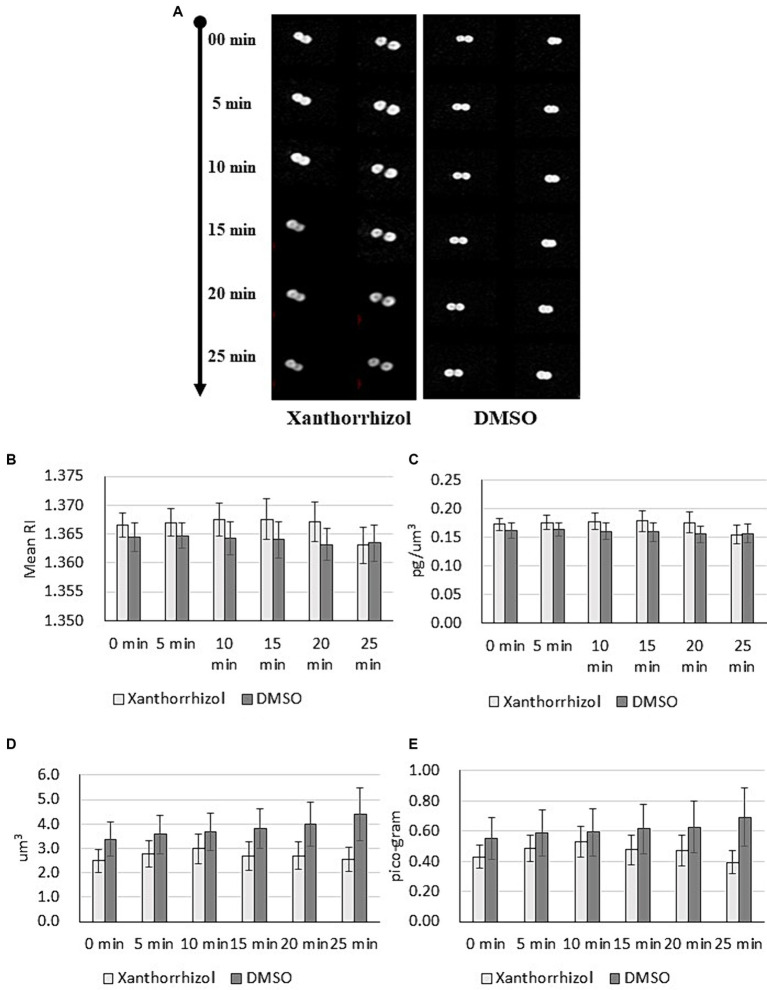 Figure 2
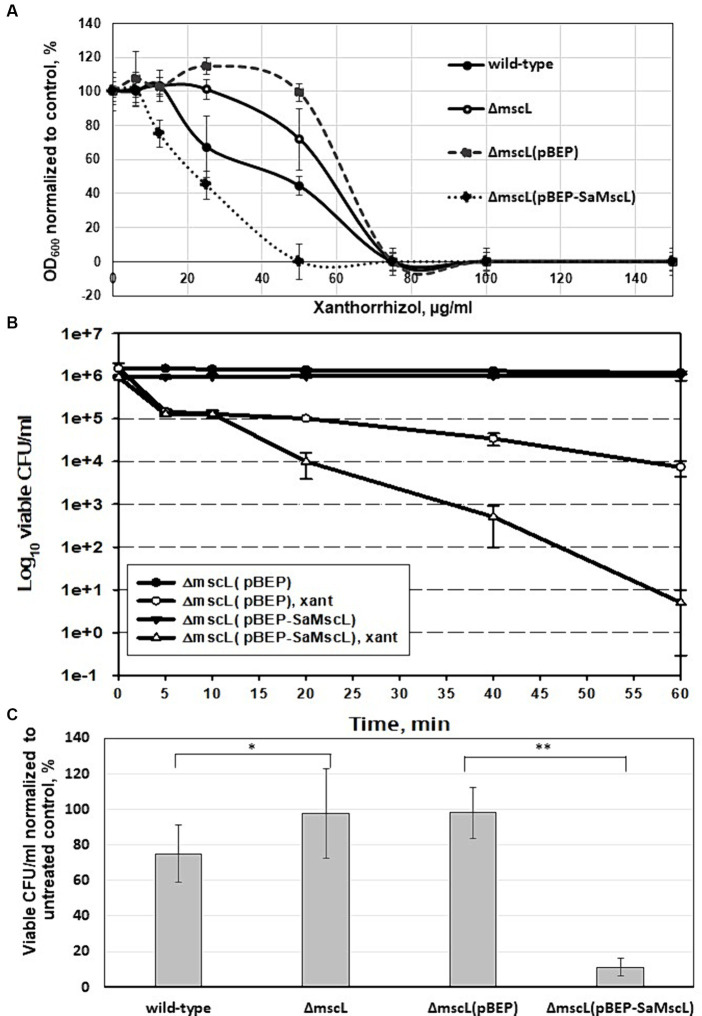 Figure 3
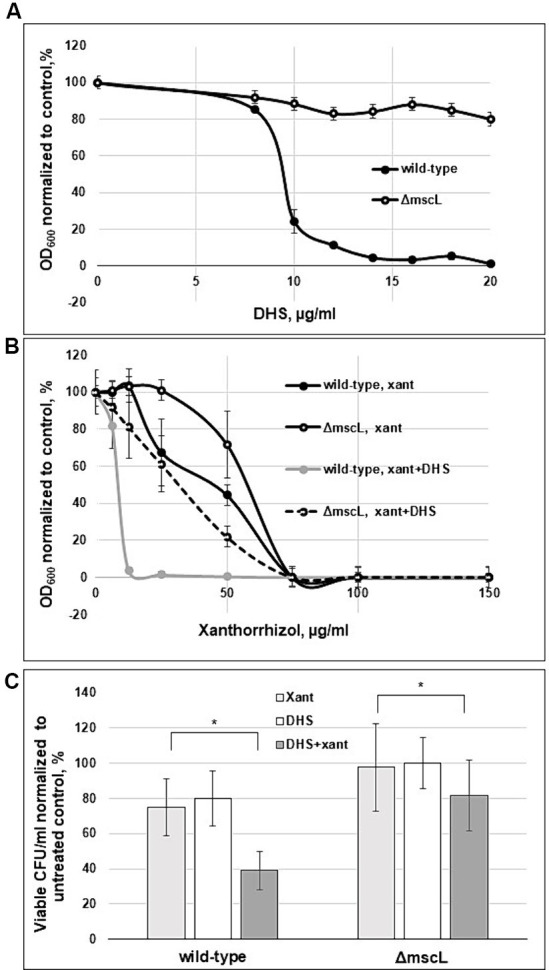 Figure 4
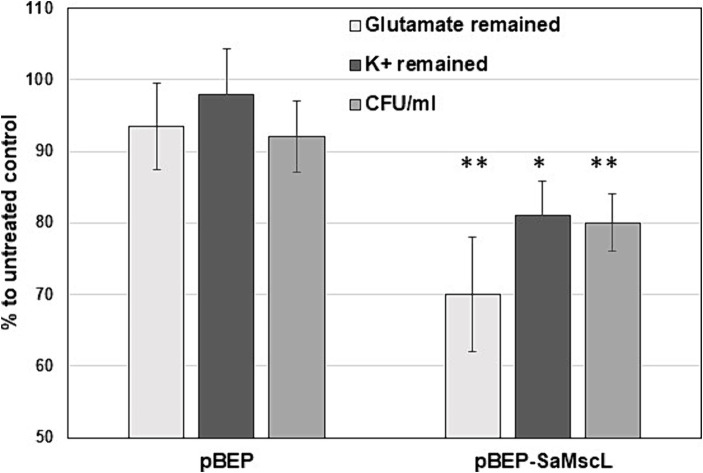 Figure 5
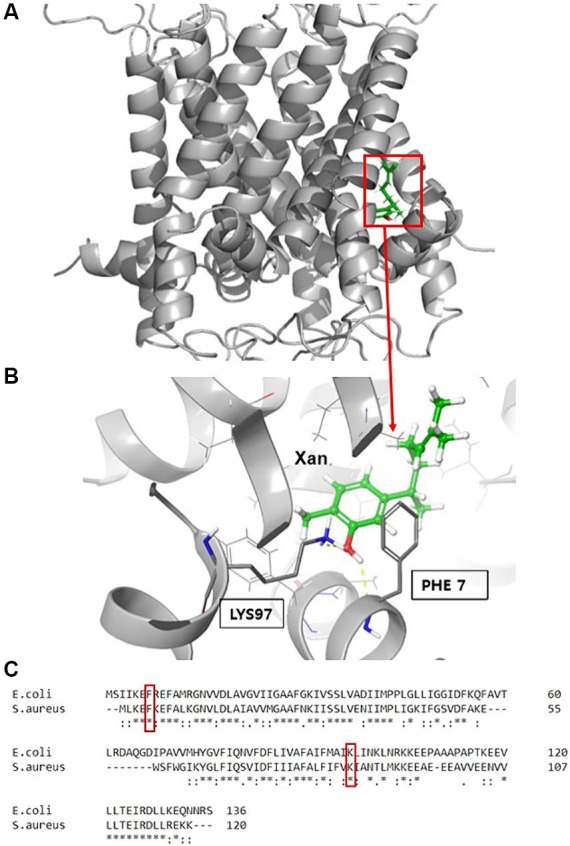 Figure 6
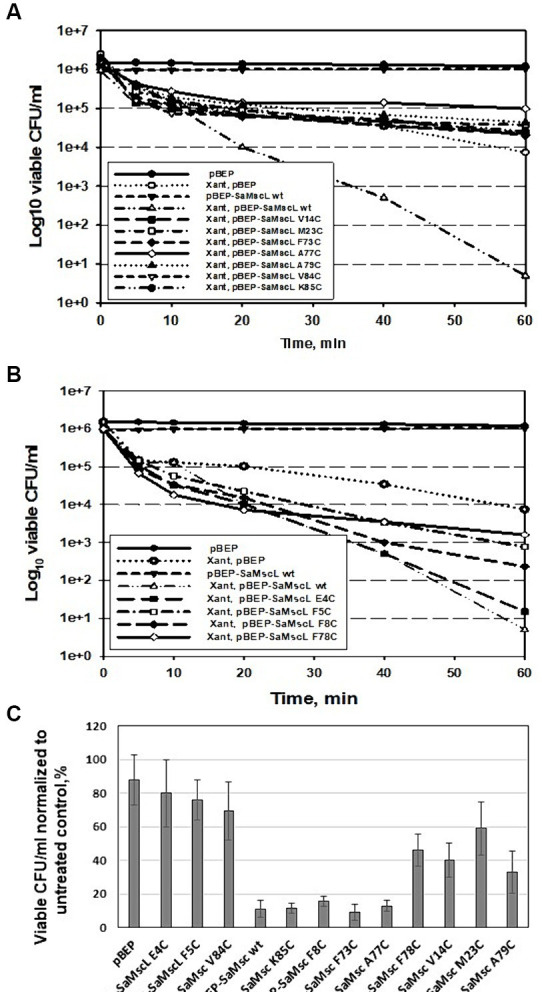 Figure 7
Peer Reviews
No public reviews on file for this paper yet. If you reviewed it on a platform where reviews are public (OpenReview, ICLR, NeurIPS, ICML), you can paste yours below so the community can read it here.
Videos
No videos yet. Explain this paper in a talk, walkthrough, or lecture? Add one.
Taxonomy
TopicsAntimicrobial Peptides and Activities · Antimicrobial agents and applications · Insect and Pesticide Research