Genetic specialization of key bifidobacterial phylotypes in multiple mother–infant dyad cohorts from geographically isolated populations
Sainaiwaer Aihetanmu, Zhixuan Liang, Xueling Zhang, Baolong Luo, Huimin Zhang, Jian Huang, Fengwei Tian, Hailong Sun, Yongqing Ni

TL;DR
This study explores how different types of bifidobacteria in the gut are passed from mothers to infants and how they vary among ethnic groups in China.
Contribution
The study reveals genetic specialization and vertical transmission of bifidobacteria in geographically isolated human populations.
Findings
Bifidobacteria strains from the same mother–infant pair were genetically similar, suggesting vertical transmission.
B. longum subsp. longum and B. breve showed genetic diversity linked to ethnicity, while B. animalis subsp. lactis strains clustered together regardless of ethnicity.
The findings suggest co-evolution between bifidobacteria and human populations, influencing strain selection for industrial or therapeutic use.
Abstract
Little has been known about symbiotic relationships and host specificity for symbionts in the human gut microbiome so far. Bifidobacteria are a paragon of the symbiotic bacteria biota in the human gut. In this study, we characterized the population genetic structure of three bifidobacteria species from 58 healthy mother–infant pairs of three ethnic groups in China, geographically isolated, by Rep-PCR, multi-locus sequence analysis (MLSA), and in vitro carbohydrate utilization. One hundred strains tested were incorporated into 50 sequence types (STs), of which 29 STs, 17 STs, and 4 STs belong to B. longum subsp. longum, B. breve, and B. animalis subsp. lactis, respectively. The conspecific strains from the same mother–child pair were genetically very similar, supporting the vertical transmission of Bifidobacterium phylotypes from mother to offspring. In particular, results based on…
Genes, proteins, chemicals, diseases, species, mutations and cell lines named across the full text — each resolved to its canonical identifier and authoritative record.
Click any figure to enlarge with its caption.
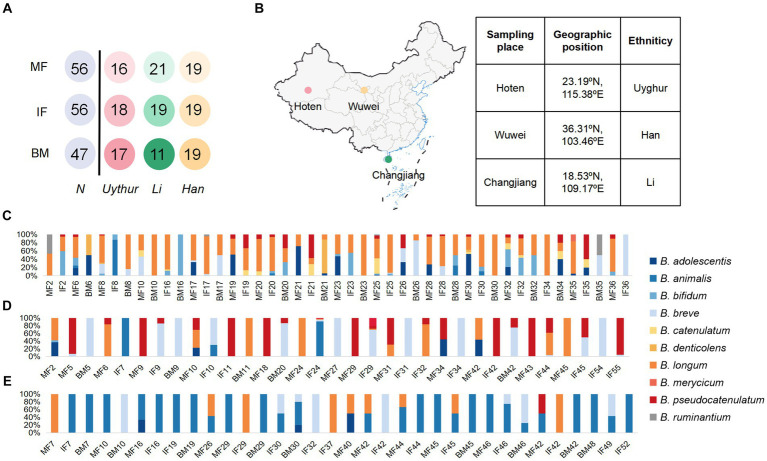 Figure 1
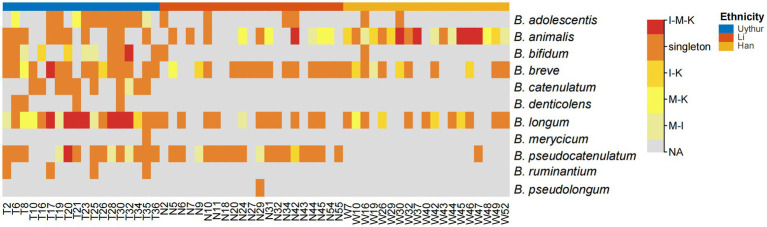 Figure 2
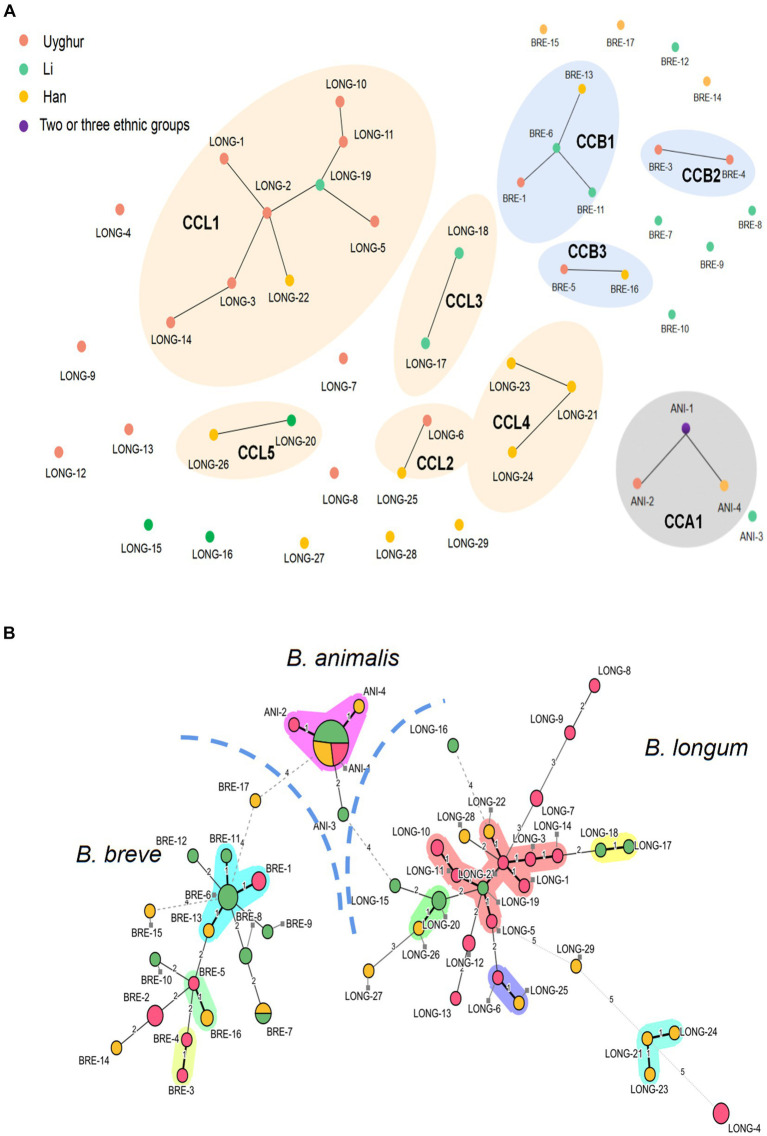 Figure 3
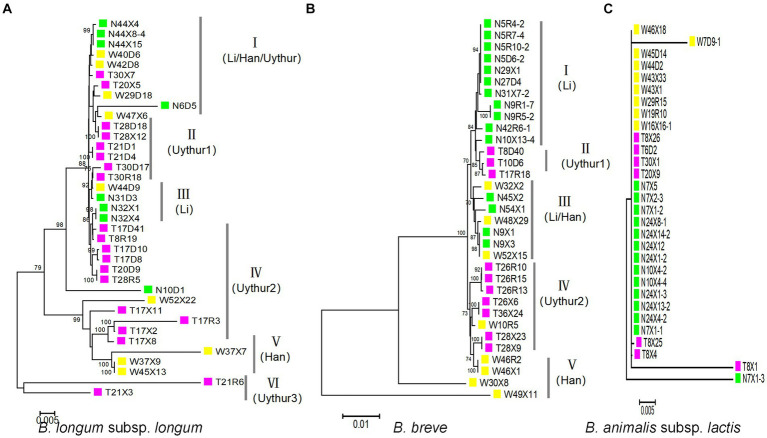 Figure 4
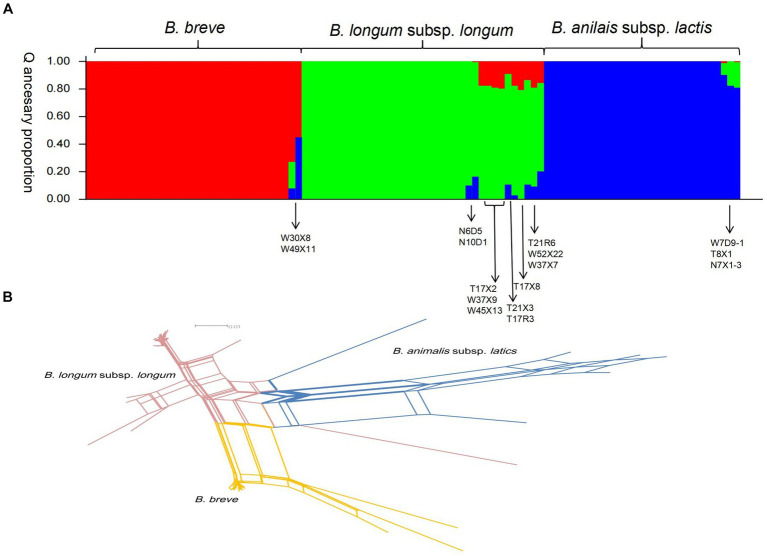 Figure 5
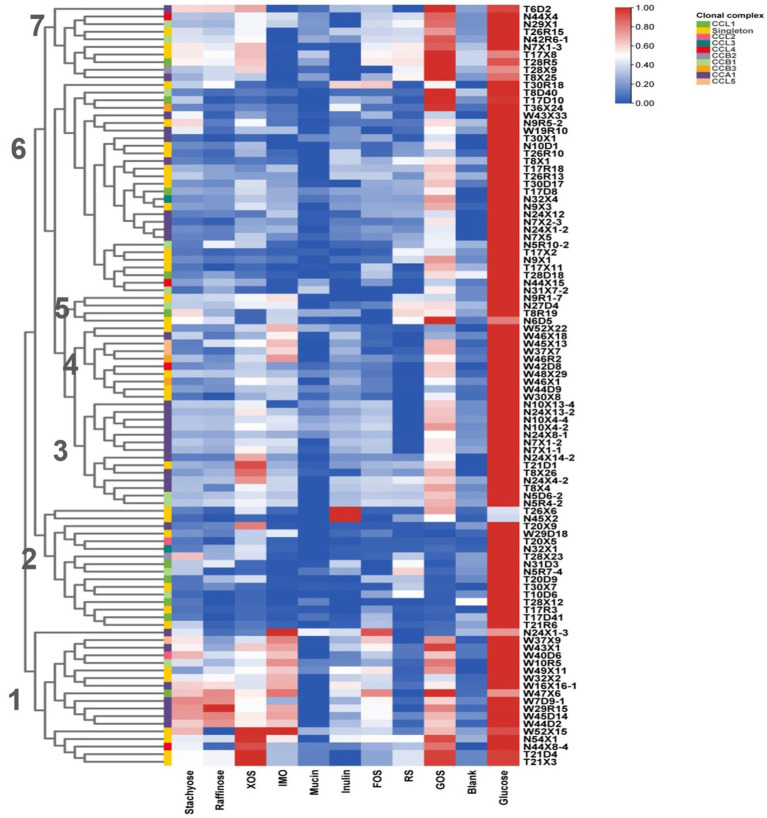 Figure 6
Peer Reviews
No public reviews on file for this paper yet. If you reviewed it on a platform where reviews are public (OpenReview, ICLR, NeurIPS, ICML), you can paste yours below so the community can read it here.
Videos
No videos yet. Explain this paper in a talk, walkthrough, or lecture? Add one.
Taxonomy
TopicsGut microbiota and health · Probiotics and Fermented Foods · Enterobacteriaceae and Cronobacter Research