Warning Function of Frank's Sign in Pre-Existing Cardiac Disease Patients: A Case Report
Mingzhe Wang, Yujing Zhang, Jiang Huang, Geping Liao, Wei Qian, Yaofu Zheng, Xiaoping Peng, Jianbing Zhu

TL;DR
A case report shows that Frank's sign, a skin fold near the ear, may help identify younger patients with heart disease, leading to early diagnosis and treatment.
Contribution
This case highlights the potential of Frank's sign as a simple screening tool for ischemic heart disease in younger patients.
Findings
A 49-year-old patient with Frank's sign and chest pain was found to have acute coronary syndrome.
The presence of Frank's sign was associated with a slit-like contrast defect and stenosis in the coronary artery.
The patient's symptoms improved after percutaneous coronary intervention, suggesting the importance of early diagnosis.
Abstract
Frank's sign (FS) refers to a diagonal skin fold between the tragus and the outer edge of the earlobe. FS has been identified as an independent variable in coronary artery disease (CAD). Young patients with FS and previous myocardial infarction are still rarely reported in clinical studies. We report the case of a 49-year-old male smoker and diabetic, with a history of myocardial infarction, who presented to the emergency department due to 2 h typical cardiac chest pain. His urgent electrocardiography (ECG) showed ST elevation, and cardiac biomarkers were elevated after admission. A diagonal earlobe crease (DELC) was observed in physical tests. The preliminary diagnosis considered acute coronary syndrome (ACS). Subsequently, acute coronary artery angiography demonstrated a slit-like contrast defect in the proximal right coronary artery (RCA), with stenosis and occlusion in the distal…
Genes, proteins, chemicals, diseases, species, mutations and cell lines named across the full text — each resolved to its canonical identifier and authoritative record.
Click any figure to enlarge with its caption.
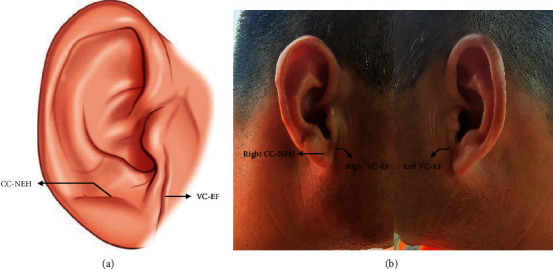 Figure 1
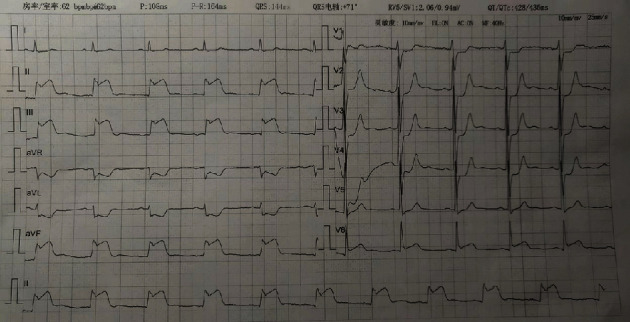 Figure 2
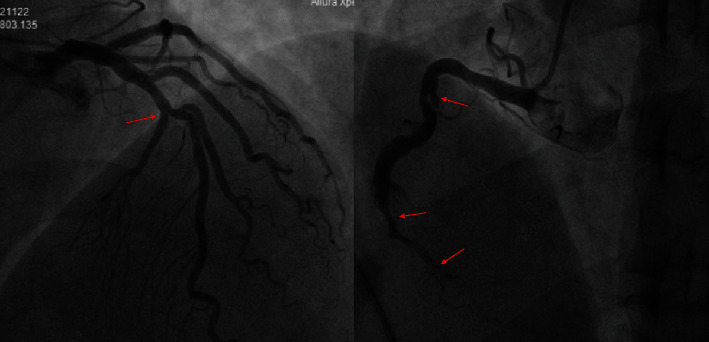 Figure 3
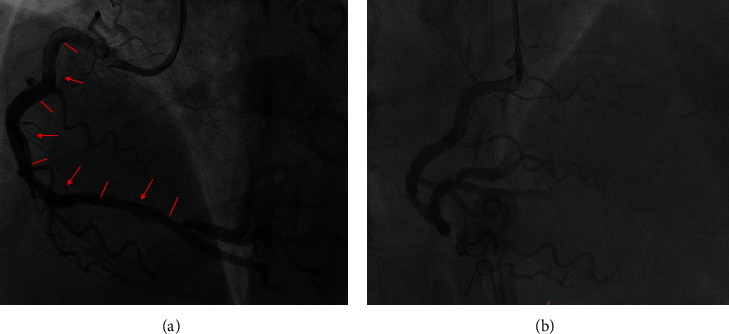 Figure 4
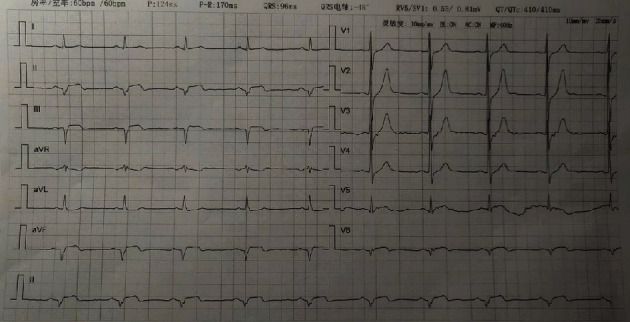 Figure 5
Peer Reviews
No public reviews on file for this paper yet. If you reviewed it on a platform where reviews are public (OpenReview, ICLR, NeurIPS, ICML), you can paste yours below so the community can read it here.
Videos
No videos yet. Explain this paper in a talk, walkthrough, or lecture? Add one.
Taxonomy
TopicsEar and Head Tumors · Ear Surgery and Otitis Media · Reconstructive Facial Surgery Techniques