Mechanical power density, spontaneous breathing indexes, and prolonged weaning failure: a prospective cohort study
Alessandro Ghiani, Swenja Walcher, Azal Lutfi, Joanna Paderewska, Simon Ulrich Jaeger, Nikolaus Kneidinger, Stephanie Susanne Stecher, Franziska Christina Trudzinski, Claus Neurohr

TL;DR
This study compares mechanical power density with traditional breathing indexes to predict which patients will struggle to wean off ventilators, finding that mechanical power density is more accurate.
Contribution
The study introduces mechanical power density as a more accurate predictor of prolonged weaning failure compared to traditional spontaneous breathing indexes.
Findings
Mechanical power density significantly outperformed traditional indexes in predicting weaning failure.
41 out of 140 patients experienced weaning failure, with measurable differences in mechanical power density and breathing indexes.
Mechanical power density had an AUROC of 0.91, higher than any traditional index tested.
Abstract
A prospective observational study comparing mechanical power density (MP normalized to dynamic compliance) with traditional spontaneous breathing indexes (e.g., predicted body weight normalized tidal volume [VT/PBW], rapid shallow breathing index [RSBI], or the integrative weaning index [IWI]) for predicting prolonged weaning failure in 140 tracheotomized patients. We assessed the diagnostic accuracy of these indexes at the start and end of the weaning procedure using ROC curve analysis, expressed as the area under the receiver operating characteristic curve (AUROC). Weaning failure occurred in 41 out of 140 patients (29%), demonstrating significantly higher MP density (6156 cmH2O2/min [4402–7910] vs. 3004 cmH2O2/min [2153–3917], P < 0.01), lower spontaneous VT/PBW (5.8 mL*kg−1 [4.8–6.8] vs. 6.6 mL*kg−1 [5.7–7.9], P < 0.01) higher RSBI (68 min−1*L−1 [44–91] vs. 55 min−1*L−1 [41–76], P <…
Genes, proteins, chemicals, diseases, species, mutations and cell lines named across the full text — each resolved to its canonical identifier and authoritative record.
Click any figure to enlarge with its caption.
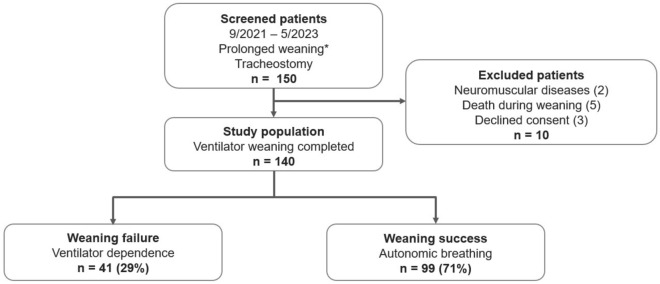 Figure 1
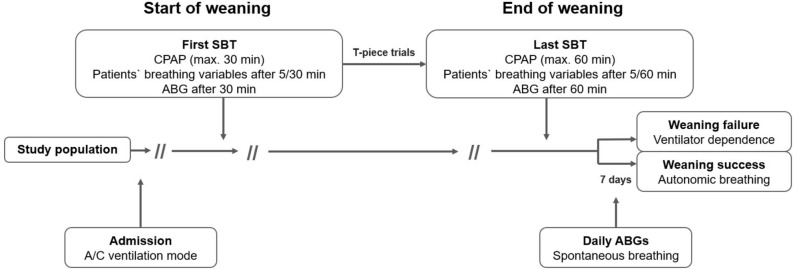 Figure 2
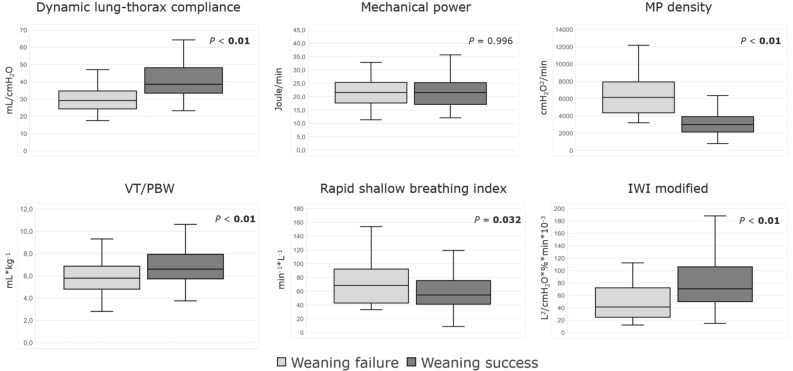 Figure 3
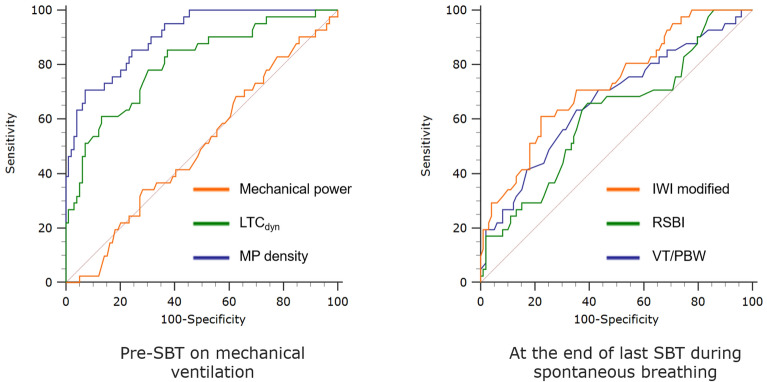 Figure 4
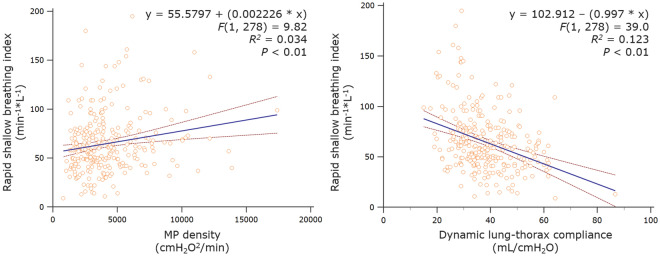 Figure 5
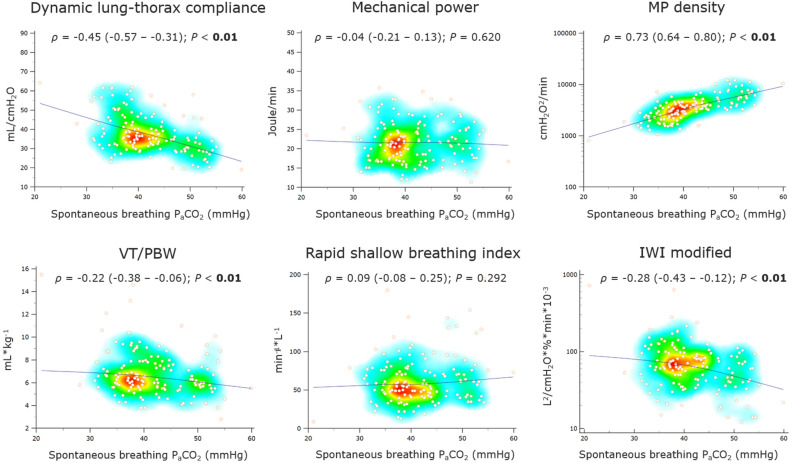 Figure 6
Peer Reviews
No public reviews on file for this paper yet. If you reviewed it on a platform where reviews are public (OpenReview, ICLR, NeurIPS, ICML), you can paste yours below so the community can read it here.
Videos
No videos yet. Explain this paper in a talk, walkthrough, or lecture? Add one.
Taxonomy
TopicsEthics and bioethics in healthcare