Stochastic journeys of cell progenies through compartments and the role of self-renewal, symmetric and asymmetric division
Hanan Dreiwi, Flavia Feliciangeli, Mario Castro, Grant Lythe, Carmen Molina-París, Martín López-García

TL;DR
This paper studies how cells move through developmental stages and how different types of cell division affect population growth and differentiation.
Contribution
The paper introduces a stochastic model to analyze cell progeny dynamics through compartments, incorporating self-renewal, symmetric, and asymmetric divisions.
Findings
Self-renewal probability determines whether cell progeny populations grow or remain finite.
Lifelines of single-cell descendants reveal patterns of division and death events across compartments.
The model is applied to hematopoietic and thymocyte differentiation, showing how bifurcations occur in terminal compartments.
Abstract
Division and differentiation events by which cell populations with specific functions are generated often take place as part of a developmental programme, which can be represented by a sequence of compartments. A compartment is the set of cells with common characteristics; sharing, for instance, a spatial location or a phenotype. Differentiation events are transitions from one compartment to the next. Cells may also die or divide. We consider three different types of division events: (i) where both daughter cells inherit the mother’s phenotype (self-renewal), (ii) where only one of the daughters changes phenotype (asymmetric division), and (iii) where both daughters change phenotype (symmetric division). The self-renewal probability in each compartment determines whether the progeny of a single cell, moving through the sequence of compartments, is finite or grows without bound. We…
Genes, proteins, chemicals, diseases, species, mutations and cell lines named across the full text — each resolved to its canonical identifier and authoritative record.
Click any figure to enlarge with its caption.
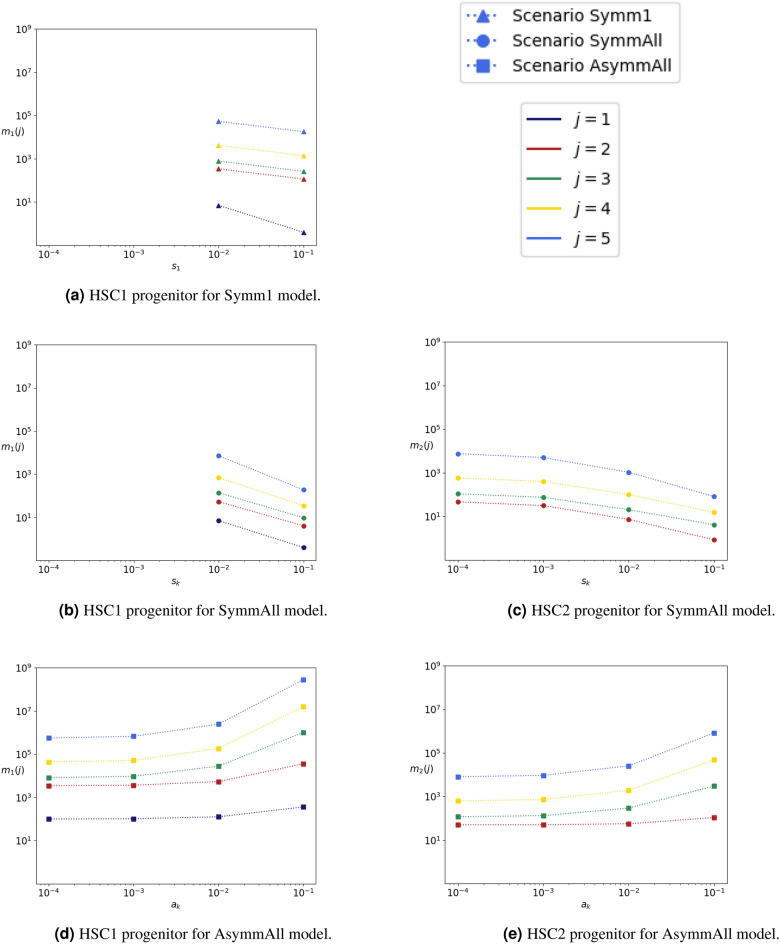 Figure 10
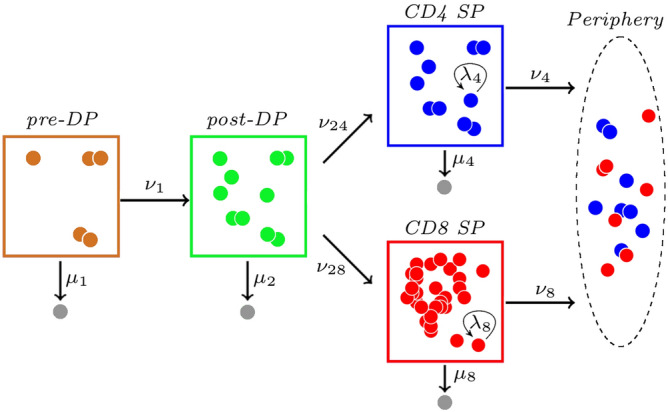 Figure 11
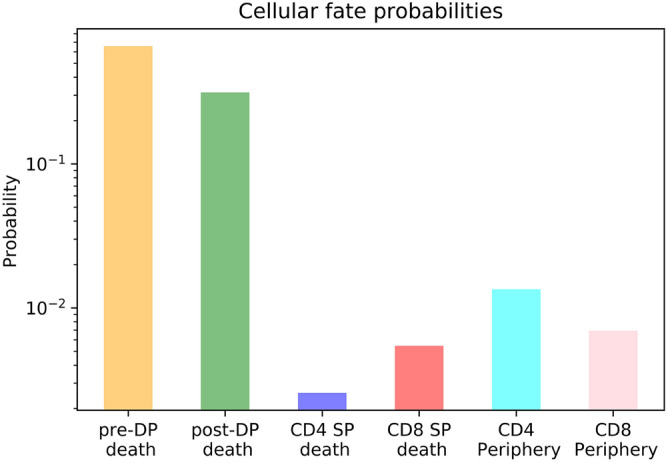 Figure 12
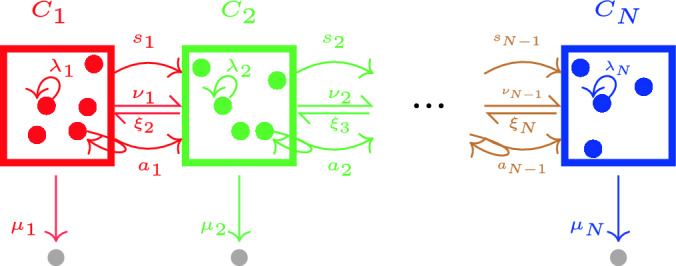 Figure 1
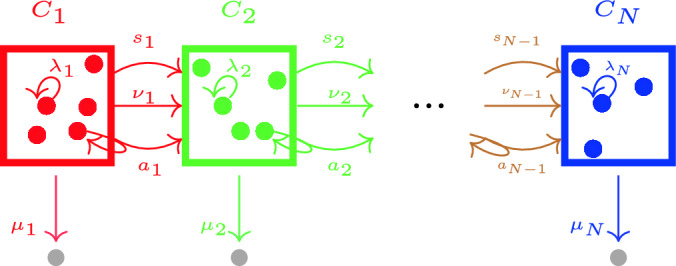 Figure 2
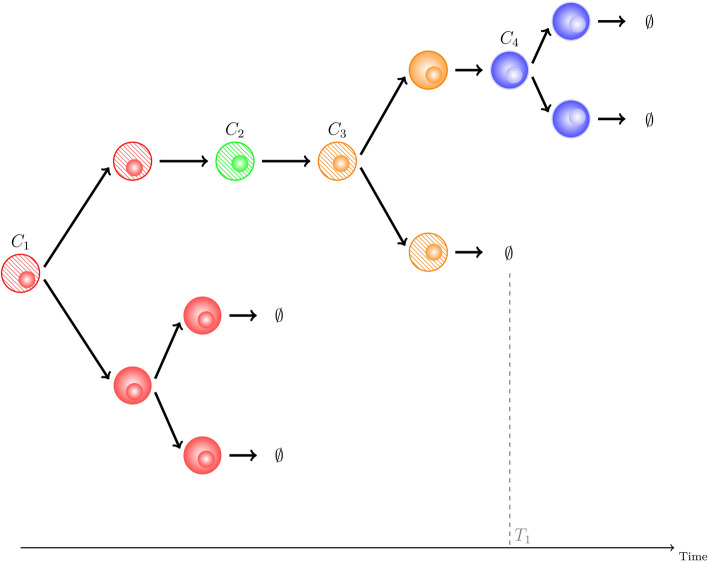 Figure 3
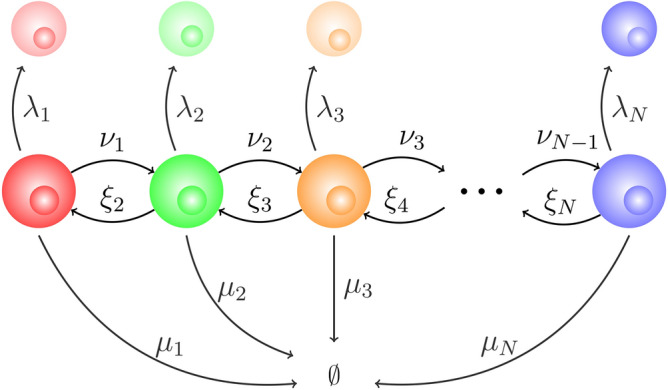 Figure 4
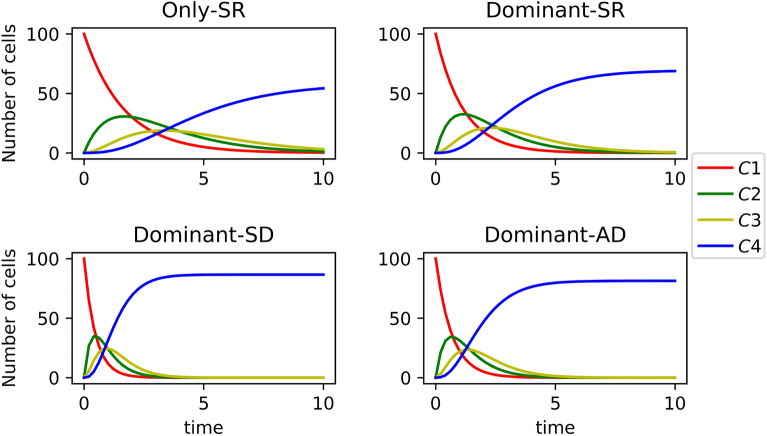 Figure 5
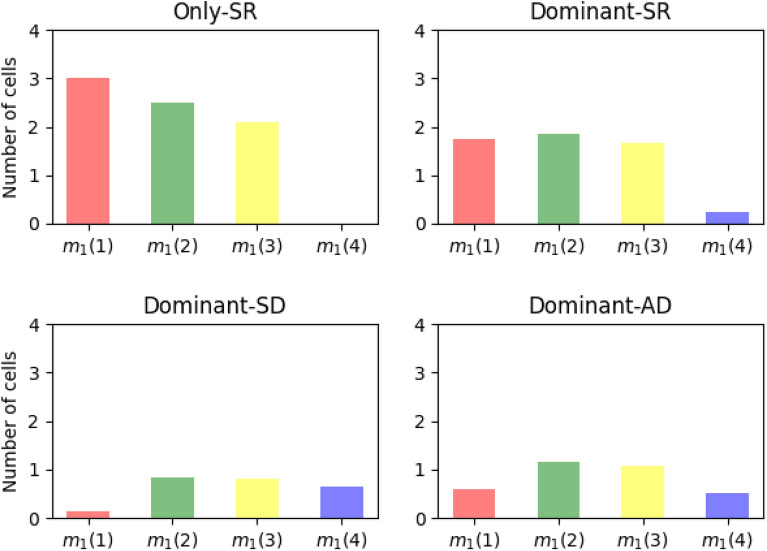 Figure 6
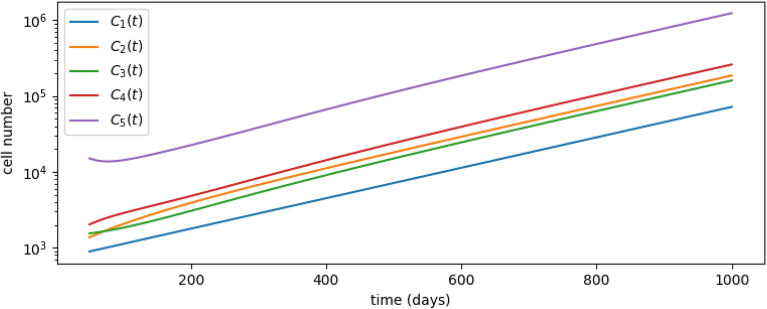 Figure 7
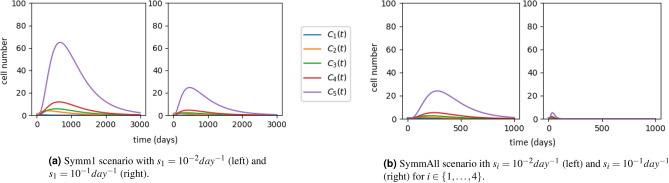 Figure 8
 Figure 9
Peer Reviews
No public reviews on file for this paper yet. If you reviewed it on a platform where reviews are public (OpenReview, ICLR, NeurIPS, ICML), you can paste yours below so the community can read it here.
Videos
No videos yet. Explain this paper in a talk, walkthrough, or lecture? Add one.
Taxonomy
TopicsCellular Mechanics and Interactions · Cancer Cells and Metastasis · Pluripotent Stem Cells Research