CDC Trioplex diagnostic assay underperforms in detection of circulating Chikungunya West African genotype
Mignane Ndiaye, Mouhamed Kane, Diamilatou Balde, Safietou Sankhé, Maimouna Mbanne, Seynabou Mbaye Souna Diop, Umar Ahmad, Gerald Mboowa, Samba Niang Sagne, Mamadou Cisse, Ndongo Dia, Amadou Alpha Sall, Ousmane Faye, Gamou Fall, Oumar Faye, Manfred Weidmann, Moussa Moïse Diagne

Abstract
Genes, proteins, chemicals, diseases, species, mutations and cell lines named across the full text — each resolved to its canonical identifier and authoritative record.
Click any figure to enlarge with its caption.
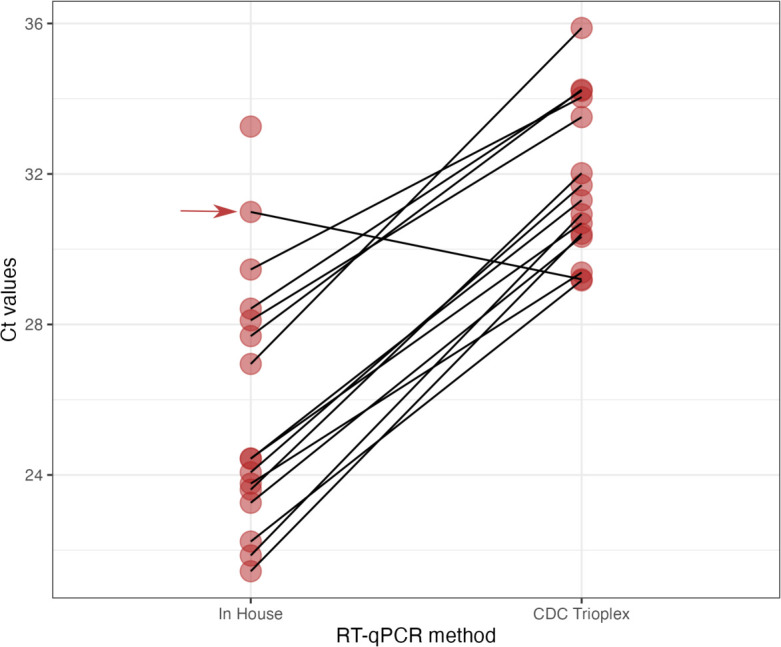 Fig 1
Fig 1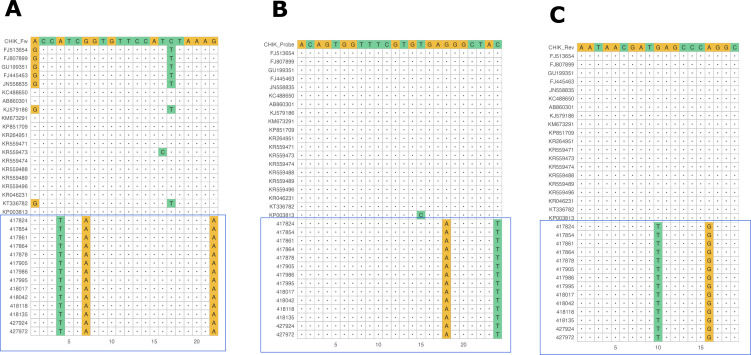 Fig 2
Fig 2- —HHS | NIH | OSC | Common Fund (NIH Common Fund)
Peer Reviews
No public reviews on file for this paper yet. If you reviewed it on a platform where reviews are public (OpenReview, ICLR, NeurIPS, ICML), you can paste yours below so the community can read it here.
Videos
No videos yet. Explain this paper in a talk, walkthrough, or lecture? Add one.
Taxonomy
TopicsMathematical and Theoretical Analysis · Matrix Theory and Algorithms · Mathematical Dynamics and Fractals
LETTER
Since 2015, the virology laboratory of the Institut Pasteur de Dakar (IPD) has been performing real-time molecular diagnostics of suspected arboviruses, including Chikungunya fever (CF) cases for the syndromic sentinel surveillance program of fevers 4S network (1). During the unprecedented recent largest ever CF outbreak in late 2023 in the southern part of the country affecting the regions of Kédougou and Tambacounda on October 2023, 210 RT-qPCR confirmed cases have been recorded (2). Due to the swift evolution of RNA viruses, it is essential to monitor mutations occurring within the primer- and probe-binding sites which may impact on the efficacy of these assays (3).
In response to the spread of Chikungunya virus (CHIKV) in Gambia (4) and in Burkina Faso (2) and the potential occurrence of an unprecedented number of CF cases in the subregion, we evaluated the performance of the donated CDC Trioplex RT-qPCR detection system for regular use, which allows the simultaneous detection of Zika virus, Dengue virus, and CHIKV using a set of serum samples collected during the initial phase of the ongoing epidemic in Senegal.
Surprisingly, we noticed a mean 7 Ct value delay of the Ct values of the CDC Trioplex in comparison to our in-house CHIKV RT-qPCR assay (5, 6) for 15 CHIKV RNA-positive samples collected from the ongoing Senegalese outbreak (Table S1; Fig. 1). To monitor for signature erosion, we performed whole genome sequencing of the RNA samples as described (7) (accession numbers in Table S1), and carried out an in silico analysis of both the in-house and CDC Trioplex oligonucleotides against targeted viral regions.
Comparison of Ct values for CHIKV between IPD in-house CHIKV PCR and CDC Trioplex PCR. On average, a delta CT value of 7 was observed. The CDC Trioplex kit positive control strain was the only RNA detected with a positive delta of CT 1.79 by the Trioplex CHIKV PCR (red arrow).
The in silico analysis revealed three, two, and two mismatches in the target sequences of the circulating CHIKV West Africa (WA) genotype for the forward, the reverse, and the probe oligonucleotides, respectively (Fig. 2; Fig. S1). The most prominent mismatch is on the 3-prime end of the forward oligonucleotide, which is known to upset efficient elongation (8).
CHIKV Trioplex oligonucleotide against newly sequenced CHIKV WA genotype sequence NSP1 target sites highlighted in blue rectangle; A, B, and C indicate forward, probe, and reverse oligonucleotide, respectively.
Additionally, previous studies show that genetic variation in the viral genome at primer/probe binding regions can result in potential mismatches and false negative results (9). Altogether, a total of seven mismatches across the CHIKV NSP1 amplicon including two in the probe have a significant impact on the performance of the Trioplex CHIKV PCR.
The detection shift of approximately two logs in quantity can potentially increase the false negative rate when using the CDC Trioplex PCR in samples with intermediate to low viral load (Ct values > Ct 28). The CHIKV WA genotype circulating in Senegal can still be detected by the IPD in-house assay (4). The in silico analysis revealed no mismatches of this oligonucleotide set when aligned to a broad range of previously described and newly determined contemporary CHIKV WA genotype sequences (Fig. S2). The only RNA detected earlier than the CHIKV WA RNA by the Trioplex assay is the RNA provided with the kit. The details of the origin of this RNA should be made available to allow verifying its sequence in alignments. It is most likely that the failure of the test is due to not including a West-African genotype strain in the validation panel for the Trioplex assay. These findings underscore the importance of monitoring assay performance and conducting genomic surveillance during outbreaks.
The reference list from the paper itself. Each links out to its DOI / PubMed record.
- 1Dia N, Diene Sarr F, Thiam D, Faye Sarr T, Espié E, Omar Ba I, Coly M, Niang M, Richard V, 4S Network Group. 2014. Influenza-like illnesses in Senegal: not only focus on influenza viruses. P Lo S One 9:e 93227. doi:10.1371/journal.pone.009322724675982 PMC 3968133 · doi ↗ · pubmed ↗
- 2Epidémies de Chikungunya au Burkina Faso et au Sénégal. 2024. Epidémies de Chikungunya au Burkina Faso et au Sénégal. Available from: https://www.mesvaccins.net/web/news/21302-epidemies-de-chikungunya-au-burkina-faso-et-au-senegal
- 3Patel R, Babady E, Theel ES, Storch GA, Pinsky BA, St George K, Smith TC, Bertuzzi S. 2020. Report from the American society for microbiology COVID-19 international summit, 23 March 2020: value of diagnostic testing for SARS-Co V-2/COVID-19. m Bio 11:e 00722-20. doi:10.1128/m Bio.00722-2032217609 PMC 7157705 · doi ↗ · pubmed ↗
- 4Jallow AW, Dieng I, Sanneh B, Barry MA, Talla C, Sanneh ML, Sagne SN, Cisse M, Mendy A, Kijera M, et al.. 2024. Detection of Chikungunya virus in the Gambia through a newly implemented sentinel surveillance program. med Rxiv. doi:10.1101/2024.03.11.24303694 · doi ↗
- 5Sow A, Faye O, Diallo M, Diallo D, Chen R, Faye O, Diagne CT, Guerbois M, Weidmann M, Ndiaye Y, Senghor CS, Faye A, Diop OM, Sadio B, Ndiaye O, Watts D, Hanley KA, Dia AT, Malvy D, Weaver SC, Sall AA. 2018. Chikungunya outbreak in Kedougou, southeastern Senegal in 2009-2010. Open Forum Infect Dis 5:fx 259. doi:10.1093/ofid/ofx 259PMC 576794529354659 · doi ↗ · pubmed ↗
- 6Pastorino B, Bessaud M, Grandadam M, Murri S, Tolou HJ, Peyrefitte CN. 2005. Development of a Taq Man RT-PCR assay without RNA extraction step for the detection and quantification of African Chikungunya viruses. J Virol Methods 124:65–71. doi:10.1016/j.jviromet.2004.11.00215664052 · doi ↗ · pubmed ↗
- 7Virological. 2024. Chikungunya virus genomic characterization during an outbreak in Kedougou, southeastern Senegal, 2023 - Chikungunya virus. Available from: https://virological.org/t/chikungunya-virus-genomic-characterization-during-an-outbreak-in-kedougou-southeastern-senegal-2023/94910.1080/22221751.2024.2373308 PMC 1126825838934257 · doi ↗ · pubmed ↗
- 8Newton CR, Graham A, Heptinstall LE, Powell SJ, Summers C, Kalsheker N, Smith JC, Markham AF. 1989. Analysis of any point mutation in DNA. The amplification refractory mutation system (ARMS). Nucleic Acids Res 17:2503–2516. doi:10.1093/nar/17.7.25032785681 PMC 317639 · doi ↗ · pubmed ↗