A randomized controlled trial of ivabradine in patients with acute myocardial infarction related cardiogenic shock
Alejandro Alcaraz-Guzmán, Eder Jonathan Amaro-Palomo, Arturo Maximiliano Ruiz-Beltrán, Braiana Ángeles Díaz-Herrera, Raúl Rodrigo Neri-Bale, Lilia Hernández-Bravo, Manuel A. Candia-Ramírez, Rodrigo Gopar-Nieto, Héctor González-Pacheco, Jorge Daniel Sierra-Lara Martinez

TL;DR
This study tested if ivabradine can lower heart rate in patients with heart attack-related shock without worsening other heart functions.
Contribution
The study provides new evidence on ivabradine's effect on heart rate in acute myocardial infarction-related cardiogenic shock.
Findings
Ivabradine significantly reduced heart rate at 12 and 48 hours post-randomization.
No significant changes in cardiac index or other hemodynamic parameters were observed.
Hospital stay and mortality rates were similar between groups.
Abstract
. Acute myocardial infarction-related cardiogenic shock (AMI-CS) is often accompanied by tachycardia, which, in turn, increases myocardial oxygen consumption and hinders the use of ventricular assist devices, such as intra-aortic balloon pump. Evidence suggests that ivabradine may reduce heart rate (HR) without affecting other hemodynamic parameters. The aim of the present study was to determine the effect of ivabradine on reducing HR and changes in other hemodynamic parameters such as cardiac index (CI), in patients with AMI-CS and tachycardia. . A single-center, open label, randomized clinical trial included patients diagnosed with AMI-CS and tachycardia with >100 beats per minute (BPM). Heart rate, cardiac index, and other hemodynamic parameters measured by pulmonary flotation catheter were compared at 0, 6, 12, 24, and 48 hours after randomization. . A total of 12 patients were…
Genes, proteins, chemicals, diseases, species, mutations and cell lines named across the full text — each resolved to its canonical identifier and authoritative record.
Click any figure to enlarge with its caption.
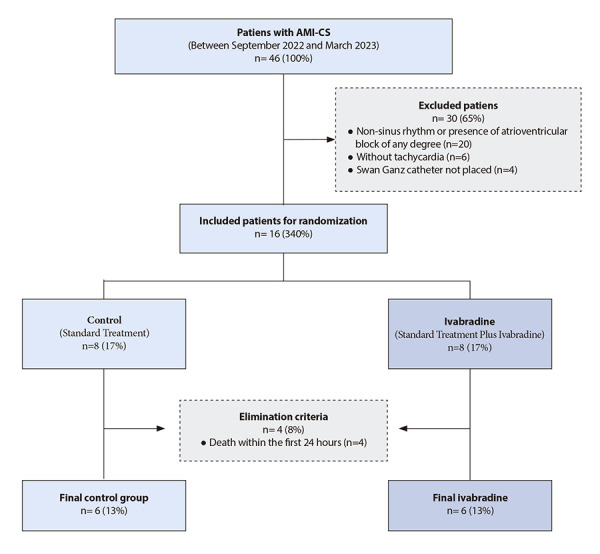 Figure 1
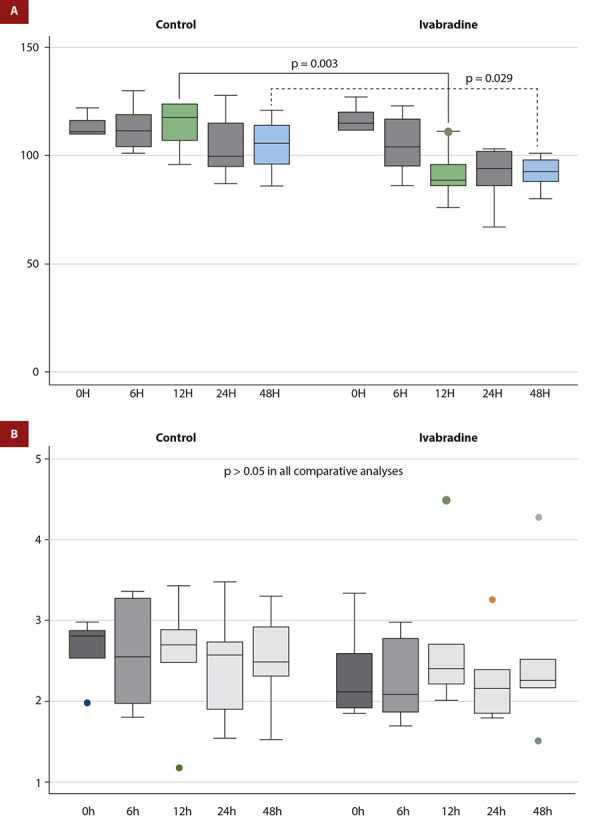 Figure 2
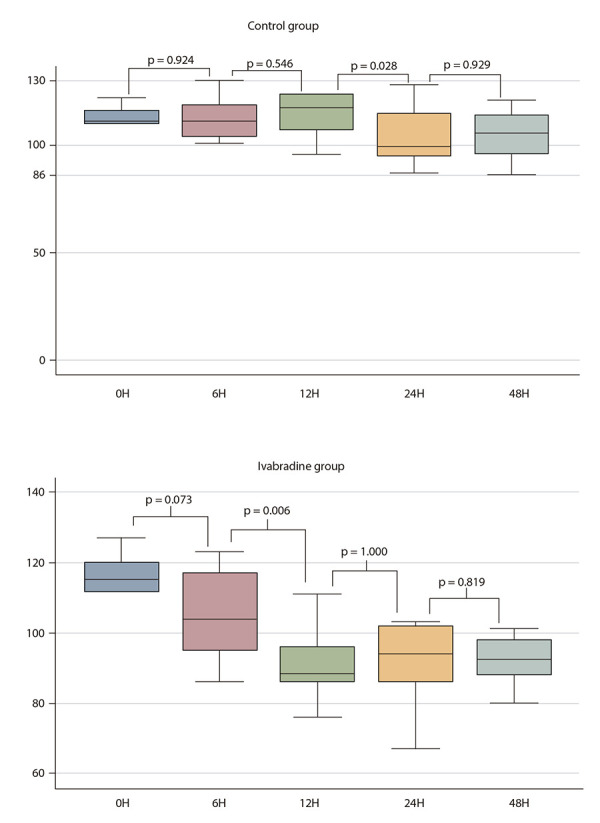 Figure 3
Peer Reviews
No public reviews on file for this paper yet. If you reviewed it on a platform where reviews are public (OpenReview, ICLR, NeurIPS, ICML), you can paste yours below so the community can read it here.
Videos
No videos yet. Explain this paper in a talk, walkthrough, or lecture? Add one.
Taxonomy
TopicsHeart rate and cardiovascular health · Cardiac Arrhythmias and Treatments · Cardiovascular Issues in Pregnancy