Histopathology of the Tongue in a Hamster Model of COVID-19
John M Coggins, Marina Hosotani Saito, Rebecca Cook, Shinji Urata, Megumi Urata, Nantian Lin Harsell, Wilhelmina Nanrui Tan, Bibiana Toro Figueira, Megan Bradley, Nadia Z. Quadri, Janisah Amirah I. Saripada, Rachel A. Reyna, Junki Maruyama, Slobodan Paessler, Tomoko Makishima

TL;DR
This study examines how SARS-CoV-2 affects the tongue in hamsters, focusing on taste-related changes and viral distribution.
Contribution
The study identifies specific locations of SARS-CoV-2 in the hamster tongue, linking viral presence to taste disturbances and salivary gland dysfunction.
Findings
SARS-CoV-2 antigen was detected in circumvallate papillae taste buds and autonomic ganglia during the infection period.
The virus was also found in serous and mucous salivary glands of the posterior tongue throughout the study period.
No changes in fungiform or filiform papillae density were observed during the infection.
Abstract
With altered sense of taste being a common symptom of coronavirus disease 2019 (COVID-19), our objective was to investigate the presence and distribution of severe acute respiratory syndrome coronavirus-2 (SARS-CoV-2) within the tongue over the course of infection. Golden Syrian hamsters were inoculated intranasally with SARS-CoV-2 and tongues were collected at 2, 3, 5, 8, 17, 21, 35, and 42 days post-infection (dpi) for analysis. In order to test for gross changes in the tongue, the papillae of the tongue were counted. Paraffin-embedded thin sections of the tongues were labeled for the presence of SARS-CoV-2 antigen. There was no difference in fungiform or filiform papillae density throughout the course of infection. SARS-CoV-2 antigen was observed in the circumvallate papillae taste buds (3–35 dpi) and autonomic ganglia (5–35 dpi), as well as in the serous and mucous salivary glands…
Genes, proteins, chemicals, diseases, species, mutations and cell lines named across the full text — each resolved to its canonical identifier and authoritative record.
Click any figure to enlarge with its caption.
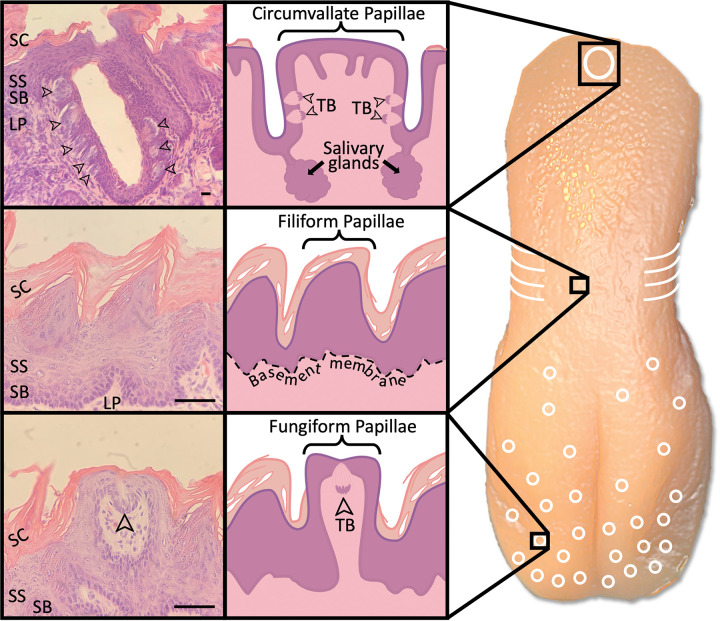 Figure 1
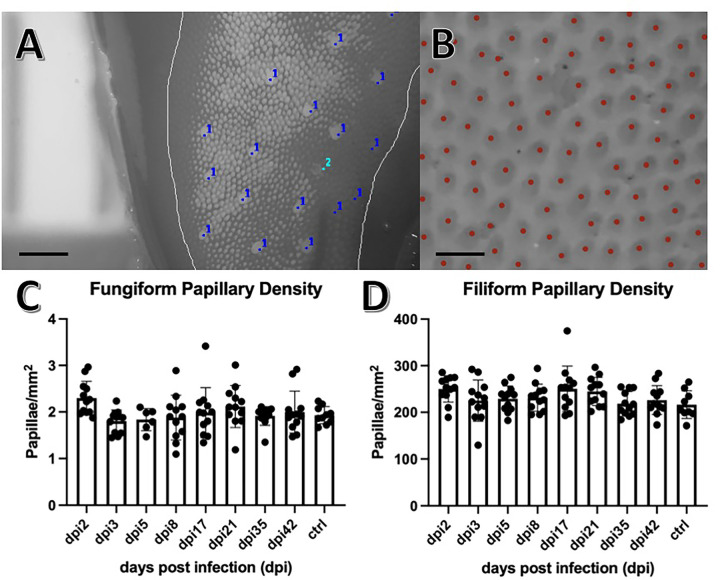 Figure 2
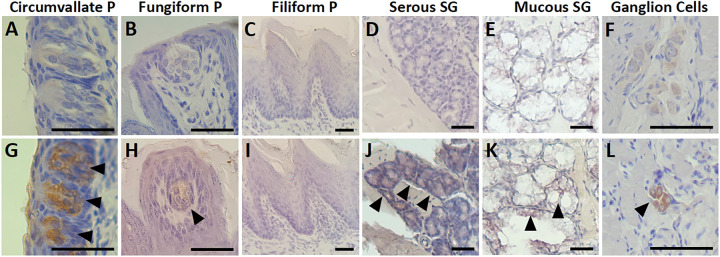 Figure 3
Peer Reviews
No public reviews on file for this paper yet. If you reviewed it on a platform where reviews are public (OpenReview, ICLR, NeurIPS, ICML), you can paste yours below so the community can read it here.
Videos
No videos yet. Explain this paper in a talk, walkthrough, or lecture? Add one.
Taxonomy
TopicsDermatological and COVID-19 studies · Oral Health Pathology and Treatment