Plasma biomarkers in patients with familial cavernous malformation and their first-degree relatives
Chunwang Li, Shuna Huang, Qixuan Li, Lingyun Zhuo, Yaqing Kang, Penghui Liu, Weilin Huang, Ke Ma, Xinru Lin, Weiheng Zhuang, Darong Chen, Huimin Wang, Lingjun Yan, Dengliang Wang, Yuanxiang Lin, Dezhi Kang, Fuxin Lin

TL;DR
The study identifies plasma biomarkers that distinguish patients with familial cerebral cavernous malformations from their healthy relatives and those with severe disease.
Contribution
Novel plasma biomarkers (CD31, BDNF, serpin E1/PAI-1, ROBO4) are identified for FCCM and severe CDA.
Findings
Low CD31 and BDNF levels are independent risk factors for FCCM.
Low serpin E1/PAI-1 and high ROBO4 levels are linked to severe CDA in FCCM patients.
Combining CD31 and BDNF provides high accuracy in distinguishing FCCM patients from healthy relatives.
Abstract
We aimed to explore the differences in plasma biomarker levels between patients with familial cerebral cavernous malformations (FCCM) and their healthy first-degree relatives (FDRs) and between FCCM patients with and without severe chronic disease aggressiveness (CDA). Magnetic resonance imaging (MRI) scanning and genetic testing was performed in patients with multiple CCMs and their FDRs. Sixty-seven plasma biomarkers were tested using a customised multiplex bead immunoassay kit. Univariate and multivariate unconditional logistic regression analyses were conducted to determine the associations between plasma factors and the risk of developing FCCM and severe CDA. Receiver operating characteristic (ROC) curves were generated for each independent risk factor. Plasma factors of 37 patients with FCCM and 37 FDRs were examined. Low CD31 (P < 0.001) and BDNF levels (P = 0.013) were…
Genes, proteins, chemicals, diseases, species, mutations and cell lines named across the full text — each resolved to its canonical identifier and authoritative record.
Click any figure to enlarge with its caption.
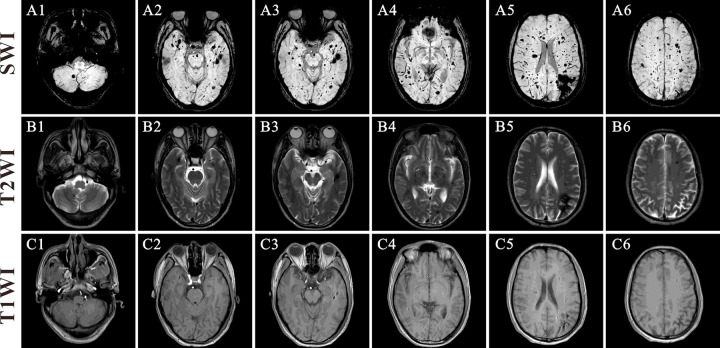 Figure 1
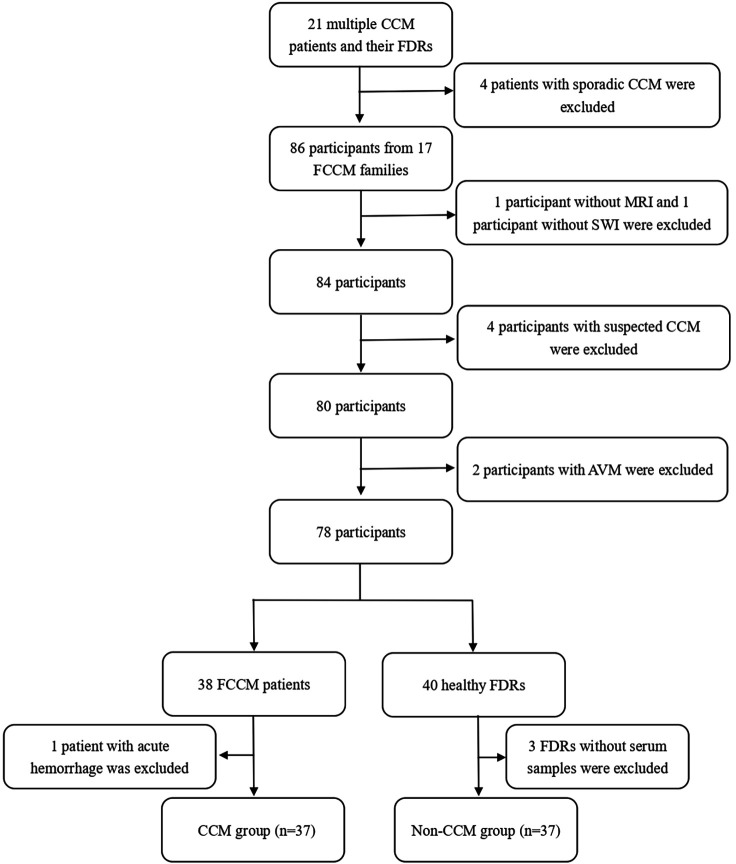 Figure 2
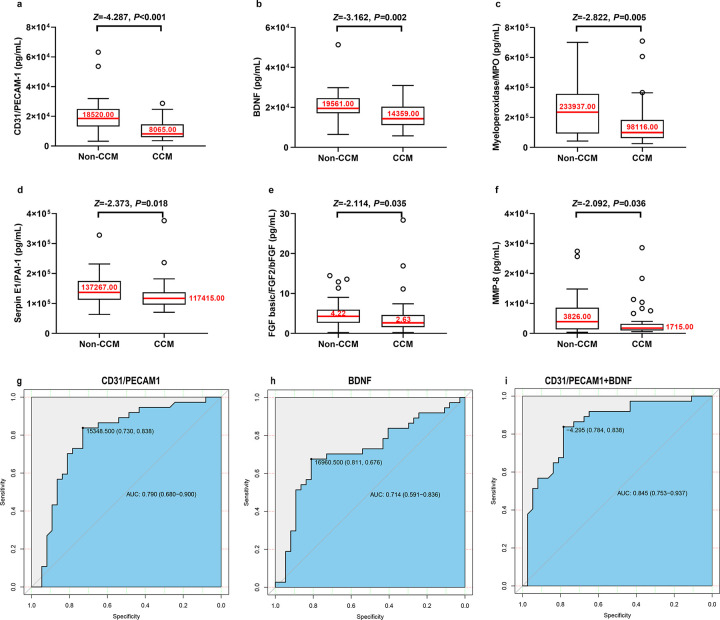 Figure 3
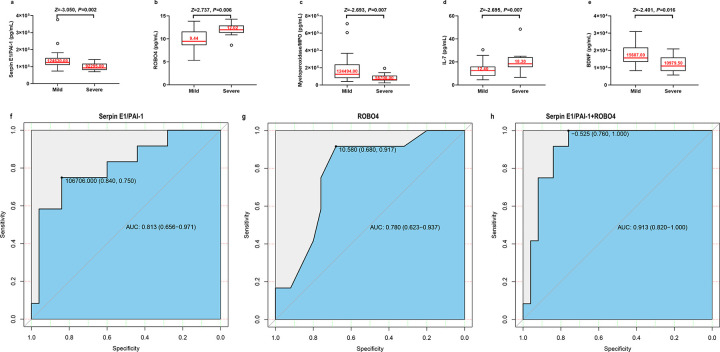 Figure 4
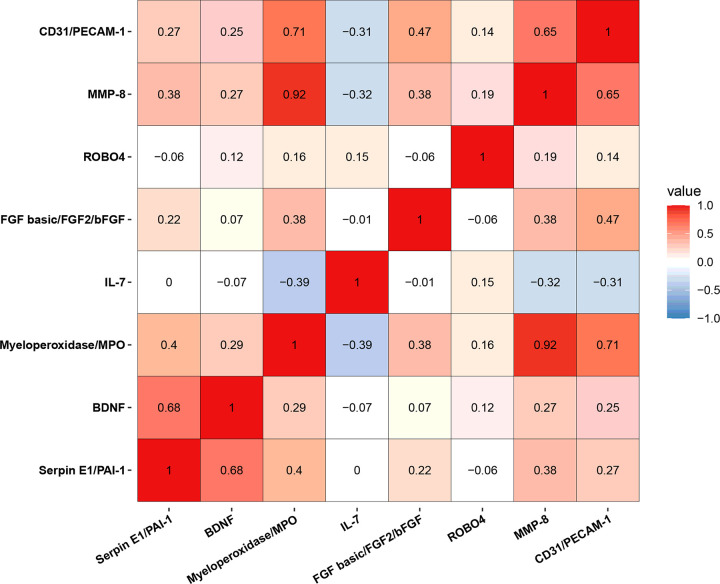 Figure 5
Peer Reviews
No public reviews on file for this paper yet. If you reviewed it on a platform where reviews are public (OpenReview, ICLR, NeurIPS, ICML), you can paste yours below so the community can read it here.
Videos
No videos yet. Explain this paper in a talk, walkthrough, or lecture? Add one.
Taxonomy
TopicsVascular Malformations Diagnosis and Treatment · Intracranial Aneurysms: Treatment and Complications · Intracerebral and Subarachnoid Hemorrhage Research