Comparative analysis of optional hunting behavior in Cricetinae hamsters using the data compression approach
J. Levenets, S. Panteleeva, Zh. Reznikova, A. Gureeva, V. Kupriyanov, N. Feoktistova, A. Surov

TL;DR
This study compares the hunting behavior of five hamster species, finding that ecological factors, not phylogeny, shape their predatory behaviors.
Contribution
The study introduces the data compression approach to analyze hunting behavior as biological 'texts' in Cricetinae hamsters.
Findings
The desert hamster Phodopus roborovskii shows the most variable and advanced hunting behavior.
Ecological conditions, not phylogenetic differences, drive the divergence in hamster hunting behaviors.
Hunting sequences in Phodopus species suggest selection during speciation despite optional behavior.
Abstract
Research into the hunting behavior in members of the Cricetidae family offers an opportunity to reveal what changes in the predatory behavioral sequences occur when a rodent species shifts from an omnivorous to a predatory lifestyle. The study tests the following hypotheses: are there phylogenetic differences in the divergence of species’ predatory lifestyles in hamsters or do ecological factors lead to shaping their hunting behavior? We applied the data compression approach for performing comparative analysis of hunting patterns as biological “texts.” The study presents a comparative analysis of hunting behaviors in five Cricetinae species, focusing on the new data obtained for the desert hamster Phodopus roborovskii whose behavior has never been studied before. The hunting behavior of P. roborovskii appeared to be the most variable one. In contrast, behavioral sequences in P.…
Genes, proteins, chemicals, diseases, species, mutations and cell lines named across the full text — each resolved to its canonical identifier and authoritative record.
Click any figure to enlarge with its caption.
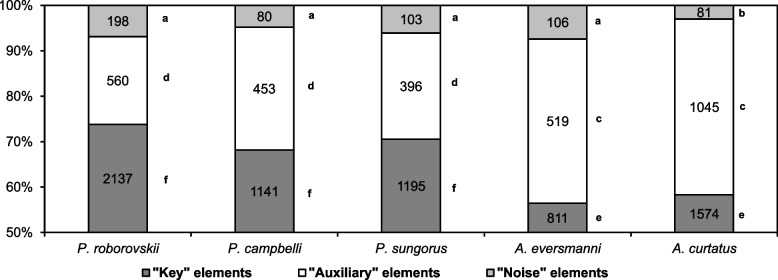 Figure 1
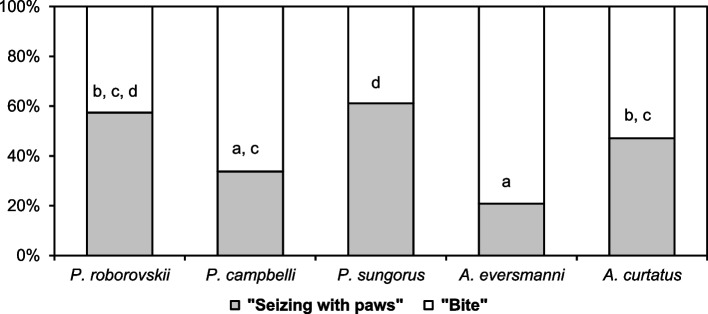 Figure 2
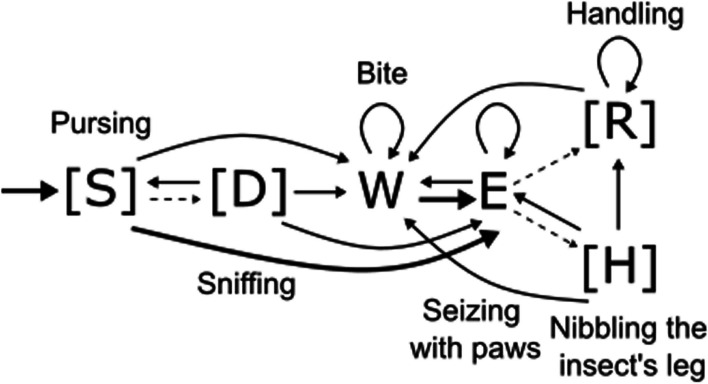 Figure 3
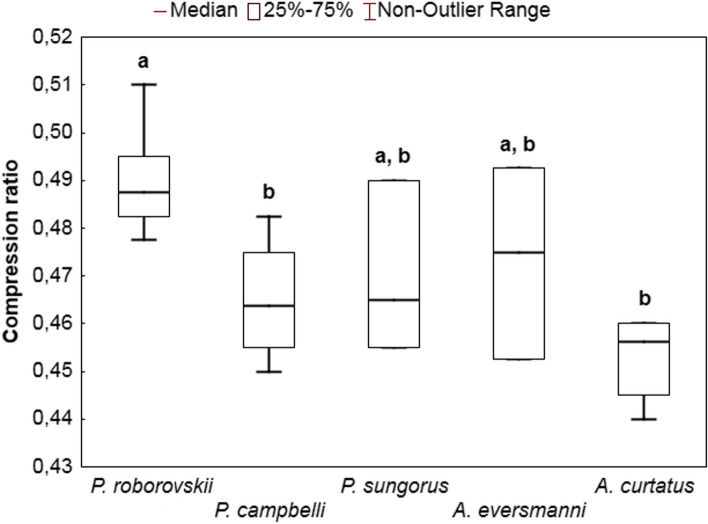 Figure 4
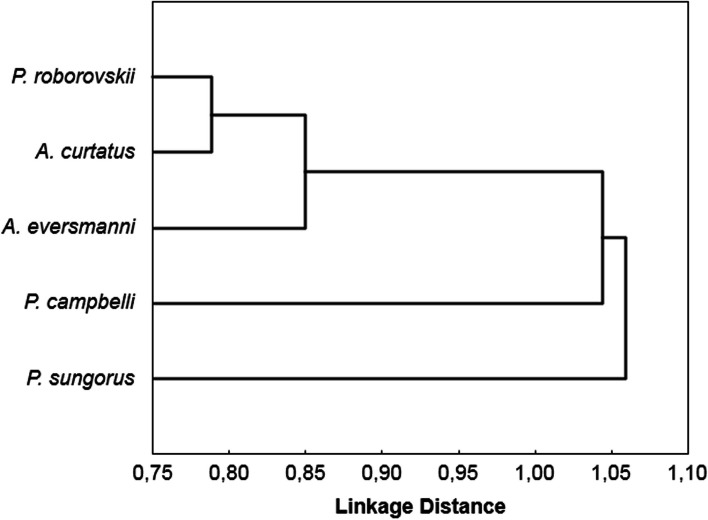 Figure 5
Peer Reviews
No public reviews on file for this paper yet. If you reviewed it on a platform where reviews are public (OpenReview, ICLR, NeurIPS, ICML), you can paste yours below so the community can read it here.
Videos
No videos yet. Explain this paper in a talk, walkthrough, or lecture? Add one.
Taxonomy
TopicsPhysiological and biochemical adaptations