Evaluation of the clinical efficacy of using an inverted triangular cannulated compression screw in combination with positive or negative buttress reduction for the healing of femoral neck fractures
Gang Wang, Cui Tang, Yong Tang, Rui Wang, Tugang Shen, Chundao Xu, Jian Yu, Gaokai Li

TL;DR
A study found that using inverted triangular cannulated compression screws with positive buttress reduction improves healing and hip function in femoral neck fractures.
Contribution
The study introduces a surgical approach combining inverted triangular cannulated compression screws with positive buttress reduction for better outcomes in femoral neck fracture healing.
Findings
Positive buttress reduction combined with the screws showed no bone nonunion, fixation failure, or ischemic necrosis.
The positive buttress group had significantly less femoral neck shortening and higher Harris hip scores.
Negative buttress reduction was associated with higher complication rates and more joint replacements.
Abstract
We aimed to compare the clinical efficacy of inverted triangular cannulated compression screws combined with Gotfried positive or negative buttress reduction in the healing of femoral neck fractures. Between October 2017 and March 2021, 55 patients with femoral neck fractures underwent treatment using inverted triangular cannulated compression screws combined with Gotfried positive or negative buttress reduction. Among these patients, 29 received inverted triangular cannulated compression screws combined with Gotfried positive buttress reduction treatment. This group consisted of 16 males and 13 females, with an average age of 43.45 ± 8.23 years. Additionally, 26 patients received inverted triangular cannulated compression nails combined with Gotfried negative buttress reduction treatment. This group included 14 males and 12 females, with an average age of 41.96 ± 8.69 years.…
Genes, proteins, chemicals, diseases, species, mutations and cell lines named across the full text — each resolved to its canonical identifier and authoritative record.
Click any figure to enlarge with its caption.
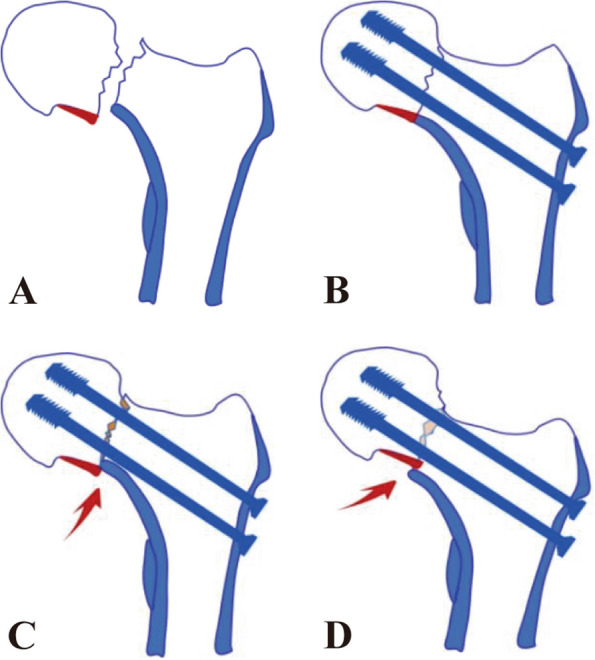 Figure 1
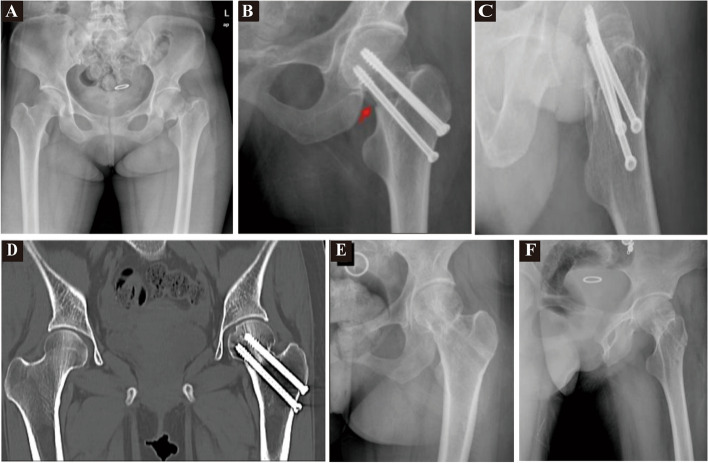 Figure 2
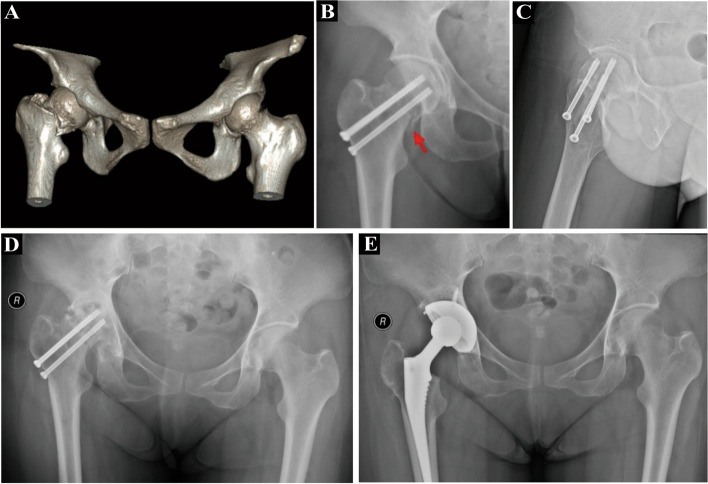 Figure 3
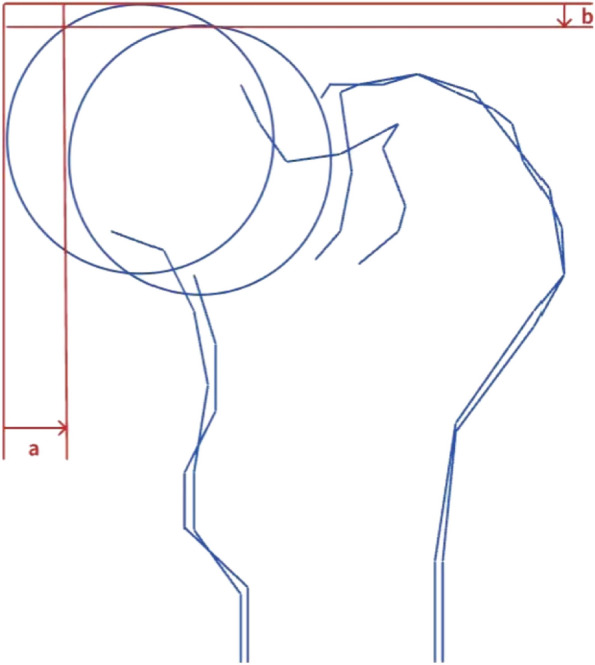 Figure 4
Peer Reviews
No public reviews on file for this paper yet. If you reviewed it on a platform where reviews are public (OpenReview, ICLR, NeurIPS, ICML), you can paste yours below so the community can read it here.
Videos
No videos yet. Explain this paper in a talk, walkthrough, or lecture? Add one.
Taxonomy
TopicsHip and Femur Fractures · Bone fractures and treatments · Orthopaedic implants and arthroplasty