Escaping a Nightmare: Successfully Retrieving a Fractured Guidewire During Percutaneous Coronary Intervention
Sanjay Kumar Sharma

TL;DR
This paper describes a rare case where a fractured guidewire during heart surgery was successfully removed using a specialized device.
Contribution
The novel use of a neurovascular device to retrieve a fractured guidewire during PCI is highlighted.
Findings
A fractured guidewire was safely retrieved during PCI in a 44-year-old male patient.
The retrieval was accomplished using a 4×40 mm Solitaire device.
The procedure avoided complications like thrombosis or vessel occlusion.
Abstract
A guidewire fracture seldom occurs as a complication of percutaneous coronary intervention (PCI). Guidewire fragments retained in the coronary tree can result in thrombosis, embolic phenomena, dissection, perforation, and vessel occlusion. This study represents a rare incidence of fractured guide wire, which occurred during PCI in a 44-year-old male due to the acute angle and heavy calcification which was safely and successfully retrieved using a 4×40 mm Solitaire device (Irvine, CA: Medtronic) (neurovascular remodeling device).
Genes, proteins, chemicals, diseases, species, mutations and cell lines named across the full text — each resolved to its canonical identifier and authoritative record.
Click any figure to enlarge with its caption.
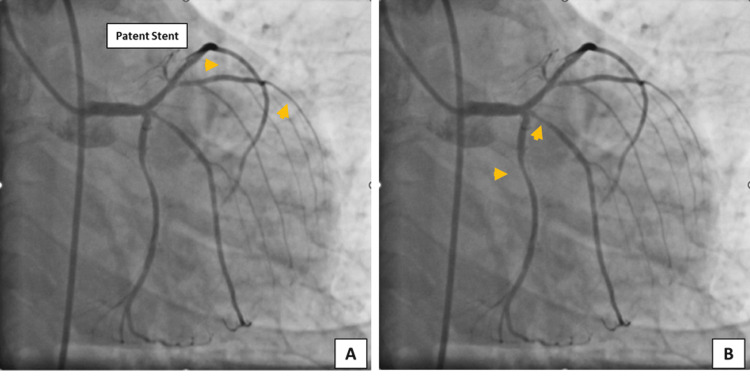 Figure 1
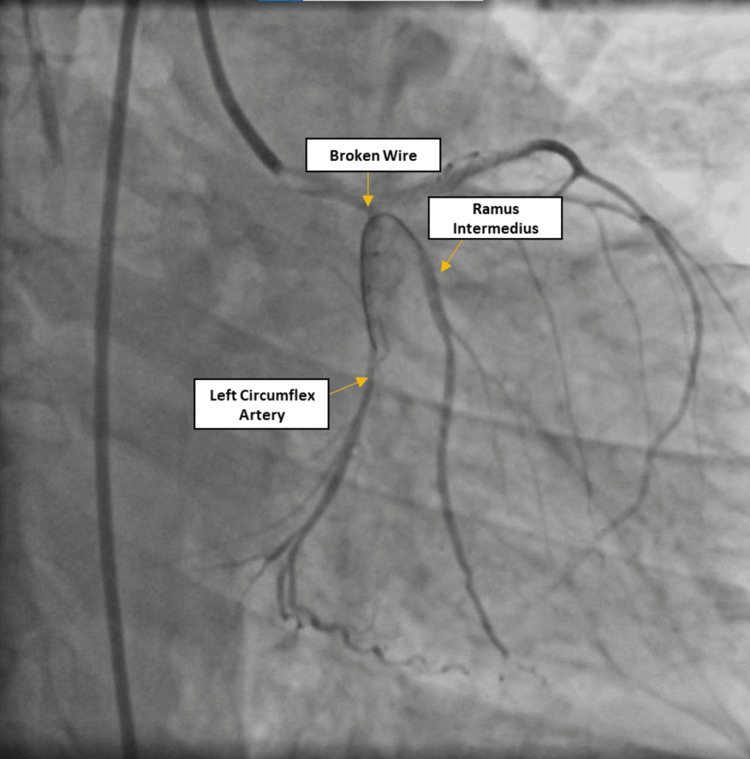 Figure 2
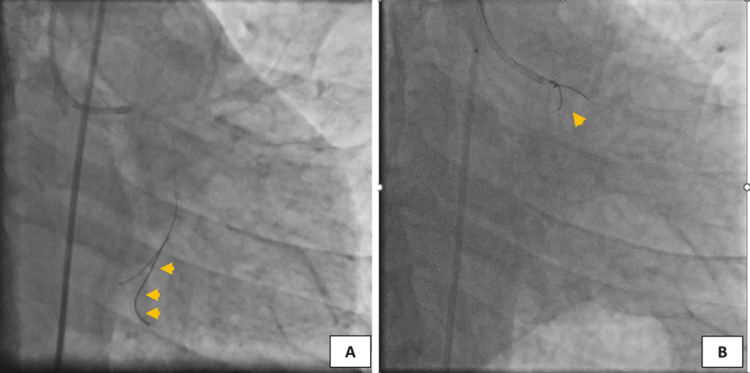 Figure 3
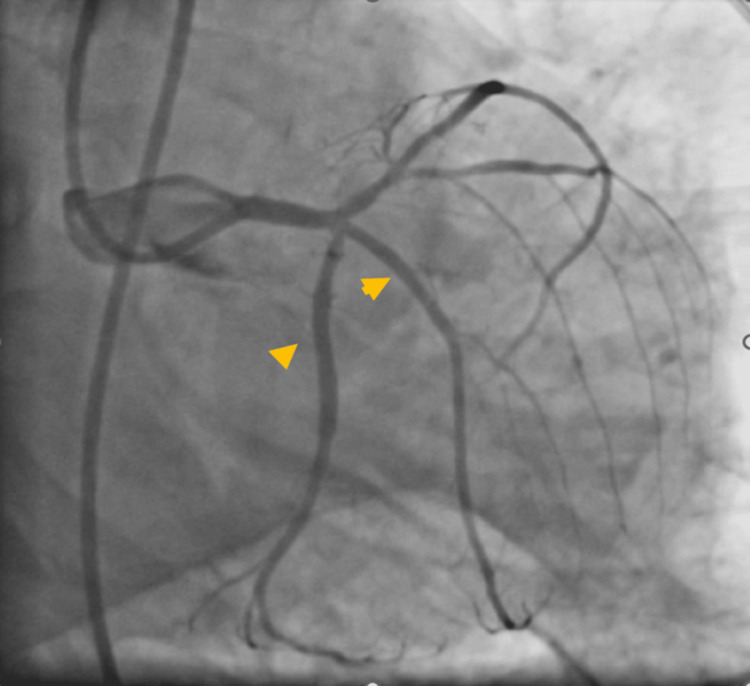 Figure 4
Peer Reviews
No public reviews on file for this paper yet. If you reviewed it on a platform where reviews are public (OpenReview, ICLR, NeurIPS, ICML), you can paste yours below so the community can read it here.
Videos
No videos yet. Explain this paper in a talk, walkthrough, or lecture? Add one.
Taxonomy
TopicsCardiac, Anesthesia and Surgical Outcomes · Cardiac Imaging and Diagnostics · Coronary Interventions and Diagnostics